
A class-design workshop includes only CMDB admins and skips audit and risk consumers. What should the lead correct?
Select an answer to reveal the explanation.
Short Explanation
Classes show up on everyone's dashboard later. If audit and risk never sit in the workshop, you'll paint a model only CMDB folks love. Pull the consumers in before the paint dries.
Full Explanation
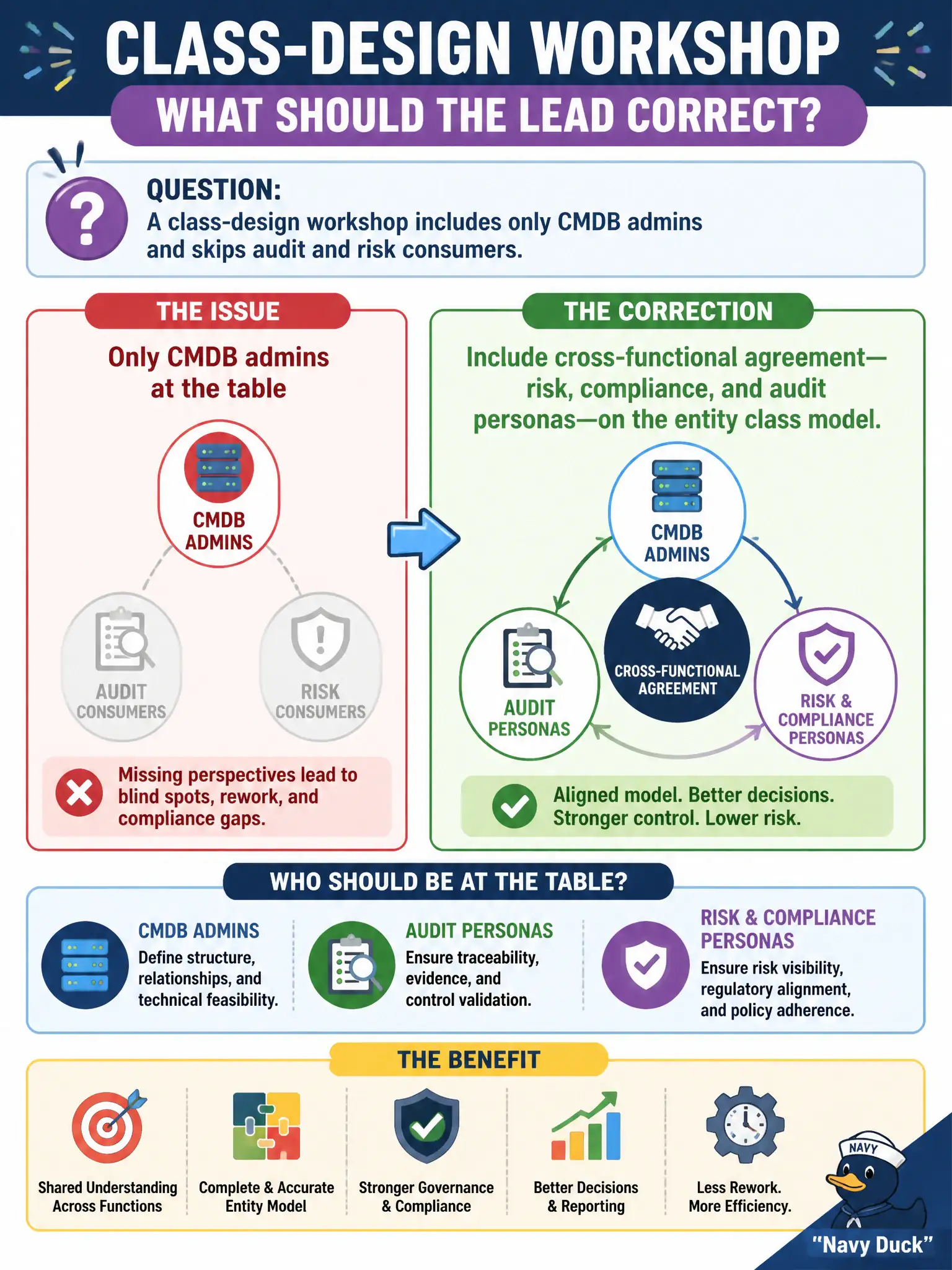
A class-design workshop must include cross-functional agreement—risk, compliance, and audit personas—on the entity class model, not only CMDB admins. Classes serve reporting and navigation for GRC consumers across the municipal program; storage-partition thinking from database administrators alone produces a taxonomy that fails executive and auditor use cases. Limiting workshops to DBAs because classes are treated as storage partitions only misstates the construct and typically yields technical labels nobody uses in attestations. Postponing all class decisions until after the first external audit finds gaps guarantees remediations under pressure and costly rework of generated content. Allowing each persona to invent private class models that never intersect recreates dual systems of categorization and breaks shared rollups for federated city agencies. Exam caveat: cross-functional agreement does not mean every bureau invents local classes—it means a shared taxonomy with consumers at the table and a change path for rare extensions. Operational check: invite risk, compliance, audit, and CMDB stewards; ratify a short stable class list; map proposed types; obtain sign-off in the IRM design authority minutes; and pilot one residual-risk and one compliance report by class with those personas before freezing taxonomy for go-live. Revisit the workshop outcome after the first quarterly executive review.