
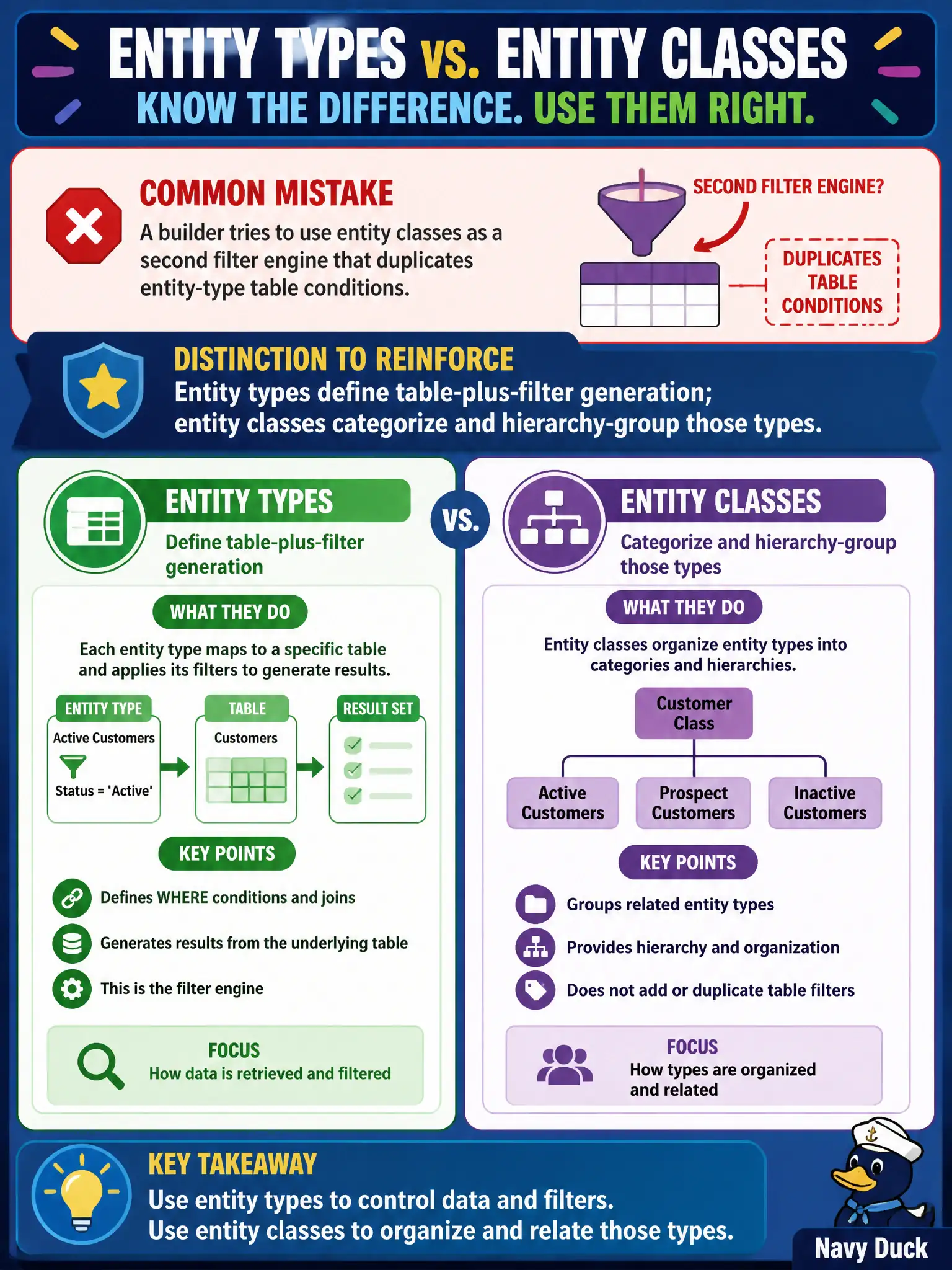
A builder tries to use entity classes as a second filter engine that duplicates entity-type table conditions. What distinction should be reinforced?
Select an answer to reveal the explanation.
Short Explanation
Types are the fishing nets (which table, which filter). Classes are the cooler labels (org, app, facility). Using classes as a second net just tangles the line. Keep the jobs separate.
Full Explanation
Entity types define table-plus-filter generation; entity classes categorize and hierarchy-group those types. Reinforcing that distinction stops builders from treating classes as a second filter engine that duplicates type conditions and tangles membership logic for city and utility estates. Types answer which source records become entities; classes answer how those entities group for navigation and executive reporting. Classes are not generators of CMDB CIs, nor are types merely dashboard color stores. Types and classes are not interchangeable labels with identical responsibilities. Classes do not replace authority documents in the policy content chain. Collapsing the two constructs typically produces either over-filtered class taxonomies or under-structured type lists that fail municipal rollups. Exam caveat: confusing type filters with class taxonomy is a common CIS-RC trap—membership comes from the type; reporting and hierarchy come from the class. Operational check: for each municipal entity type, document source table and filter separately from its assigned class; reject design reviews that place filtering rules only on the class; generate a pilot population and confirm membership matches the type filter while rollups follow the class. Keep the distinction in the city's IRM architecture diagram and train bureau admins so future consultants do not collapse the two constructs during enhancements.