
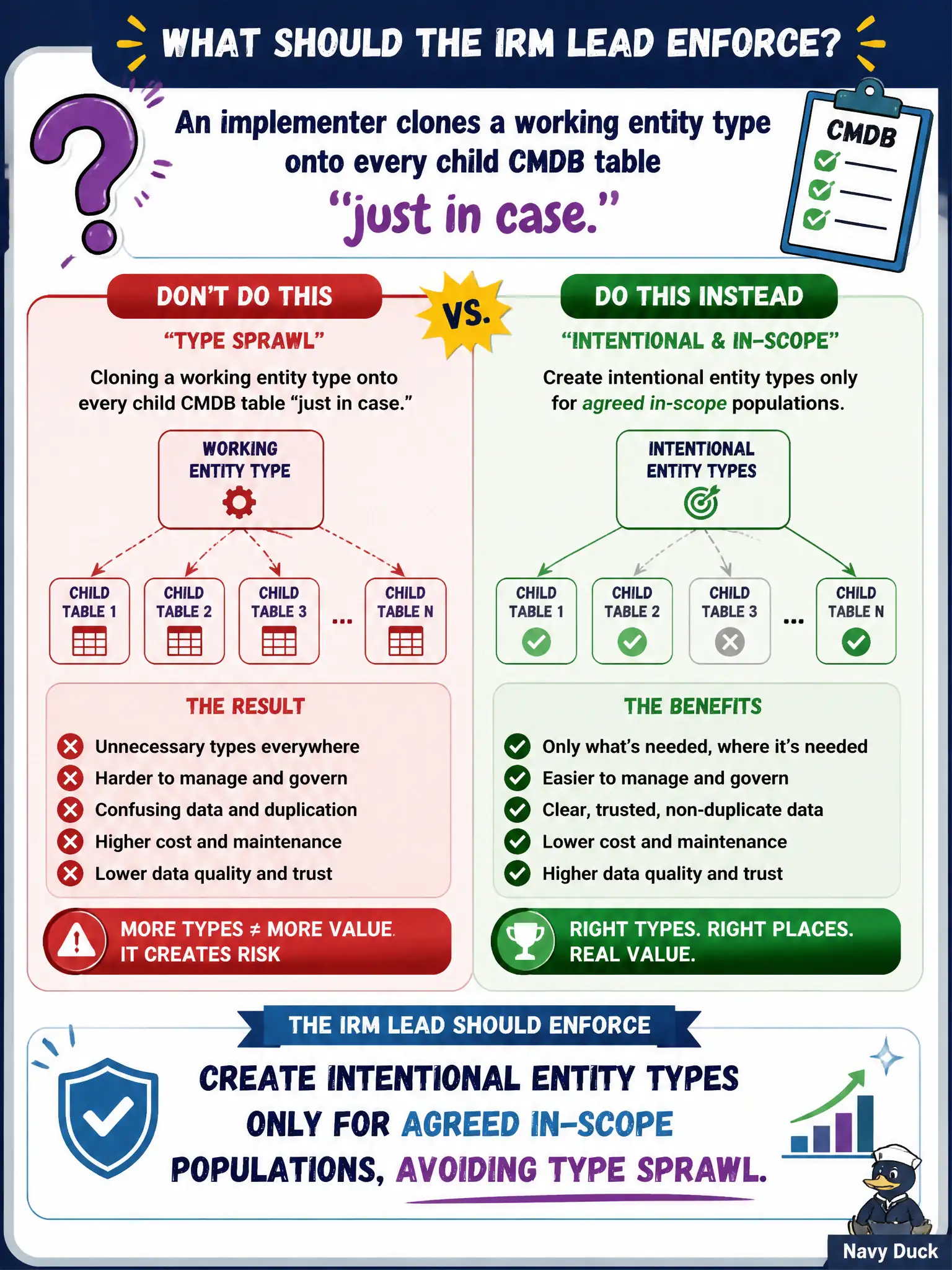
An implementer clones a working entity type onto every child CMDB table 'just in case.' What approach should the IRM lead enforce instead?
Select an answer to reveal the explanation.
Short Explanation
Cloning types like wallpapering every closet door isn't design—it's clutter. Intentional types cover the populations you actually govern. Sprawl makes overlaps, duplicates, and confused owners the default.
Full Explanation
IRM leads should create intentional entity types only for agreed in-scope populations, avoiding type sprawl across every child CMDB table. Cloning a working type onto every child 'just in case' multiplies overlapping generation paths, duplicate entities, confused ownership, and noisy control generation for a municipal estate. Intentional types with clear table-plus-filter definitions keep generation predictable and auditable. Keeping clones for every child so audits never need a new type substitutes inventory sprawl for design and makes future changes harder to impact-analyze. Deleting all entity types and relying exclusively on ad-hoc manual entities fails at civic scale where populations change continuously. Merging every CMDB class into one unfiltered type pointed at cmdb_ci creates an undifferentiated megaset that floods owners with out-of-scope items. Exam caveat: one well-filtered type per agreed population beats many near-identical child clones; hierarchy and reporting belong with classes, not with uncontrolled type proliferation. Operational check: inventory proposed types against the city's in-scope list, reject clone-everything requests in design review, document each type's table and filter rationale, and pilot generation volume before promoting additional child types. Re-validate after CMDB class changes that new children are covered by intentional filters rather than reflexive clones.