
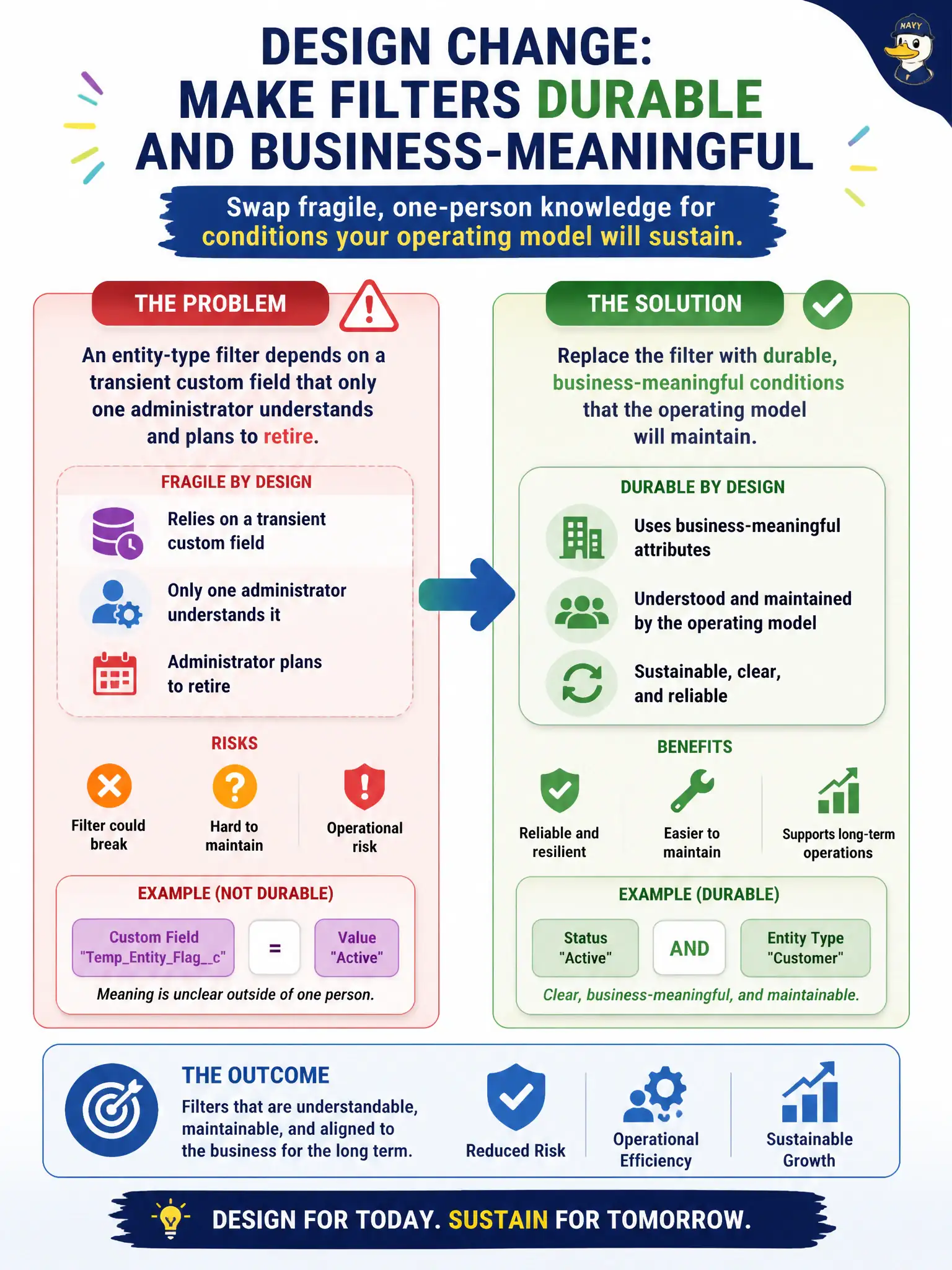
An entity-type filter depends on a transient custom field that only one administrator understands and plans to retire. What design change is appropriate?
Select an answer to reveal the explanation.
Short Explanation
If the filter hangs on a mystery checkbox only one admin loves, the entity type dies when that person leaves. Switch to fields the business already maintains—criticality, status, environment. Sustainable conditions beat clever private flags.
Full Explanation
Entity-type filters should use durable, business-meaningful conditions that the operating model will maintain—not a transient custom field only one administrator understands and plans to retire. If the filter hangs on a mystery checkbox, the entity type dies when that person leaves or the field is removed, silently breaking civic scope. Prefer criticality, lifecycle status, support group, or similar governed fields, and socialize criteria with owners. Keeping the fragile field documented only in personal notes preserves a single point of failure. Removing all conditions so the type never depends on any field recreates the unfiltered fire hose. Encoding the filter exclusively in a one-time fix script with no entity-type condition hides logic outside the maintainable type definition. Exam caveat: sustainable filter design is part of Entity Framework quality. Operational check for the design change: replace the custom-field condition with agreed business attributes, regenerate in subprod, compare population differences with owners, and retire the custom field only after the new type conditions are live. Keep civic stakeholders aligned on the operating model, and verify platform records after each change before reporting posture to leadership. Revisit the design when CMDB classes, org structures, or program charters change.