
Admins create an entity type for critical applications but never run generation or refresh. No entities appear. What misconception does this expose?
Select an answer to reveal the explanation.
Short Explanation
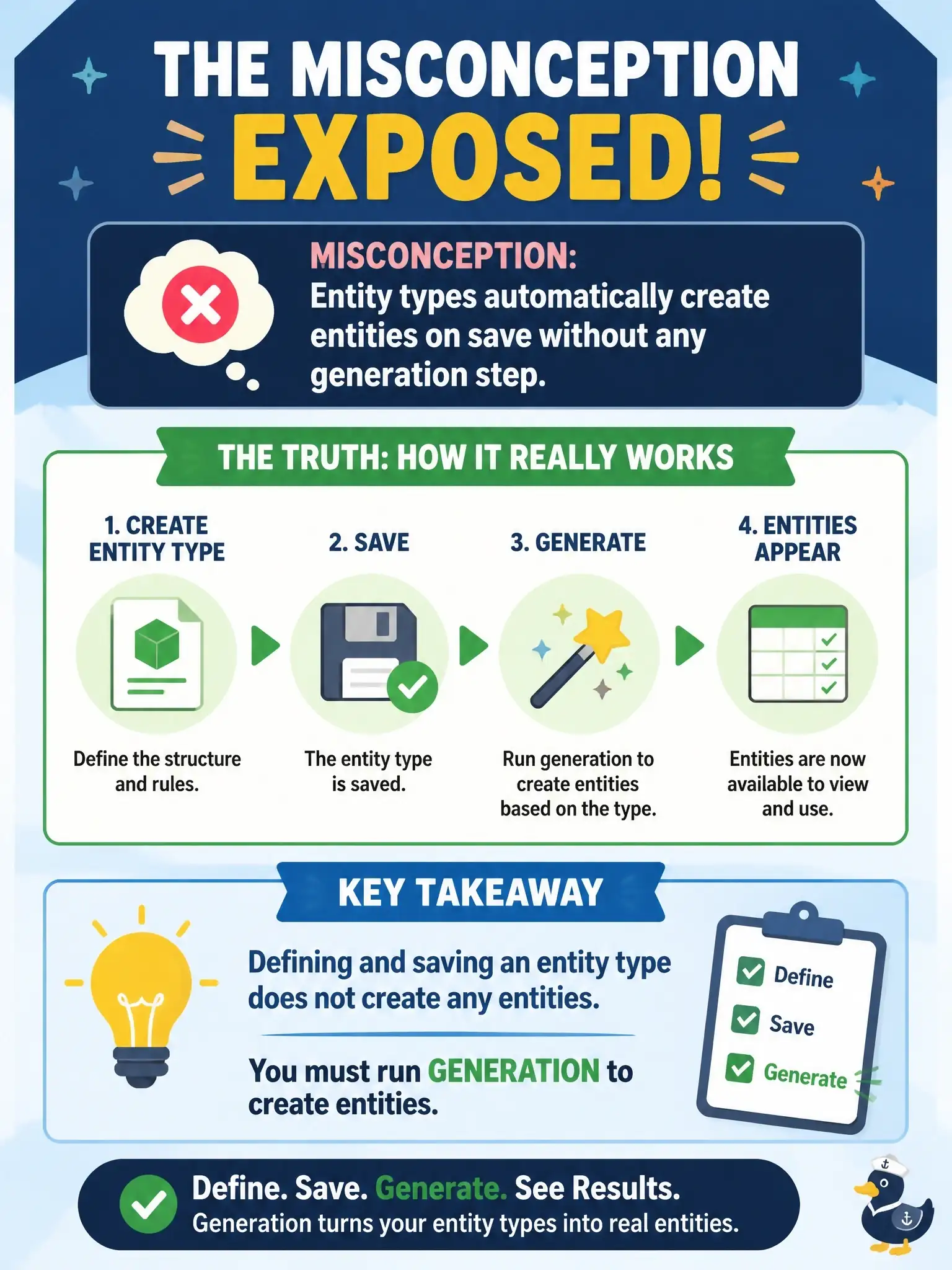
An entity type is the recipe card; generation is actually baking the cookies. If you save a critical-applications type but never run generation or refresh, the jar stays empty. The misconception is thinking the type automatically creates entities on save.
Full Explanation
The misconception exposed is the belief that entity types automatically create entities on save without any generation step. Entity types define how to find and create entities; generation or refresh must still be run to produce entity records. An entity type is the recipe card; generation bakes the cookies. Admins who save a critical-applications type and never run generation often misdiagnose an empty list as platform or plugin failure. Operationalize type design with scheduled or on-demand generation so scoped populations materialize and stay current. The statement that entity types define how to find and create entities and that generation or refresh must still be run is accurate about the platform, but it is not the misconception being exposed; it is the corrective fact. Blaming missing entities on the Policy and Compliance plugin not being installed misattributes an operational step to licensing. Saying entities only appear after an Advanced Audit engagement is closed invents an unrelated dependency. Exam caveat: type definition and generation/refresh are separate steps. Operational check for admins: after saving the entity type, run generate/refresh, confirm entities appear for matching CIs, schedule recurring refresh, and document the job owner so empty lists are not 'fixed' by reinstalling plugins. Keep civic stakeholders aligned on the operating model, and verify platform records after each change before reporting posture to leadership. Revisit the design when CMDB classes, org structures, or program charters change.