
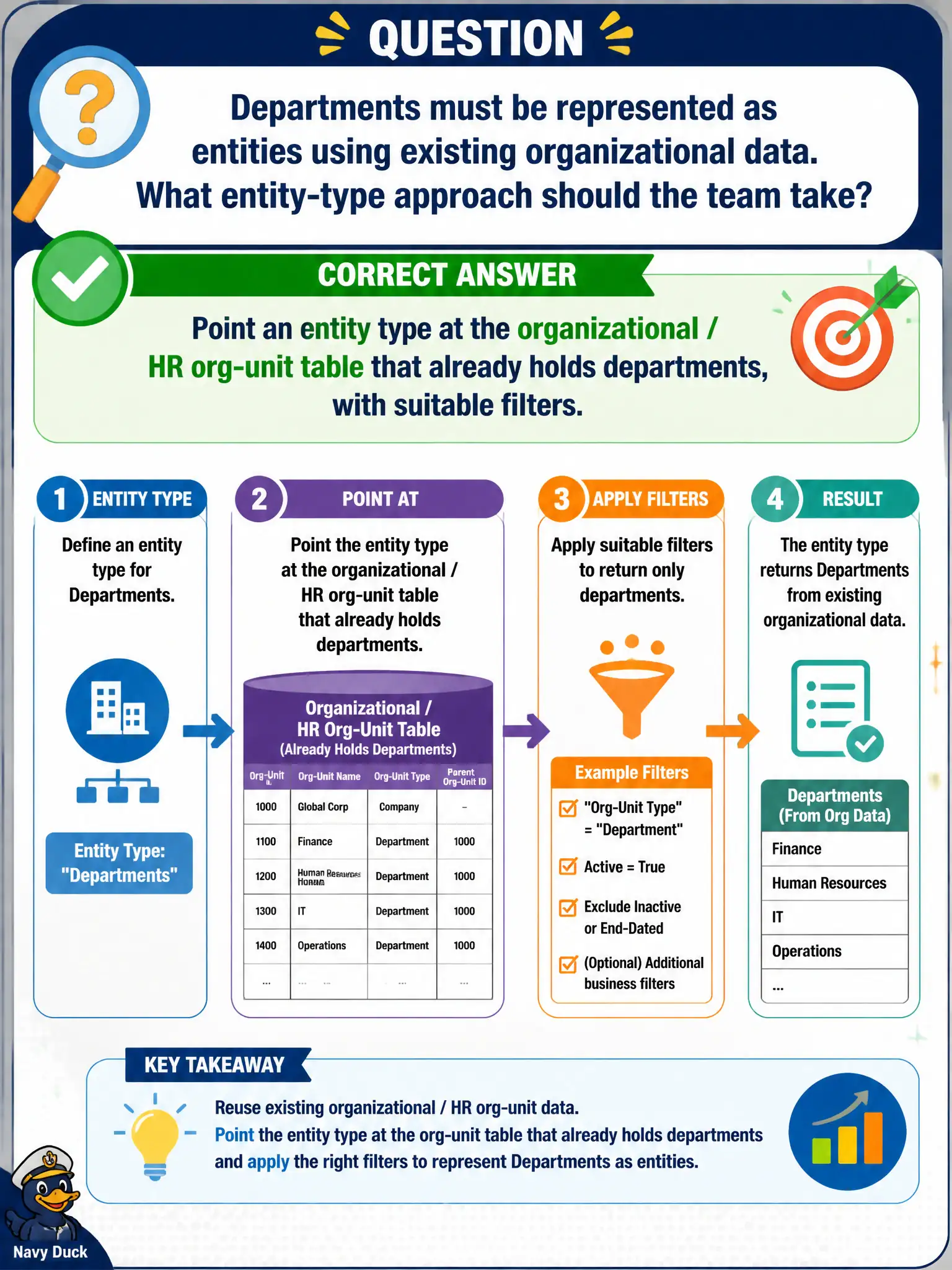
Departments must be represented as entities using existing organizational data. What entity-type approach should the team take?
Select an answer to reveal the explanation.
Short Explanation
Departments already live in org data—do not clone them into fake CMDB CIs just for GRC. Aim the entity type at the org-unit table and filter to active departments. Reuse the city’s real hierarchy instead of inventing a shadow one.
Full Explanation
Departments should be represented by pointing an entity type at the organizational or HR org-unit table that already holds departments, with suitable filters for active units. Departments already live in org master data; cloning them into fake CMDB CIs solely to feed GRC creates reconciliation debt and ownership confusion. Matching the entity type to the true object class is core Entity Framework design for cities. Inventing duplicate department configuration items in the CMDB solely to feed GRC builds a shadow hierarchy. Representing every department as a Knowledge article instead of an entity abandons the entity model. Using only network switch CIs as stand-ins for departments confuses infrastructure inventory with organizational structure. Exam caveat: source organizational entities from authoritative org-unit tables, not fabricated CIs. Operational check for the team: point a department entity type at the org-unit table, filter to active in-scope units, generate entities, and verify names and hierarchy align with HR/org data rather than with newly invented department CIs. Keep civic stakeholders aligned on the operating model, and verify platform records after each change before reporting posture to leadership. Revisit the design when CMDB classes, org structures, or program charters change.