
A municipal IT board assumes only GDPR principles matter and ignores earlier Convention language on automated processing. Which insight correctly connects that tradition to modern European data protection?
Select an answer to reveal the explanation.
Short Explanation
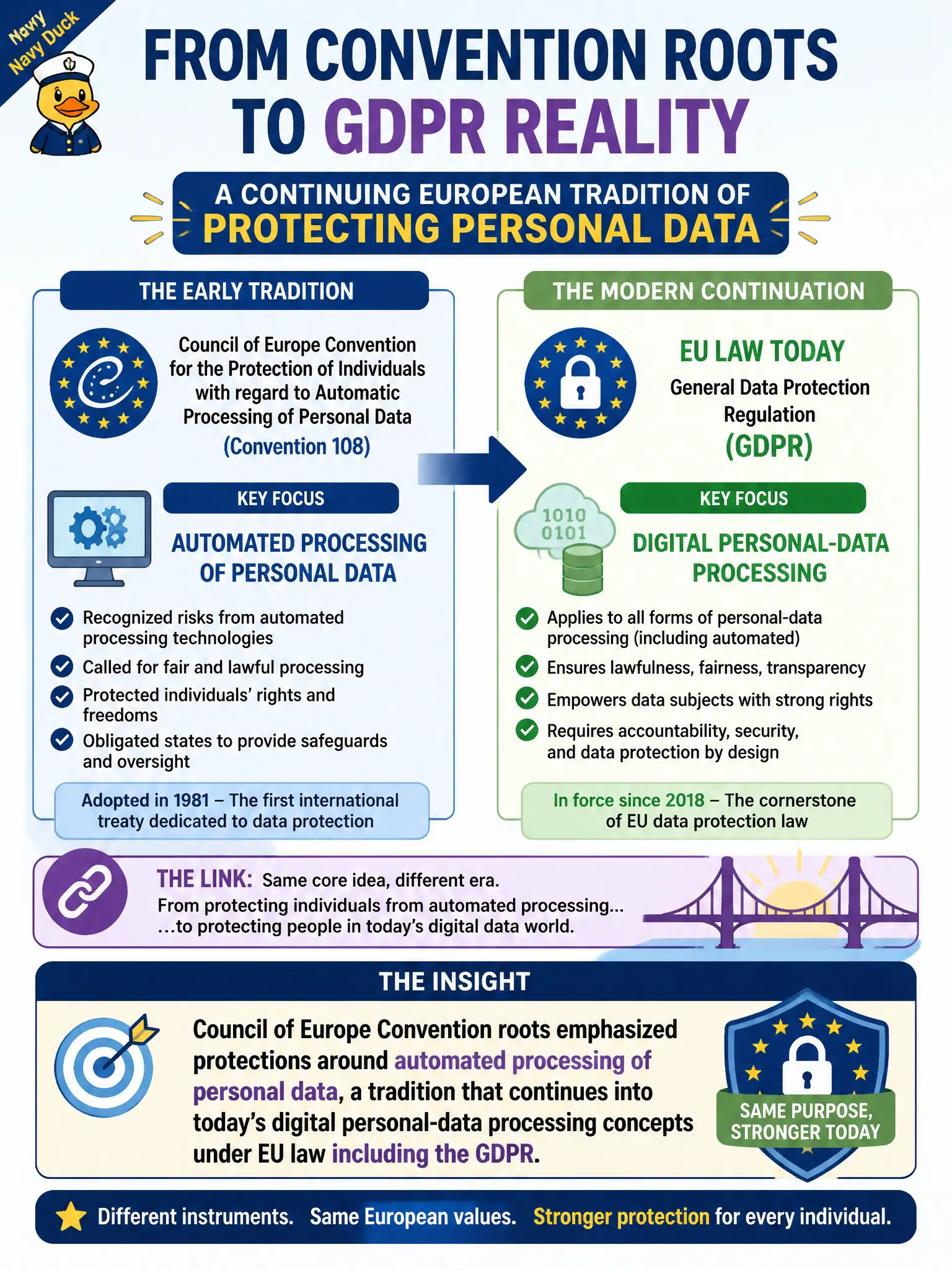
Europe worried about computers chewing through personal files long before the GDPR logo existed. Convention 108’s automated-processing focus is the ancestor story; GDPR is the modern chapter for digital personal data. Skipping that history leaves the IT board thinking privacy law started in 2018.
Full Explanation
Council of Europe Convention roots emphasised protections around automated processing of personal data, a tradition that continues into today’s digital personal-data processing concepts under EU law including the GDPR. Municipal IT boards that ignore earlier Convention language miss why automated filing risks were never a post-2018 invention. Automated processing was addressed before the GDPR and has clear historical European roots. Convention 108 did not only regulate paper filing cabinets while excluding computers. Modern digital processing is not governed exclusively by US sectoral laws that displaced European conventions. Exam caveat: tradition-of-automated-processing items reward CoE roots continuing into GDPR-era digital processing. Operational check: open staff onboarding with a short timeline—Convention 108 automated-processing focus → Directive 95/46 → GDPR—so engineers stop treating GDPR as an isolated product requirement without lineage. For municipal teams, keep a one-page decision note that states the governing instrument, why competing labels fail, and what evidence would change the conclusion. Document the decision trail so auditors can see how the civic team matched facts to the correct legal category rather than to a slogan.