
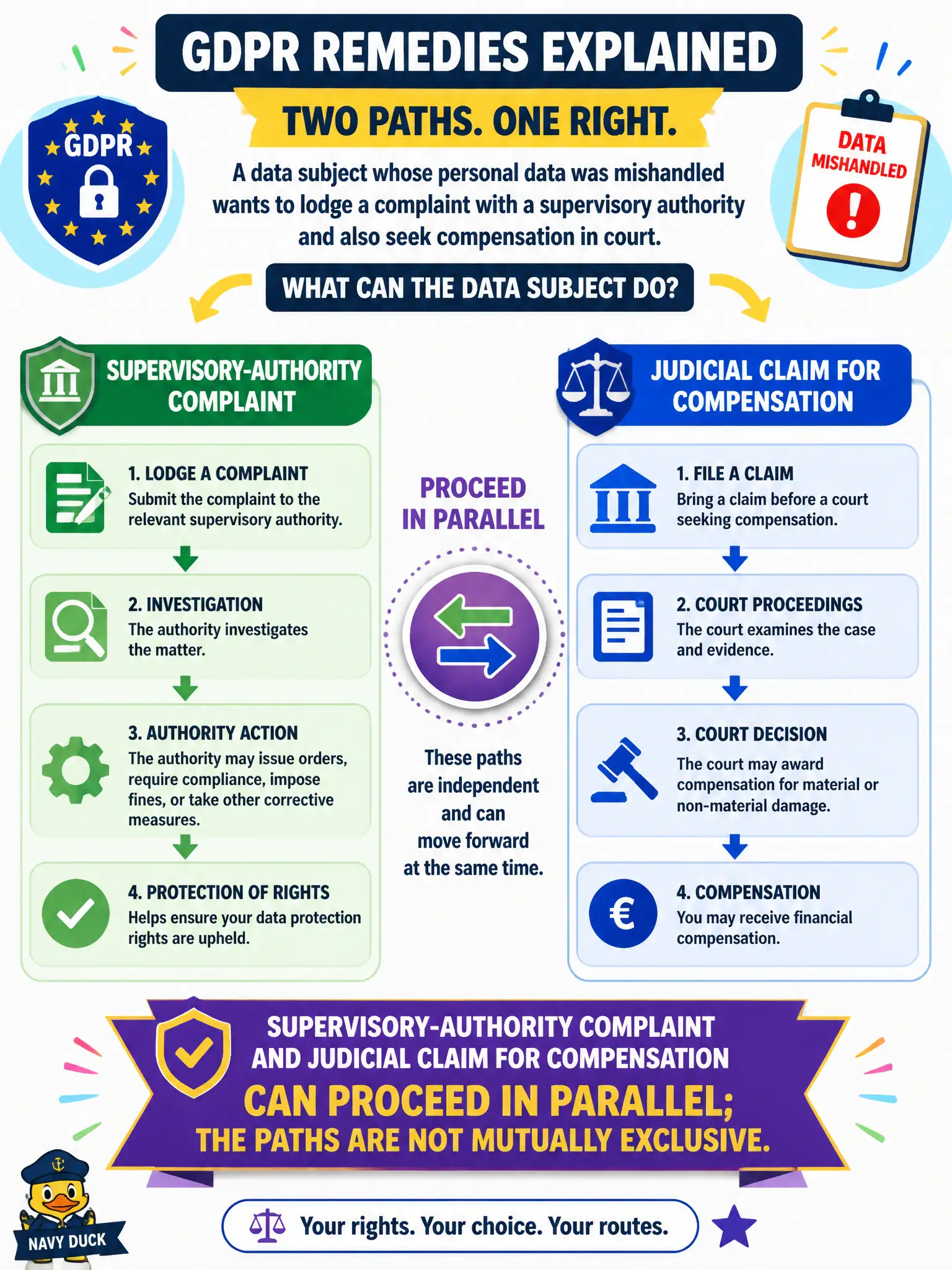
A data subject whose personal data was mishandled wants to lodge a complaint with a supervisory authority and also seek compensation in court. Which statement best reflects GDPR remedies?
Select an answer to reveal the explanation.
Short Explanation
Think of it like reporting a bad contractor to a licensing board and still suing for damages—those are different tools. Under the GDPR, complaining to a supervisory authority does not lock you out of court. You can chase administrative help and compensation at the same time.
Full Explanation
A data subject whose personal data was mishandled may lodge a complaint with a supervisory authority and also seek compensation in court because those paths are not mutually exclusive under the GDPR. Administrative oversight and civil redress are complementary civic tools—reporting to a licensing-style authority does not forfeit damages. Claiming that filing an SA complaint permanently bars any later civil claim fails by inventing an exhaustion rule Articles 77–79 do not impose. Saying court compensation is available only after the SA first imposes an administrative fine fails by creating a false sequencing prerequisite. Asserting administrative complaints and judicial remedies are mutually exclusive, so the person must choose one path, fails against the Regulation’s parallel-remedy design. Exam caveat: parallel availability does not mean identical outcomes or that every complaint automatically yields a fine; each forum applies its own procedures and standards. Operational check: train complaint and litigation teams that SA engagement does not settle civil exposure by default, preserve evidence for both tracks, and remediate underlying processing failures promptly. In public-interest terms, documenting the lawful analysis, assigning owners, and retaining evidence of how individuals were protected is how organisations demonstrate accountability when supervisory questions arrive.