
Besides GDPR administrative fines, what is accurate about additional consequences in the European framework?
Select an answer to reveal the explanation.
Short Explanation
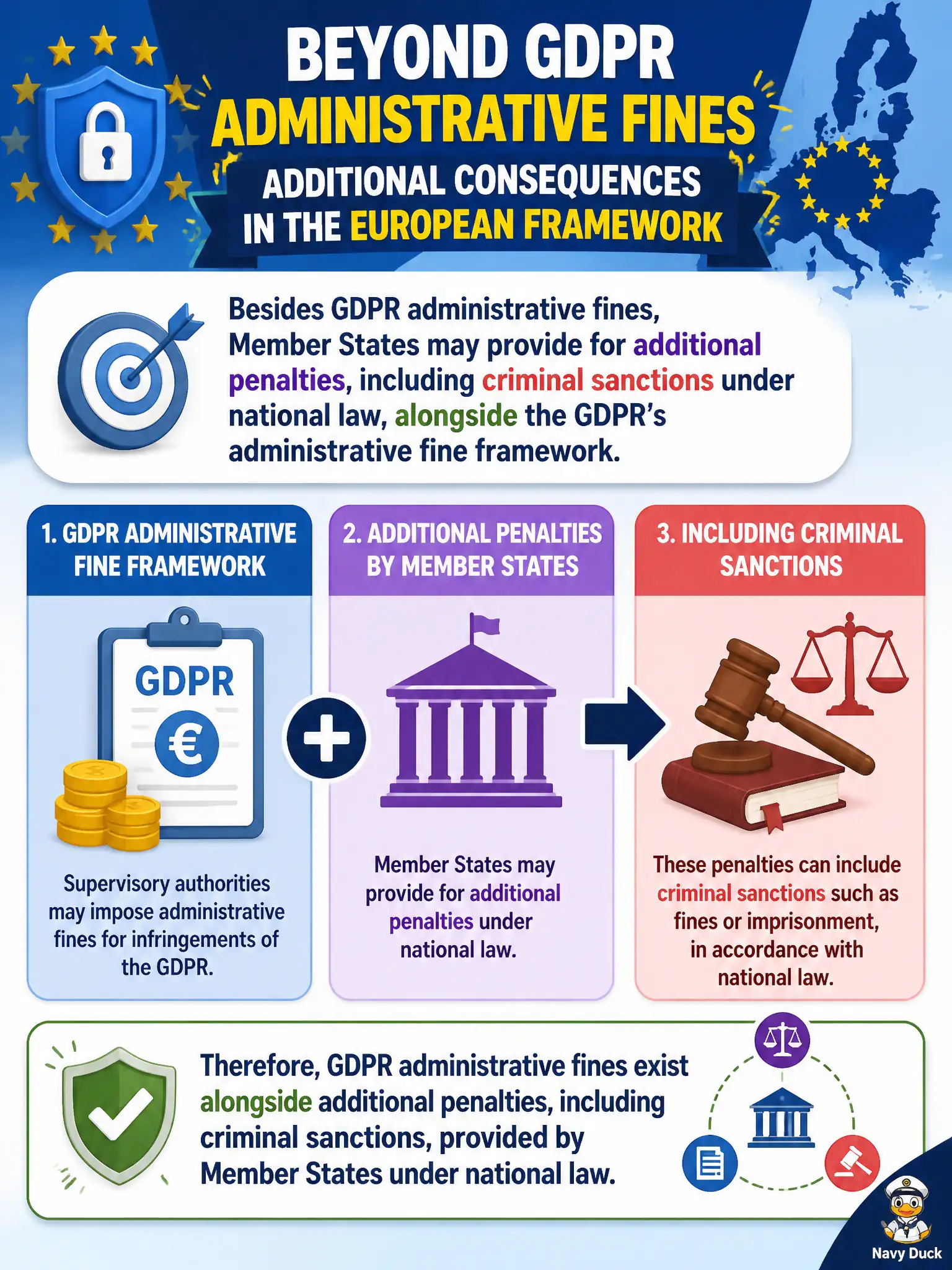
GDPR sets the big administrative-fine playbook, but national law can still add its own penalties—including criminal ones in some countries. Think federal rulebook plus local add-ons, not 'fines only forever.'
Full Explanation
Besides GDPR administrative fines, it is accurate that Member States may provide for additional penalties, including criminal sanctions under national law, alongside the GDPR’s administrative fine framework. That layered model lets national legal systems add civic deterrence where the Regulation leaves room, without pretending Article 83 is the only possible consequence. Claiming Member States are forbidden from ever providing criminal penalties related to personal-data infringements fails against the GDPR’s allowance for additional national penalties in defined circumstances. Saying administrative fines automatically repeal all national employment law fails by inventing wholesale repeal unrelated to fining. Asserting only the United Nations Security Council may add penalties beyond Article 83 fails by misplacing international security machinery into data-protection enforcement. Exam caveat: national criminal overlays vary widely; CIPP/E expects awareness that additional penalties can exist beside Union administrative fines, not mastery of every Member State penal code. Operational check: map whether local law adds criminal exposure for the processing at issue, brief executives beyond ‘max fine only,’ and align incident response with both administrative and potential national penalty risks.