
A data subject objects to processing for scientific research carried out as a task in the public interest. How does GDPR objection handling in that setting typically differ from a simple marketing opt-out?
Select an answer to reveal the explanation.
Short Explanation
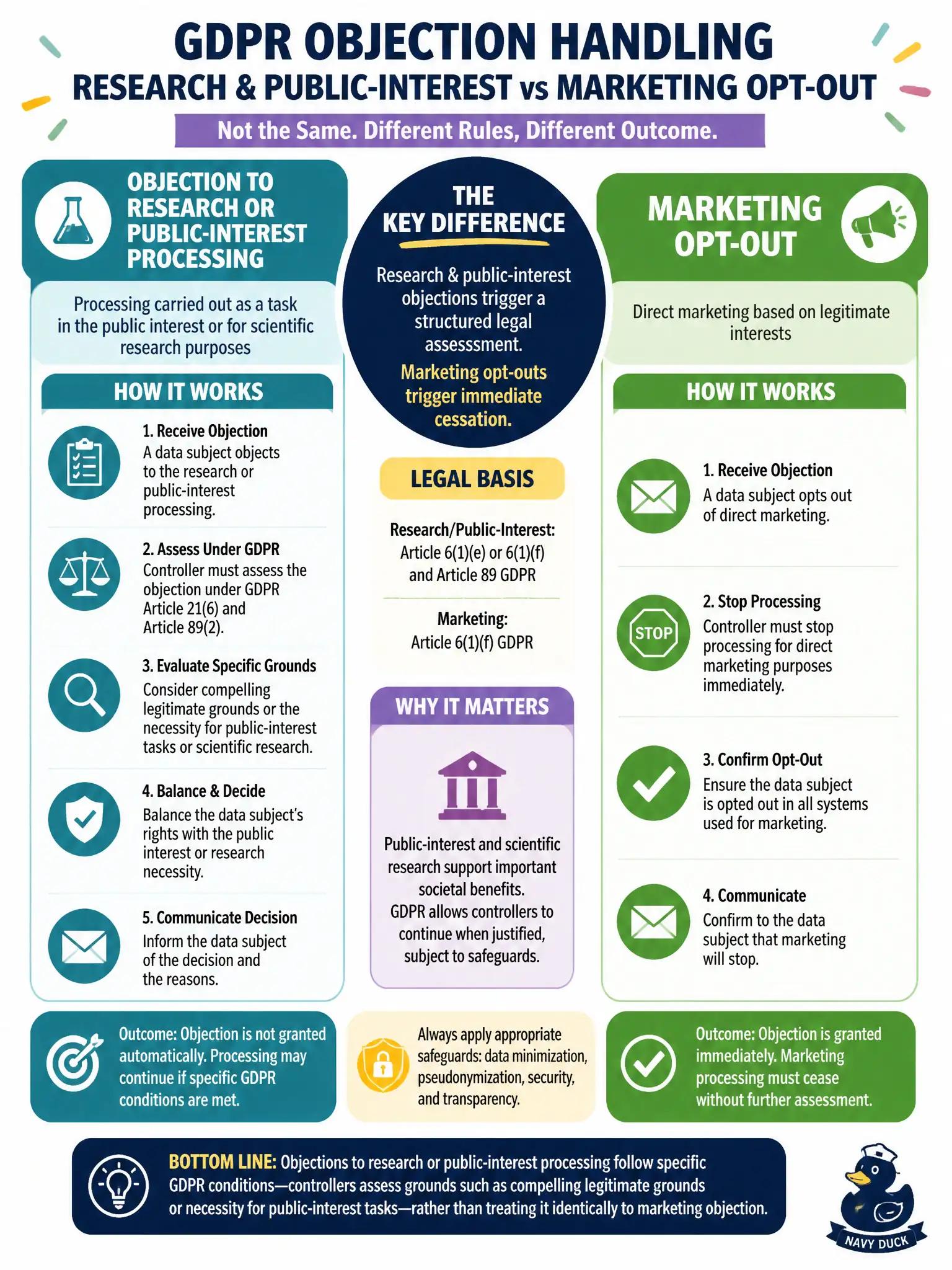
Marketing objection is usually a hard stop—like hanging up on a sales call. Research in the public interest plays by a different script: the GDPR sets special conditions and balancing, not a carbon copy of the marketing opt-out. Same word ‘object,’ different rulebook.
Full Explanation
Objection to processing for scientific research carried out as a task in the public interest follows specific GDPR conditions. Controllers assess grounds such as compelling legitimate grounds or whether processing is necessary for public-interest tasks / official authority, rather than treating the objection as identical to an absolute direct-marketing opt-out. The analysis is structured and contextual, not a simple unsubscribe clone and not a free pass to ignore the person.
Objection in research does not always have the same absolute effect as an objection to direct marketing. Scientific research processing can be the subject of objection under the Regulation’s conditions; “never” is wrong. Public-interest research also does not automatically override every objection without further conditions—the controller must still apply the applicable tests.
Exam caveat: marketing objection ≈ stop; research/public-interest objection ≈ conditioned assessment. Operational check: classify the processing purpose, apply the correct objection pathway, document public-interest necessity or compelling grounds if continuing, and communicate outcomes. Civic research programmes should respect participants as rights-holders, explaining how public-interest claims were weighed rather than dismissing objections with a slogan.