
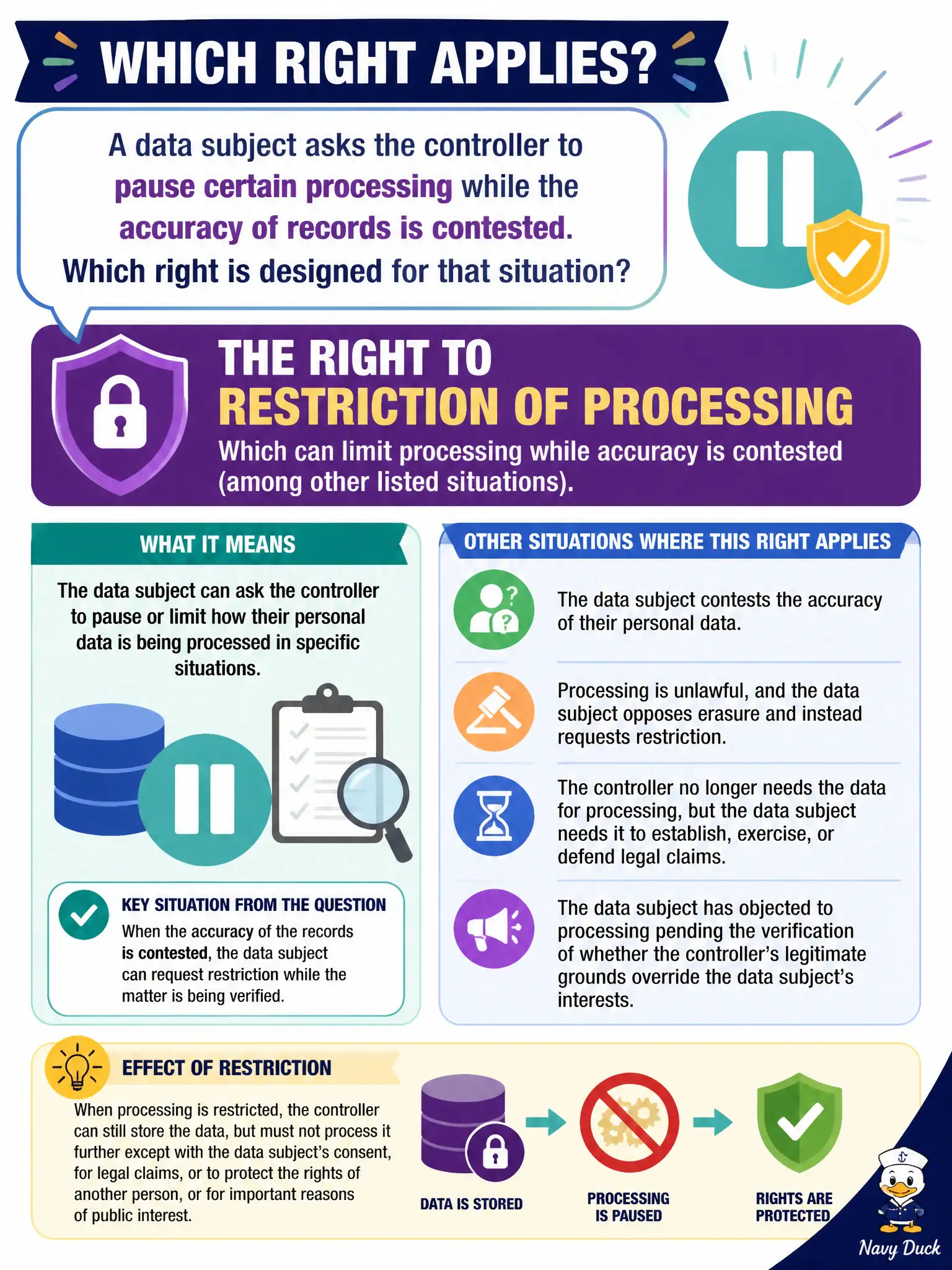
A data subject asks the controller to pause certain processing while the accuracy of records is contested. Which right is designed for that situation?
Select an answer to reveal the explanation.
Short Explanation
If the record's wrong and you're still arguing about it, restriction is the 'pause button' right. Processing gets limited while accuracy is sorted—not a press conference and not a random EU filing. Hold the line until the facts settle.
Full Explanation
When a data subject asks the controller to pause certain processing while the accuracy of records is contested, the right designed for that situation is restriction of processing. Restriction limits what may be done with the personal data—generally storage and certain narrow permitted uses—while accuracy (or other listed trigger situations) is resolved. It is the GDPR’s structured pause button, preventing business-as-usual use of disputed data.
The right to object exclusively for scientific research archives is not the tool described in this accuracy-dispute scenario. Mandatory public disclosure of contested fields on a municipal website is the opposite of careful restriction. Automatic transfer of the dispute to the European Commission within twenty-four hours is not the Article 18 procedure.
Exam caveat: restriction ≠ erasure; know when to pause processing versus delete data. Operational check: flag records as restricted in operational systems, block routine uses including marketing and automated decisions where required, allow only permitted narrow processing, resolve accuracy promptly, and then lift or convert to rectification/erasure as appropriate. City caseworkers should use restriction to stop harmful decisions on disputed data while fairness is restored for the resident.