
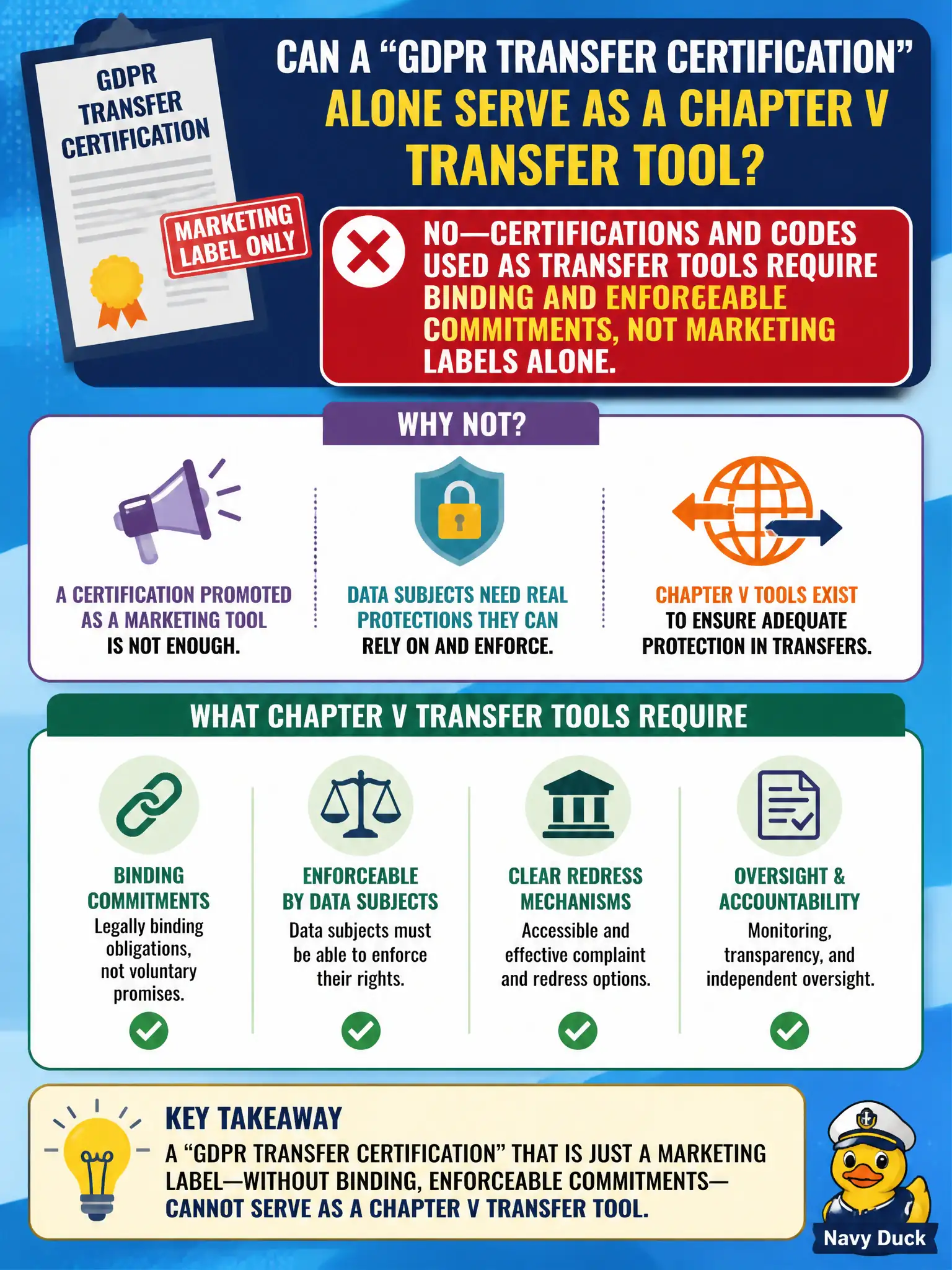
A vendor markets a “GDPR transfer certification” but offers no binding, enforceable commitments toward data subjects or exporters. Can that certification alone serve as a Chapter V transfer tool?
Select an answer to reveal the explanation.
Short Explanation
A shiny “transfer certified” badge without teeth is just décor. For certifications or codes to work as transfer tools, someone has to be bound in a way that can actually be enforced. Without those commitments, keep looking at SCCs, BCRs, adequacy, or other real Chapter V paths.
Full Explanation
Codes of conduct and certification mechanisms can support transfers only when they are approved for that purpose and accompanied by binding, enforceable commitments toward data subjects and exporters. A marketed “GDPR transfer certification” that offers no such commitments is a sales label, not an Article 46 appropriate safeguard. Controllers serving the public must distinguish real accountability instruments from badges designed for procurement gloss.
Certificates that merely mention the GDPR do not authorise all third-country transfers. Using the same blue as the EU flag creates no enforceability presumption. Marketing certifications do not replace Standard Contractual Clauses merely because the vendor acts as a processor.
Exam caveat: Articles 40–43 codes and certifications have specific approval pathways; transfer use additionally needs binding commitments under Article 46. Ordinary ISO or security badges are not automatic Chapter V tools even when the brochure says “GDPR ready.”
Operational check: demand written evidence of approval status and enforceable commitments before accepting a certification transfer narrative; otherwise execute SCCs or BCRs or rely on adequacy, and keep vendor marketing language out of the record of processing transfer field.