
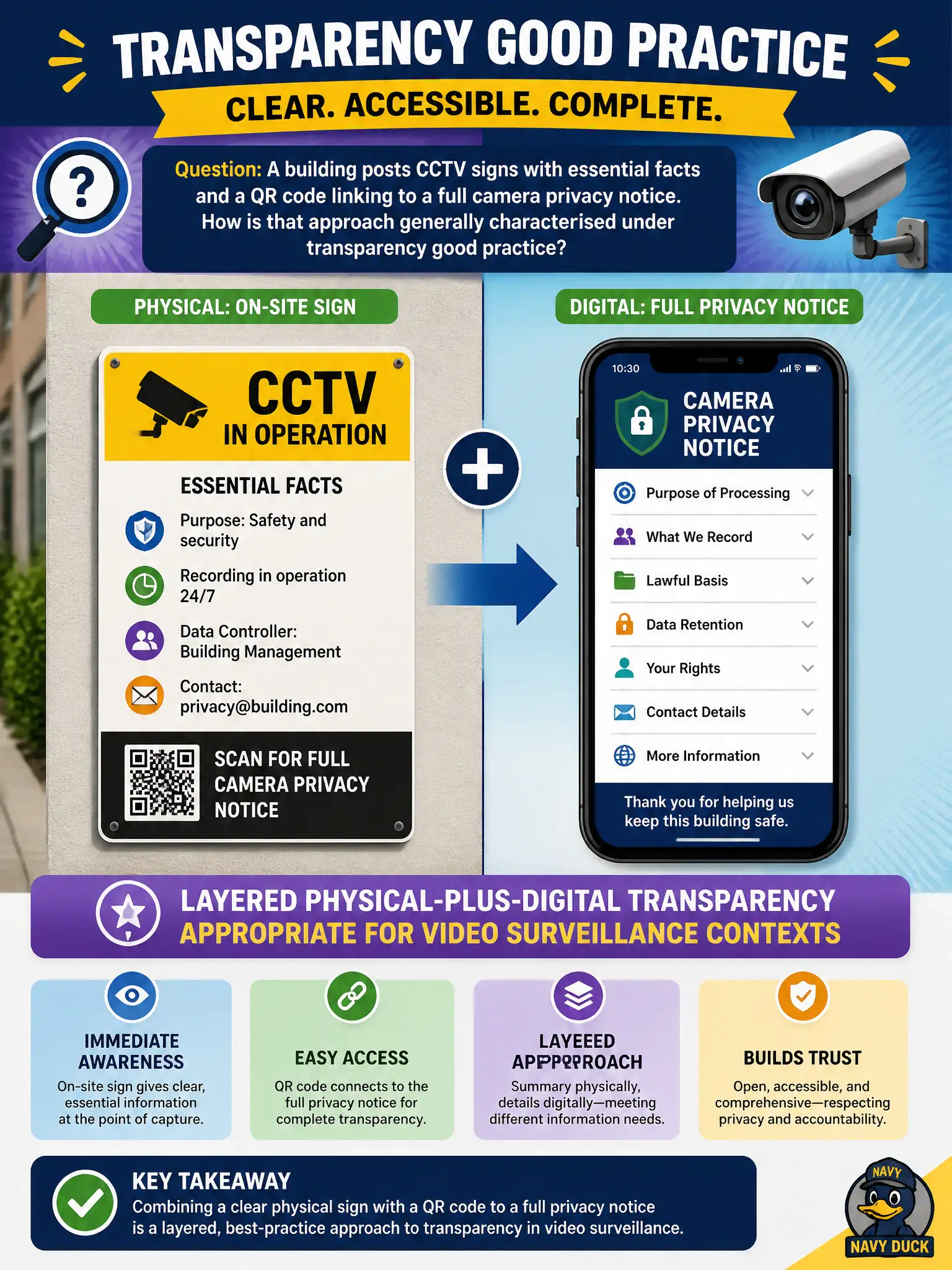
A building posts CCTV signs with essential facts and a QR code linking to a full camera privacy notice. How is that approach generally characterised under transparency good practice?
Select an answer to reveal the explanation.
Short Explanation
A sign at the door plus a link to the full story is classic layered transparency for cameras. People see the basics on site and can dig deeper. It supports notice—it does not replace needing a lawful basis.
Full Explanation
Video-surveillance transparency commonly uses layered physical-plus-digital notice: on-site signs with essential facts (controller identity, purpose snapshot, contact pathway) plus a QR code or URL to the full camera privacy notice. That approach matches Article 12’s accessibility goals in spaces where people cannot read a long policy at a doorway. Civic buildings, transit hubs, and private premises all use this pattern so residents and visitors are not left unaware of monitoring.
GDPR does not ban QR codes across Member States. Signage does not replace the need for an Article 6 lawful basis. Covert surveillance without any signage is not “always preferred”; covert monitoring is tightly constrained and often unlawful without strong justification and safeguards.
Exam caveat: signs must be truthful and the linked notice must exist and load; broken QR codes recreate a transparency failure. Special rules or DPIA expectations for systematic monitoring still apply.
Operational check: audit cameras against posted signs, test QR destinations on a phone, confirm the full notice states basis, retention, rights, and contact routes, and retire unmarked cameras or bring them into the notice programme.