
Before launching a new processing activity on legitimate interests, a privacy counsel reviews current EDPB materials on Article 6(1)(f). What is the sound reason for that step?
Select an answer to reveal the explanation.
Short Explanation
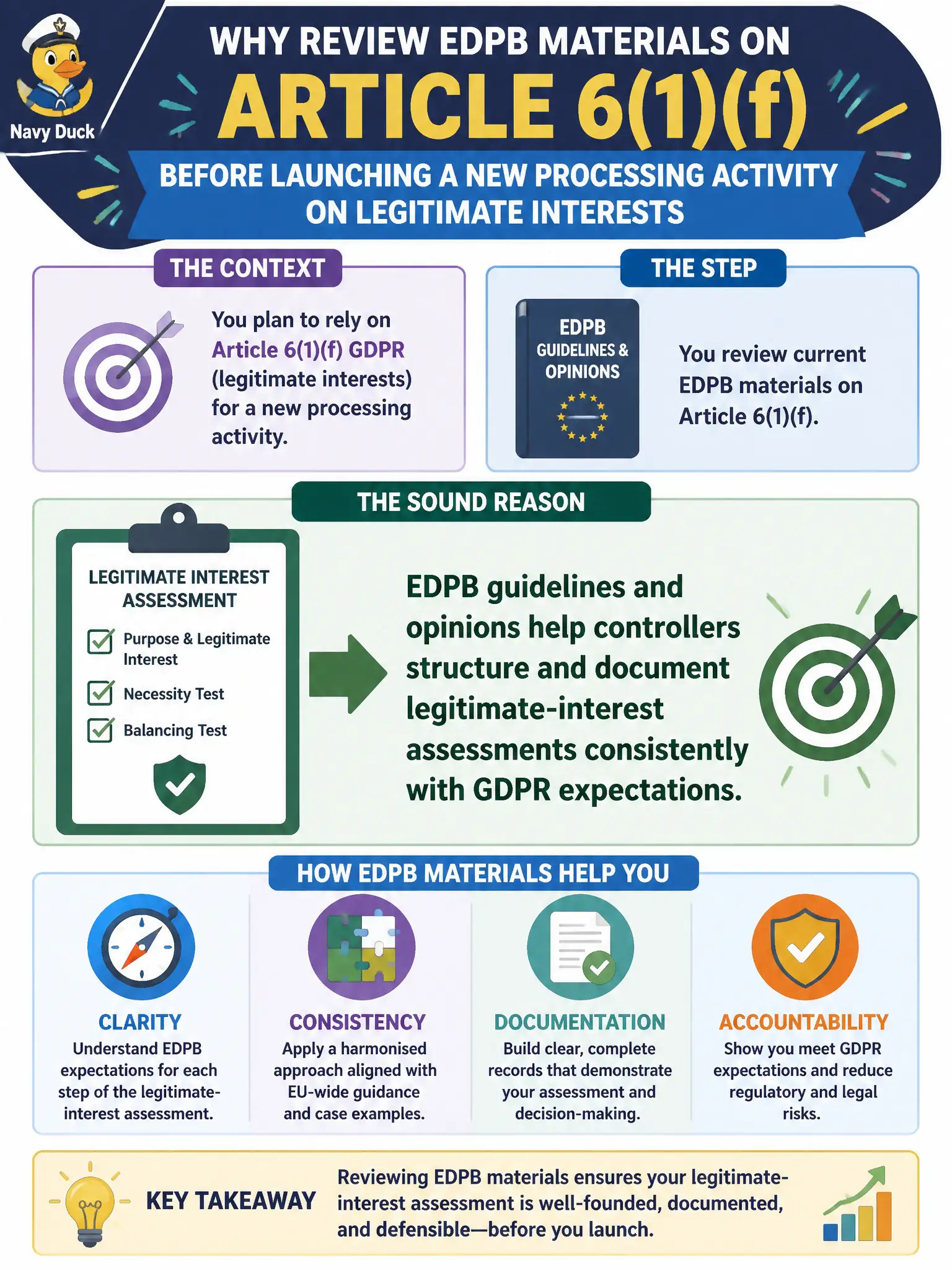
Think of EDPB guidance as the shared playbook for how to run a legitimate-interests assessment. It does not erase the law, but it helps you weigh purpose, necessity, and impact the way supervisors expect.
Full Explanation
EDPB guidelines and opinions are soft-law instruments that help controllers interpret GDPR consistently across the EEA. Before launching processing on legitimate interests, reviewing current EDPB materials on Article 6(1)(f) is sound practice because those texts explain how to structure purpose, necessity, and balancing analyses, how reasonable expectations and safeguards factor in, and how documentation should look. Municipal privacy counsel and private counsel alike use that guidance to align LIAs with supervisory expectations without treating guidance as optional colour commentary.
EDPB guidelines do not replace Member State law or remove the need for a balancing test; they help perform the test correctly. They are not binding only on US companies under the Data Privacy Framework—that framework is a transfer tool, not a limit on who may read EDPB guidance. Consulting guidance also does not create a permanent safe harbor against all fines; accountability still turns on actual compliance and evidence.
Exam caveat: know the hierarchy—GDPR and national law bind; EDPB guidance is highly influential for exams and enforcement culture but is not itself a statutory waiver. Cite guidance to improve analysis, not to claim immunity.
Operational check: attach the relevant EDPB legitimate-interest points to the LIA template, confirm the assessment addresses necessity alternatives and Article 21 objection handling, version-control the LIA, and revisit it when purposes or intrusiveness change.