
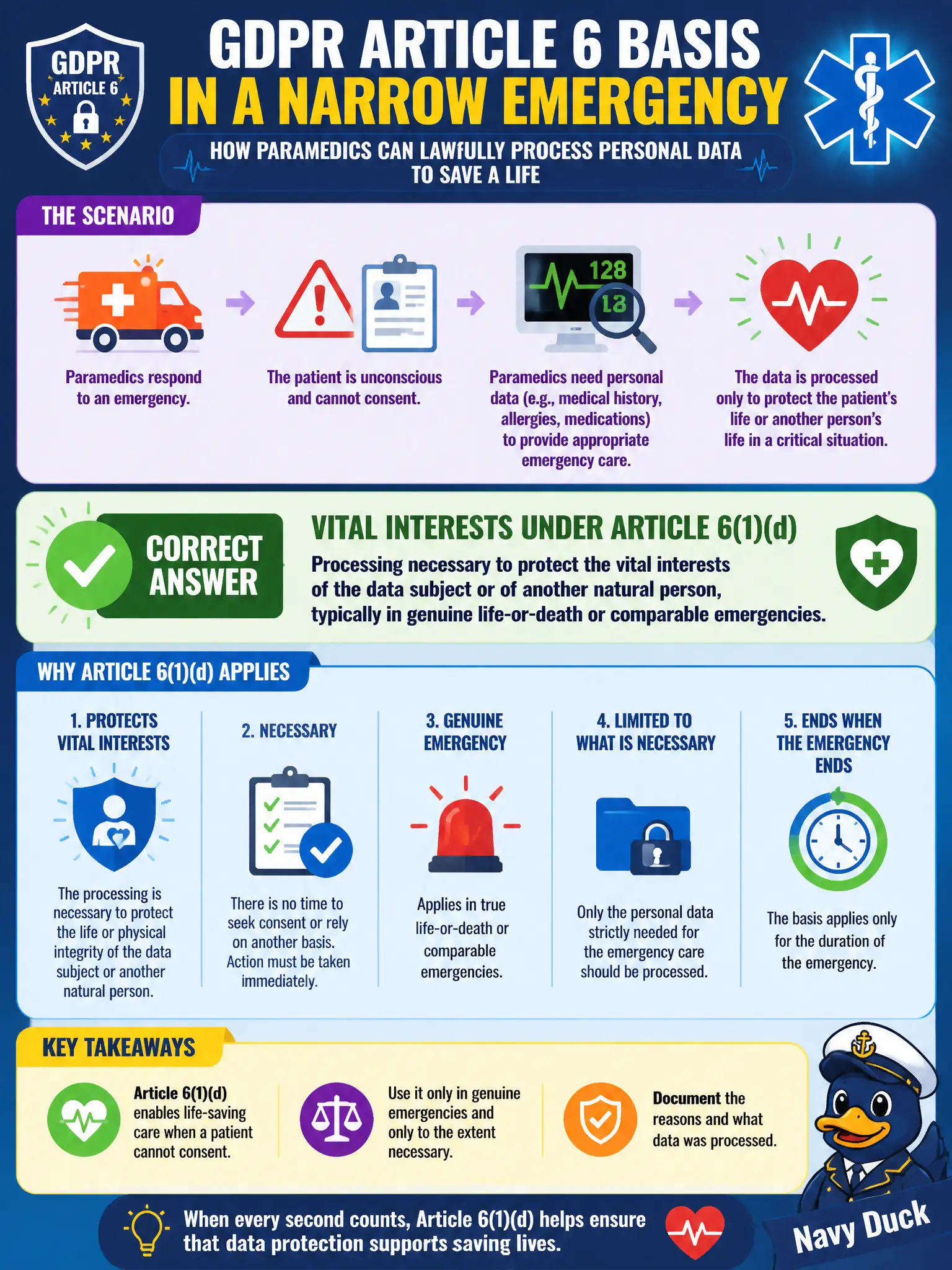
Paramedics process an unconscious patient’s personal data to provide emergency care when the patient cannot consent. Which Article 6 basis is most appropriately considered in that narrow emergency setting?
Select an answer to reveal the explanation.
Short Explanation
Unconscious patient, emergency care, no time for a consent form—that is the classic vital-interests moment. It is a narrow lane for protecting life and comparable vital stakes, not a daily marketing basis. When the patient cannot speak, protecting them comes first.
Full Explanation
Article 6(1)(d) permits processing necessary to protect the vital interests of the data subject or of another natural person. It is interpreted narrowly, typically for emergencies such as providing care when the person cannot consent. Paramedic processing of an unconscious patient’s data for emergency treatment is a textbook context; vital interests should not be stretched to routine commercial purposes.