
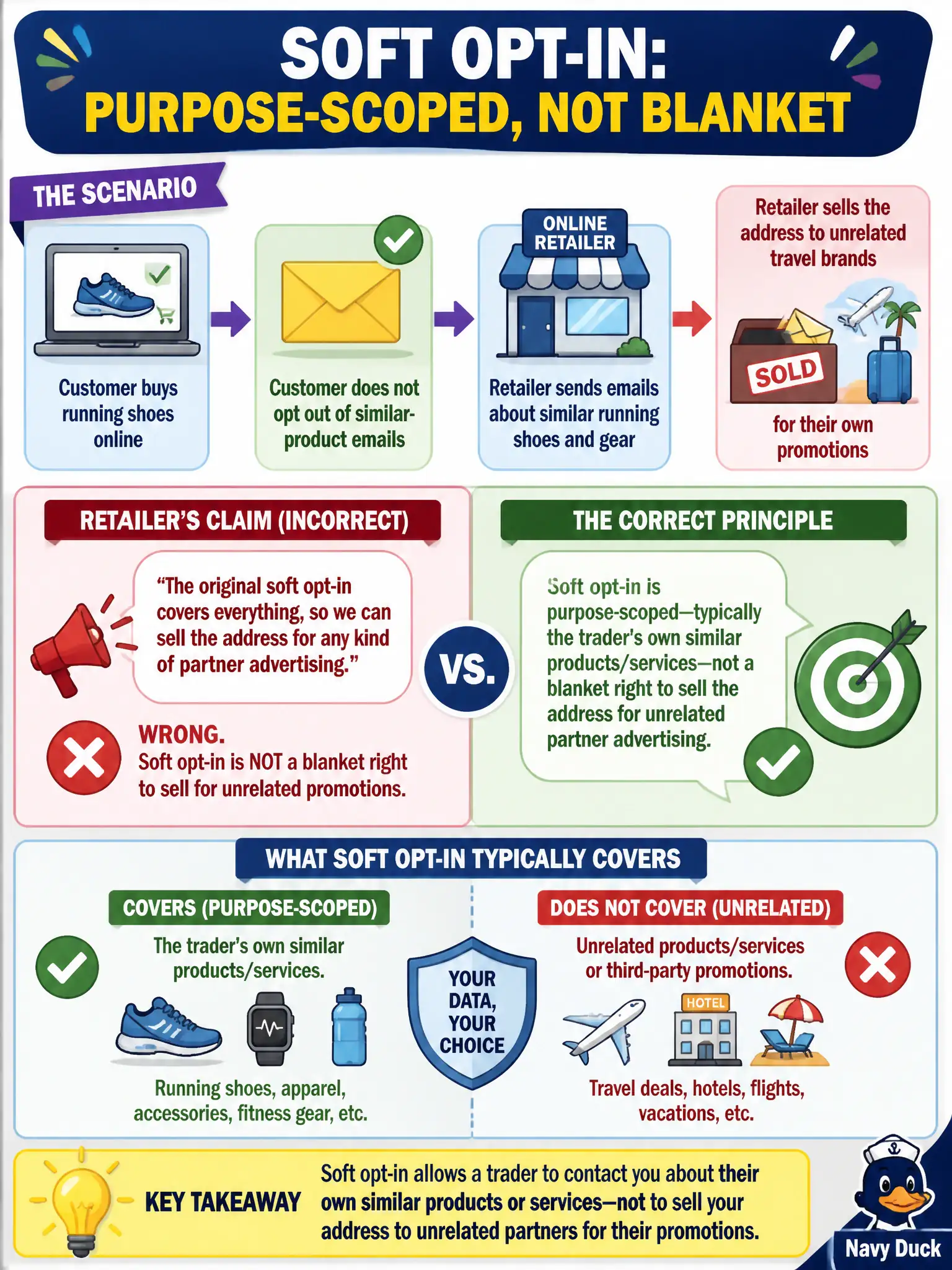
After a customer buys running shoes online and does not opt out of similar-product emails, the retailer also sells the address to unrelated travel brands for their own promotions, claiming the original soft opt-in covers everything. Which statement is correct?
Select an answer to reveal the explanation.
Short Explanation
Soft opt-in is a narrow hallway, not an airport. It usually covers your similar products to existing customers—not auctioning the inbox to every partner with a brochure. Stretching it into blanket partner spam breaks the scope.
Full Explanation
After a customer buys running shoes online and does not opt out of similar-product emails, a retailer that also sells the address to unrelated travel brands claiming the original soft opt-in covers everything is wrong: soft opt-in is purpose-scoped—typically the trader’s own similar products/services—not a blanket right to sell the address for unrelated partner advertising. Soft opt-in is a narrow hallway, not an airport. Saying soft opt-in forever authorises any partner’s email on any topic fails scope limits. Claiming partner data sales need no further consent analysis once soft opt-in attaches fails purpose and relationship boundaries. Asserting any post-purchase email is exempt from ePrivacy if the receipt PDF mentioned ‘updates’ fails when content is partner advertising beyond similar own products. Exam caveat: national soft-opt-in texts vary, but they commonly require own similar products, an existing customer relationship, and easy ongoing opt-out—not brokerage of the inbox. Operational check: confine soft-opt-in mail to own similar goods, obtain fresh consent before partner promotions or list sales, maintain suppression, and train marketers on scope boundaries. In public-interest terms, documenting the lawful analysis, assigning owners, and retaining evidence of how individuals were protected is how organisations demonstrate accountability when supervisory questions arrive.