
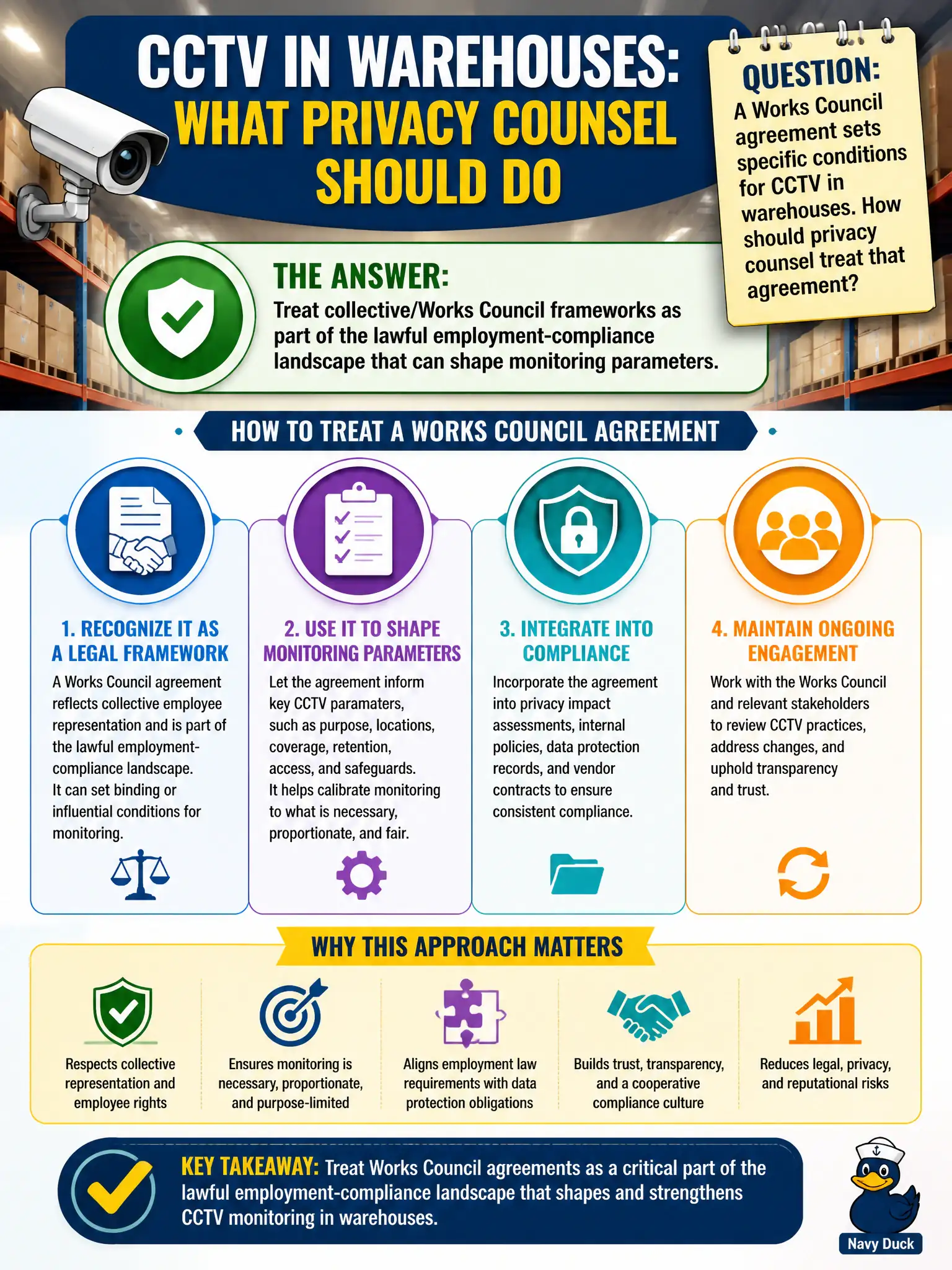
A Works Council agreement sets specific conditions for CCTV in warehouses. How should privacy counsel treat that agreement?
Select an answer to reveal the explanation.
Short Explanation
When the Works Council deal draws the CCTV lines, those lines are part of how you stay lawful at work—not decoration. GDPR still applies, but local collective rules can set the playbook. Follow both layers.
Full Explanation
When a Works Council agreement sets specific conditions for CCTV in warehouses, privacy counsel should treat collective/Works Council frameworks as part of the lawful employment-compliance landscape that can shape monitoring parameters. Agreed camera limits are operational law-in-action for the shop floor, protecting workers while still allowing legitimate security aims. Ignoring the agreement because GDPR always voids collective agreements on monitoring fails—GDPR does not automatically nullify lawful co-determination bargains. Treating it as optional colour commentary with no compliance effect fails workplace reality in Member States that empower such agreements. Using it only for union PR, never for operational monitoring rules, fails by divorcing paperwork from controls. Exam caveat: collective rules operate alongside GDPR principles; they can tighten placement, retention, and access even when a generic GDPR checklist looks ‘green.’ Operational check: encode agreement limits into camera locations, retention timers, and access lists; train security staff; audit against the agreement; and update the DPIA and notices to match the bargained parameters. In public-interest terms, documenting the lawful analysis, assigning owners, and retaining evidence of how individuals were protected is how organisations demonstrate accountability when supervisory questions arrive.