
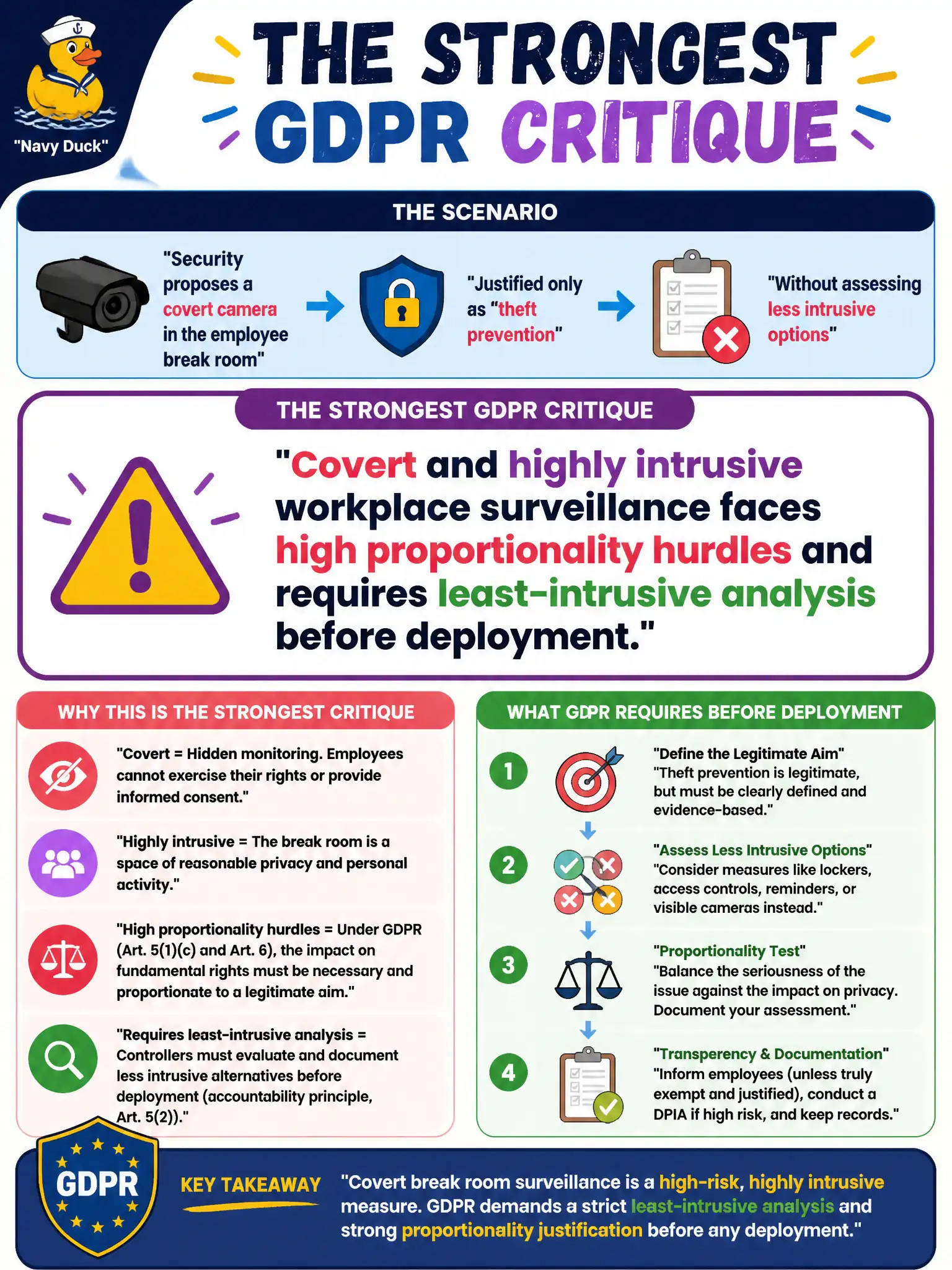
Security proposes a covert camera in the employee break room, justified only as “theft prevention,” without assessing less intrusive options. What is the strongest GDPR critique?
Select an answer to reveal the explanation.
Short Explanation
A hidden camera where people eat lunch is about as subtle as a foghorn. Theft prevention is a real goal, but you still have to ask whether something less creepy would work. Covert break-room surveillance usually fails the proportionality sniff test.
Full Explanation
Security proposing a covert camera in the employee break room, justified only as ‘theft prevention,’ without assessing less intrusive options faces the strongest critique that covert and highly intrusive workplace surveillance faces high proportionality hurdles and requires least-intrusive analysis before deployment. Hidden cameras where people rest and eat clash with reasonable privacy expectations and civic workplace dignity. Saying covert break-room cameras are always lawful if theft has ever occurred on site fails necessity analysis—past theft does not automatically justify the most intrusive tool. Claiming break rooms are never workplaces so monitoring rules never apply fails; they are still employment premises where monitoring rules bite. Treating theft-prevention labels as automatically satisfying necessity without further analysis fails proportionality methodology. Exam caveat: targeted, transparent CCTV in high-risk zones with retention limits may be justifiable; covert monitoring of private-feeling spaces is exceptional and heavily scrutinised. Operational check: inventory less intrusive alternatives (access control, inventory seals, targeted area monitoring), run a DPIA, consult worker representatives where required, avoid covert break-room plans, and document why chosen measures are necessary and proportionate.