
A housing authority keeps critical eligibility business rules only in long email threads between analysts. How should those rules become visible metadata?
Select an answer to reveal the explanation.
Short Explanation
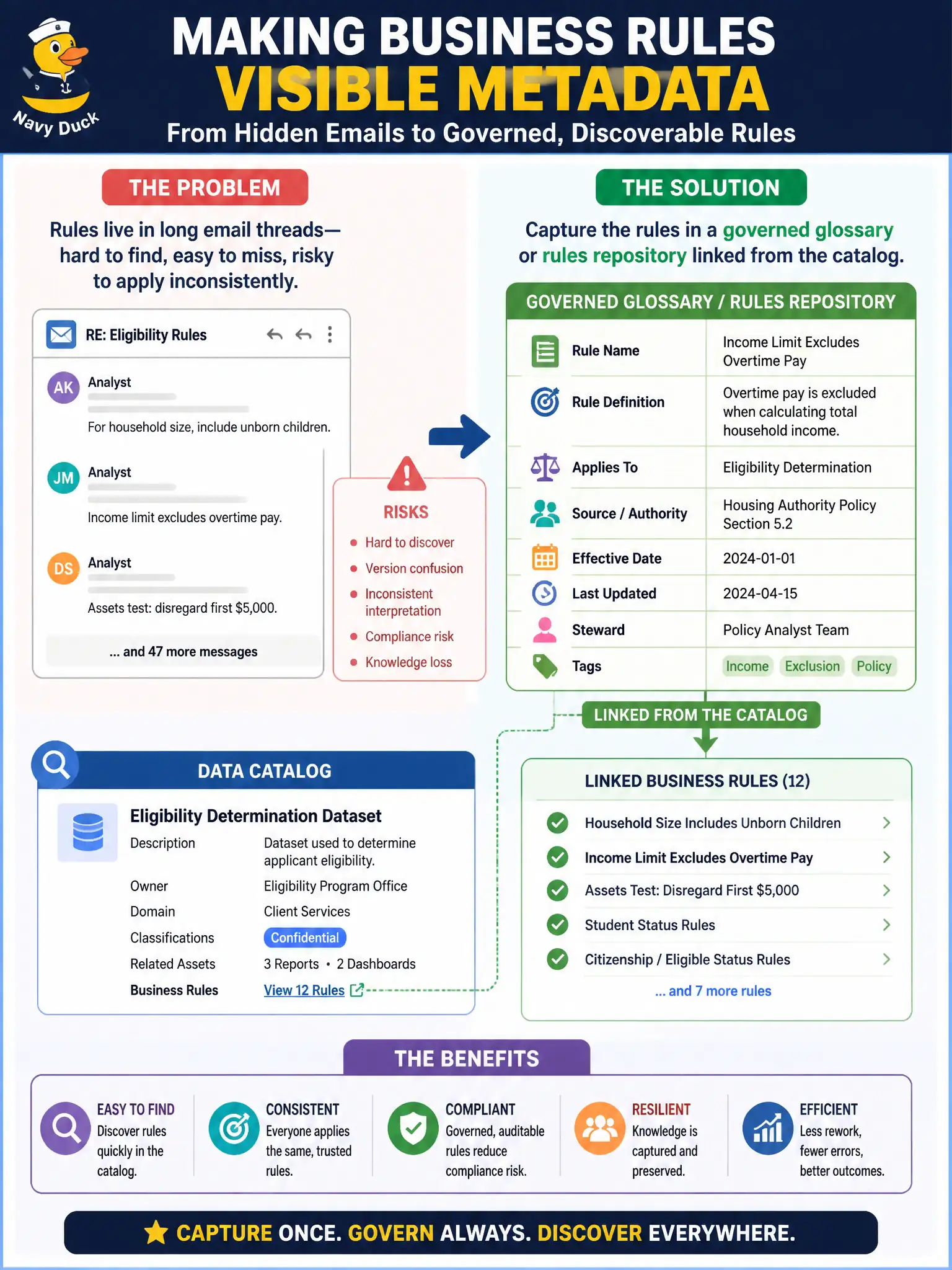
Business rules stuck in email are like fire codes written only on sticky notes—nobody can find them when it counts. Put the eligibility rules into a governed glossary or rules repository and link them from the catalog. Then every analyst sees the same official wording.
Full Explanation
Critical eligibility business rules that live only in long email threads are invisible metadata and a continuity risk for a housing authority. Those rules should be captured in a governed glossary or rules repository and linked from the catalog so staff can find the same logic that determines benefits or program qualification. Relying solely on chat screenshots in personal notebooks fails availability, audit, and succession. Printing emails annually into a locked cabinet outside the catalog separates rules from the systems people actually query. Asking each analyst to invent private rule names that never appear in shared tools guarantees conflicting eligibility interpretations. CIMP framing treats business rules as managed knowledge assets connected to data. Caveat: version and effective dating matter when policy changes; an unversioned rule blob can be as dangerous as an email thread. Operationally, inventory the eligibility decisions used in production reports, place each rule in the governed repository with an owner and effective date, link the catalog dataset to those rules, and retire email as the system of record for the logic. After capture, require eligibility reports to cite the repository rule identifier so email threads can no longer serve as an unofficial second rulebook.