
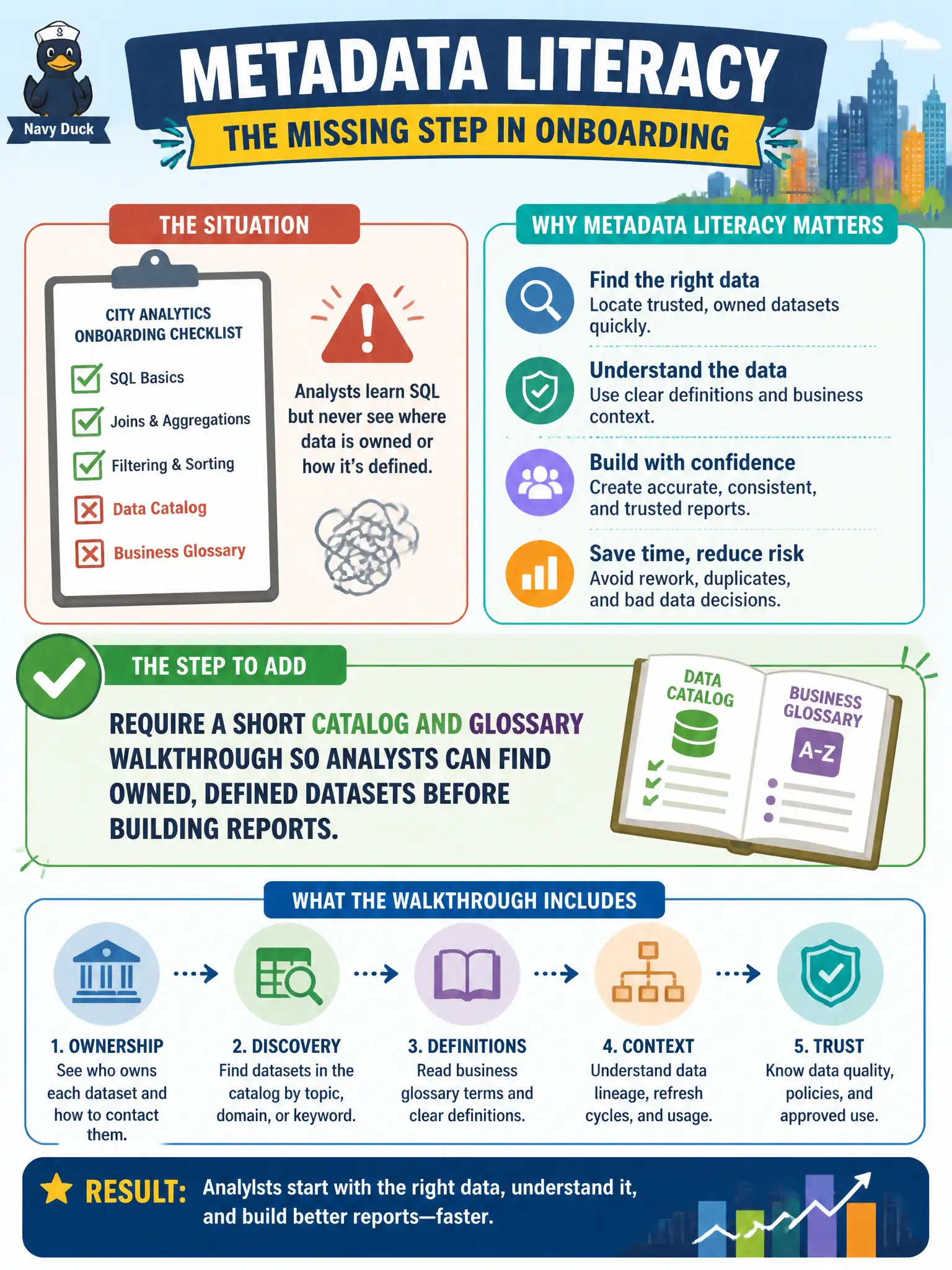
A city analytics onboarding checklist teaches new analysts SQL but never shows the data catalog or business glossary. What metadata-literacy step should the information management lead add?
Select an answer to reveal the explanation.
Short Explanation
Handing someone SQL without a catalog is like giving a library card with no map of the stacks. A quick catalog and glossary walkthrough teaches new analysts where trusted datasets live and what the terms mean. That literacy step cuts random table hunting and wrong-definition reports.
Full Explanation
Metadata literacy belongs in analytics onboarding for municipal staff, not as an optional afterthought. Teaching new analysts SQL without showing the data catalog or business glossary leaves them dependent on tribal knowledge and increases the chance they will report on unowned or poorly defined datasets. Requiring a short catalog and glossary walkthrough so analysts can find owned, defined datasets before building reports establishes a safe discovery habit aligned with information-management practice. Deleting the catalog and directing people to email warehouse admins recreates ticket bottlenecks the catalog was meant to remove. Postponing all analytics hiring until a knowledge graph replaces the glossary confuses a long-term architecture option with immediate literacy needs. Limiting onboarding to password resets ignores how definitions and ownership are discovered in civic work. On the exam, pair “new analyst onboarding” with catalog and glossary enablement rather than with tool deletion or hiring freezes. Caveat: a walkthrough must point to living governed assets; a one-time demo of a stale catalog teaches the wrong lesson. Operationally, add a checklist item that each new analyst locates a stewarded dataset for their domain, reads its glossary terms, and confirms owner and certification status before their first production report is published.