
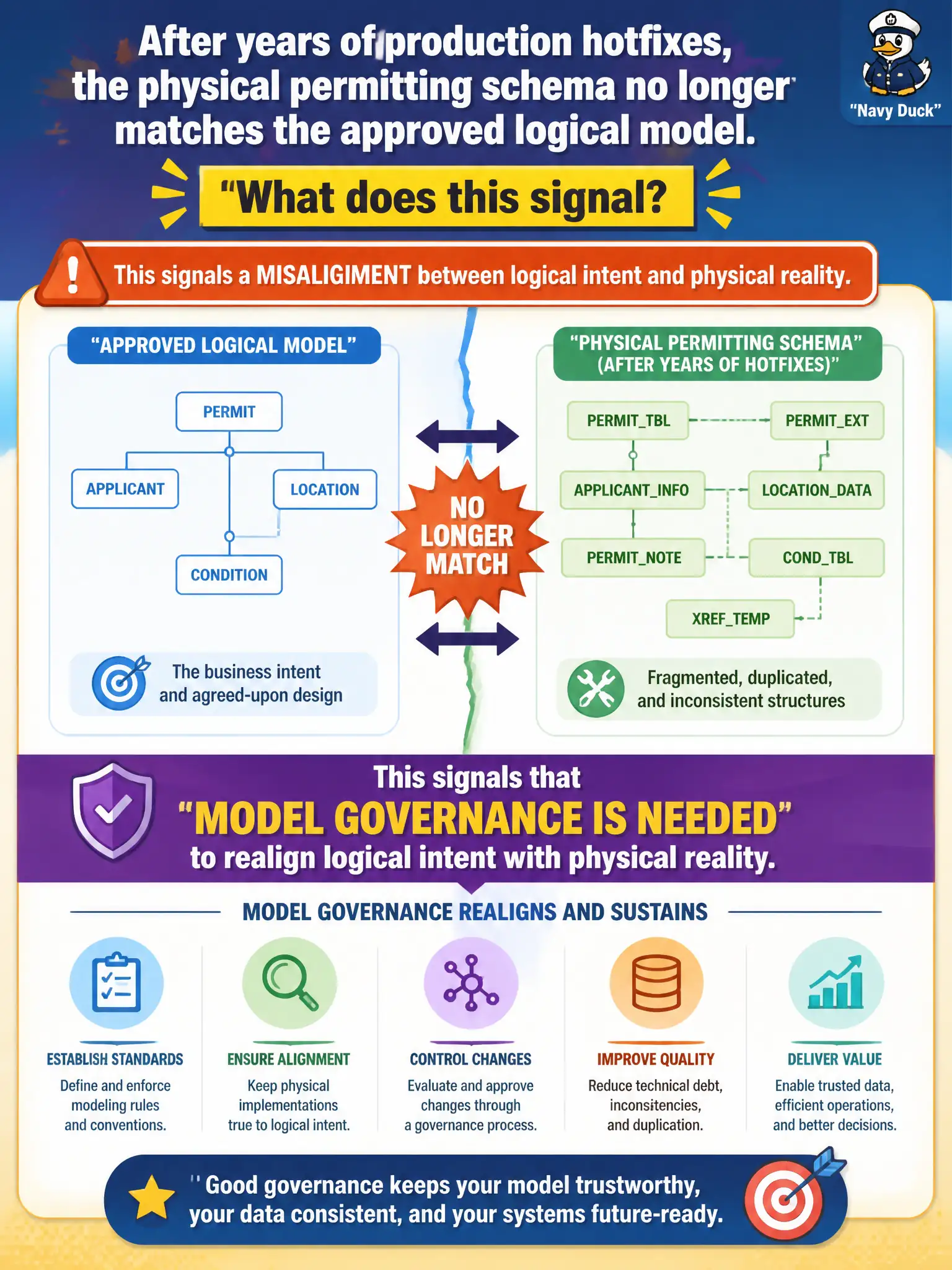
After years of production hotfixes, the physical permitting schema no longer matches the approved logical model. What does this signal?
Select an answer to reveal the explanation.
Short Explanation
When the blueprint and the building stop matching, someone has to bring them back together. Model governance is that repair job—hotfixes without updates create silent drift.
Full Explanation
When years of production hotfixes leave the physical permitting schema misaligned with the approved logical model, the signal is that model governance is required to realign logical intent with physical reality. Drift without review means documentation lies, impact analysis misses consumers, and new features build on accidental structures. Discarding logical models permanently after any hotfix abandons the design contract. Treating physical drift as always desirable accelerates chaos. Governing only UI color themes while schemas diverge misses the data architecture problem. Exam language ties schema drift to governance of models across levels. Caveat: some physical deviations are justified for performance, but they must be documented and approved as intentional exceptions, not silent hotfixes. Operationally, diff the live permitting schema against the logical model, log variances, assign stewards to accept or remediate each, and require model review before further structural changes. Re-alignment may include updating the logical model to reflect intentional physical choices or refactoring physical structures back to approved intent; either path requires documented decisions, not silent drift.