
Business licenses must attach to legal entities while inspections occur at branch locations. What MDM modeling need does this create?
Select an answer to reveal the explanation.
Short Explanation
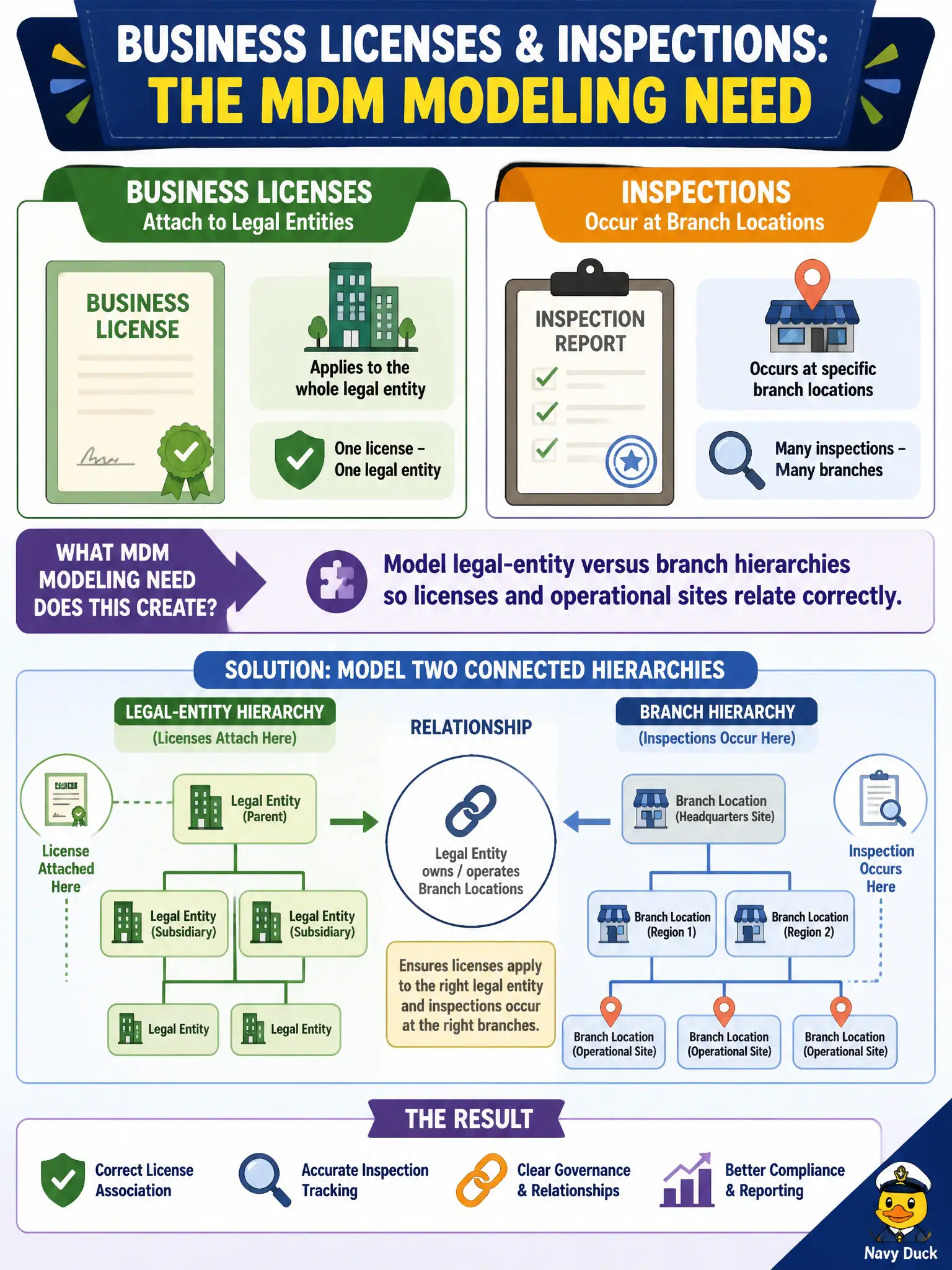
HQ isn’t the same as the corner store. Licenses hang on legal entities; fieldwork hits branches—so model that hierarchy.
Full Explanation
Business licenses that must attach to legal entities while inspections occur at branch locations create an MDM modeling need to represent legal-entity versus branch hierarchies so licenses and operational sites relate correctly. Civic regulatory processes span entity and site levels. Collapsing every branch into one anonymous free-text note with no identifiers fails structured relationships. Issuing one license ID that randomly rotates among unrelated parties each night destroys identity stability. Forbidding any relationship links between party records in the hub prevents the required hierarchy. Exam caveat: party hierarchy (legal entity vs site/branch) is a common MDM modeling requirement. Operational check: model legal entity–branch relationships, bind licenses to entities and inspections to sites, and test traversals used by inspectors. Validate hierarchy samples with licensing stewards before municipal cutover. Keep verification evidence with the municipal runbook so audits can prove the chosen control was applied as designed and that rejected alternatives would have left city services exposed to the failure modes described above. Keep verification evidence with the municipal runbook so audits can prove the chosen control was applied as designed and that rejected alternatives would have left city services exposed to the failure modes described above.