
Stewards merge two parties and later prove the merge was wrong. What capability must the MDM design provide?
Select an answer to reveal the explanation.
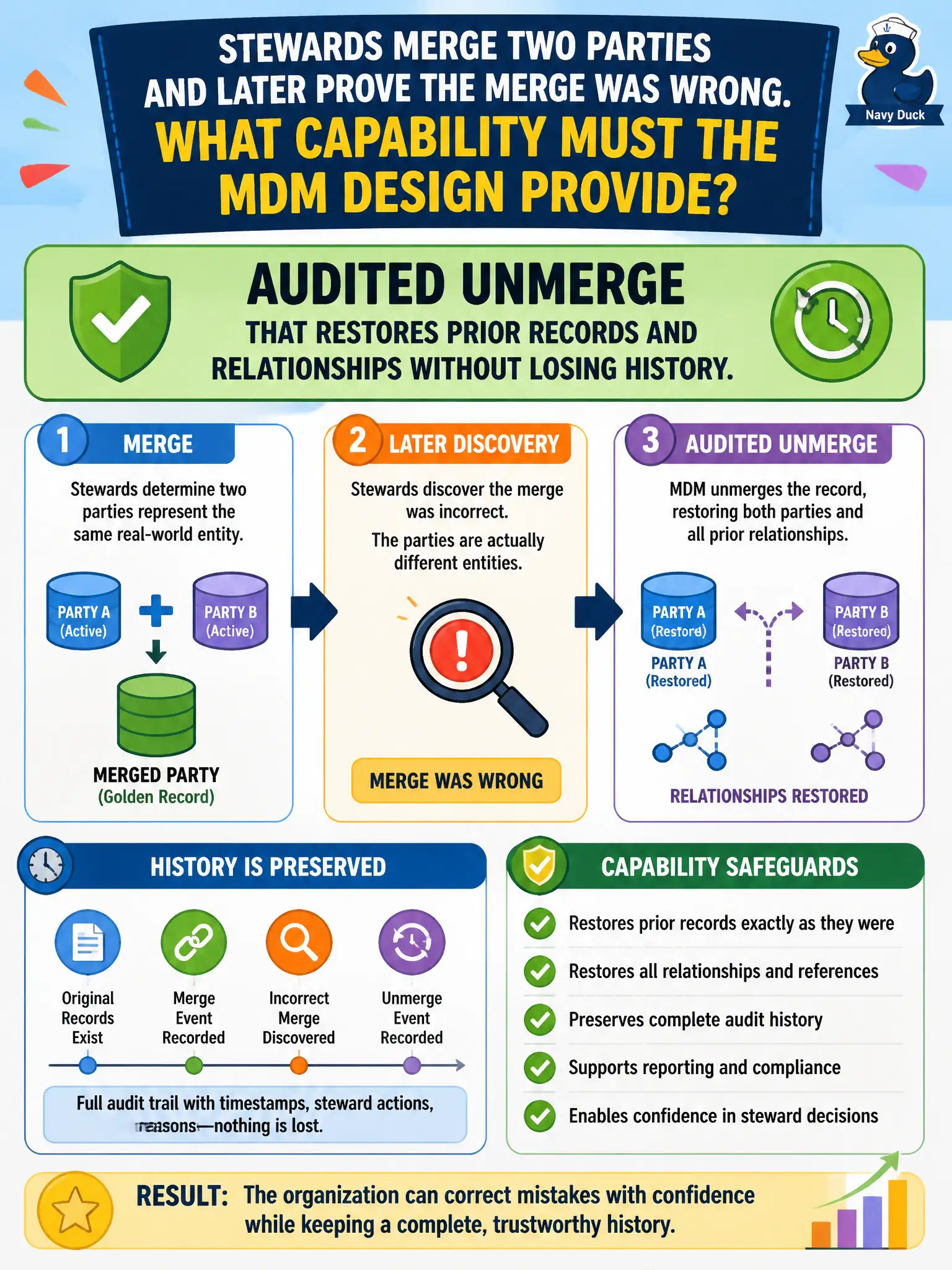
Short Explanation
False merges happen—like stapling two different people into one folder. You need an unmerge that pulls them apart again and leaves an audit trail.
Full Explanation
When stewards merge two parties and later prove the merge was wrong, MDM design must provide audited unmerge that restores prior records and relationships without losing history. Civic identity errors are inevitable; recovery must be first-class. Permanent hard-delete of both records with no recovery path fails safety and audit. Manual recreation from memory with no system trail fails integrity and repeatability. Hiding the error by changing only the display name on the surviving record fails to restore the correct party separation and relationships. Exam caveat: unmerge / undo-merge with audit trail is a required MDM capability theme. Operational check: test unmerge in non-production with relationship restore checks, require dual control for production unmerge, and retain the audit log. Include unmerge drills in the municipal MDM runbook so stewards are not improvising under resident complaint pressure. Keep verification evidence with the municipal runbook so audits can prove the chosen control was applied as designed and that rejected alternatives would have left city services exposed to the failure modes described above. Keep verification evidence with the municipal runbook so audits can prove the chosen control was applied as designed and that rejected alternatives would have left city services exposed to the failure modes described above.