
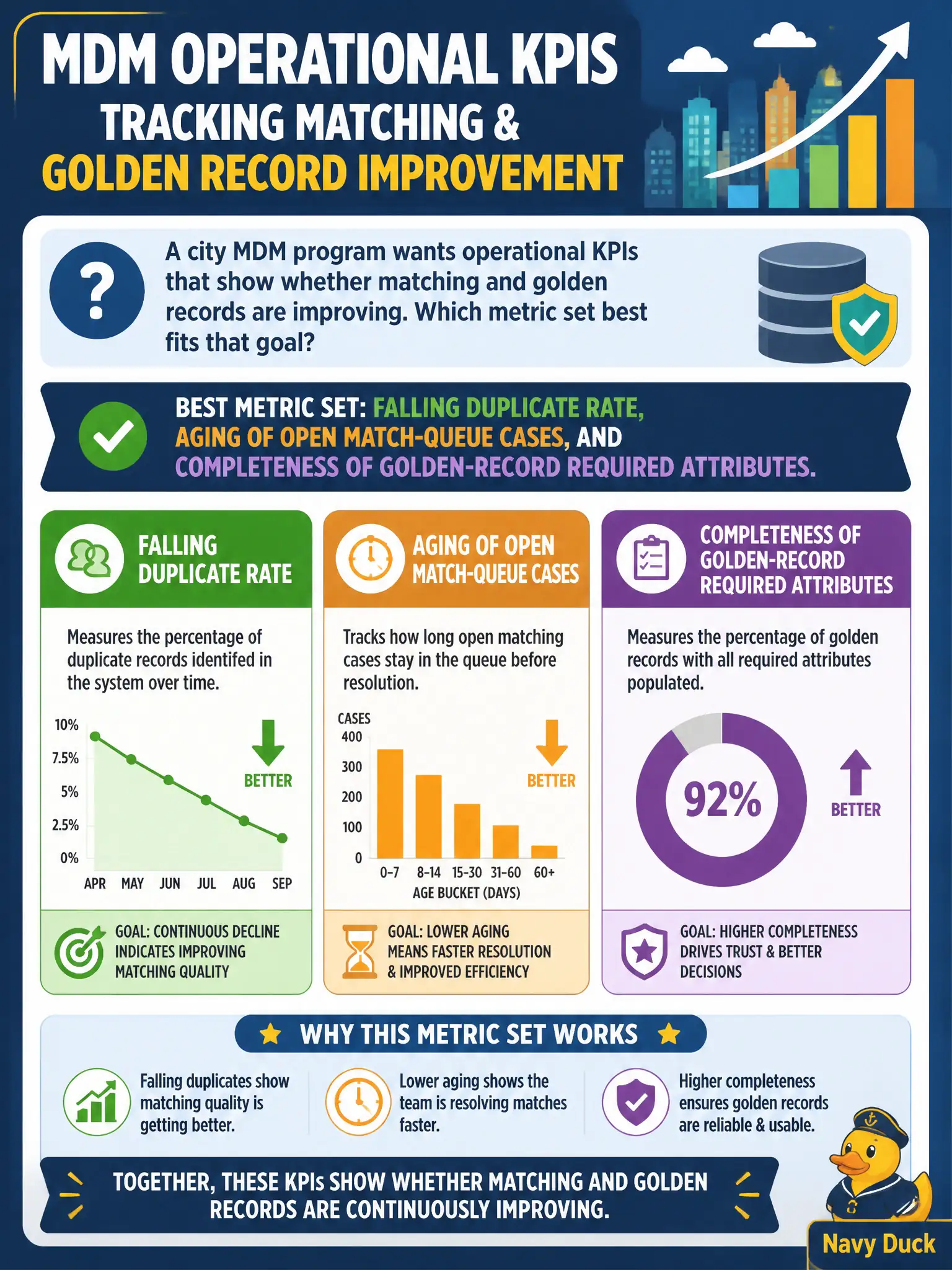
A city MDM program wants operational KPIs that show whether matching and golden records are improving. Which metric set best fits that goal?
Select an answer to reveal the explanation.
Short Explanation
Think dashboard for the shop floor, not the gift shop. Duplicate rate, how long suspects sit in the queue, and whether golden records have the fields they need tell you if MDM is actually working.
Full Explanation
Operational KPIs that show whether matching and golden records are improving should emphasize falling duplicate rate, aging of open match-queue cases, and completeness of golden-record required attributes. Those metrics tie directly to civic MDM outcomes residents and stewards feel. Tracking only steward headcount and MDM tool brand fails as input vanity rather than outcome health. CPU utilization of overnight ETL and backup tape counts fail as infrastructure metrics disconnected from master quality. Marketing open rates and parking-app downloads fail as unrelated digital engagement numbers. Exam caveat: MDM health metrics center on duplicates, queue aging, and golden completeness—not tool logos or server CPU. Operational check: baseline duplicate rate and queue age, set targets, dashboard weekly for stewards and sponsors, and escalate stalled queues to the data council. Publish the municipal KPI definitions so vendors cannot redefine success as license utilization alone. Keep verification evidence with the municipal runbook so audits can prove the chosen control was applied as designed and that rejected alternatives would have left city services exposed to the failure modes described above.