
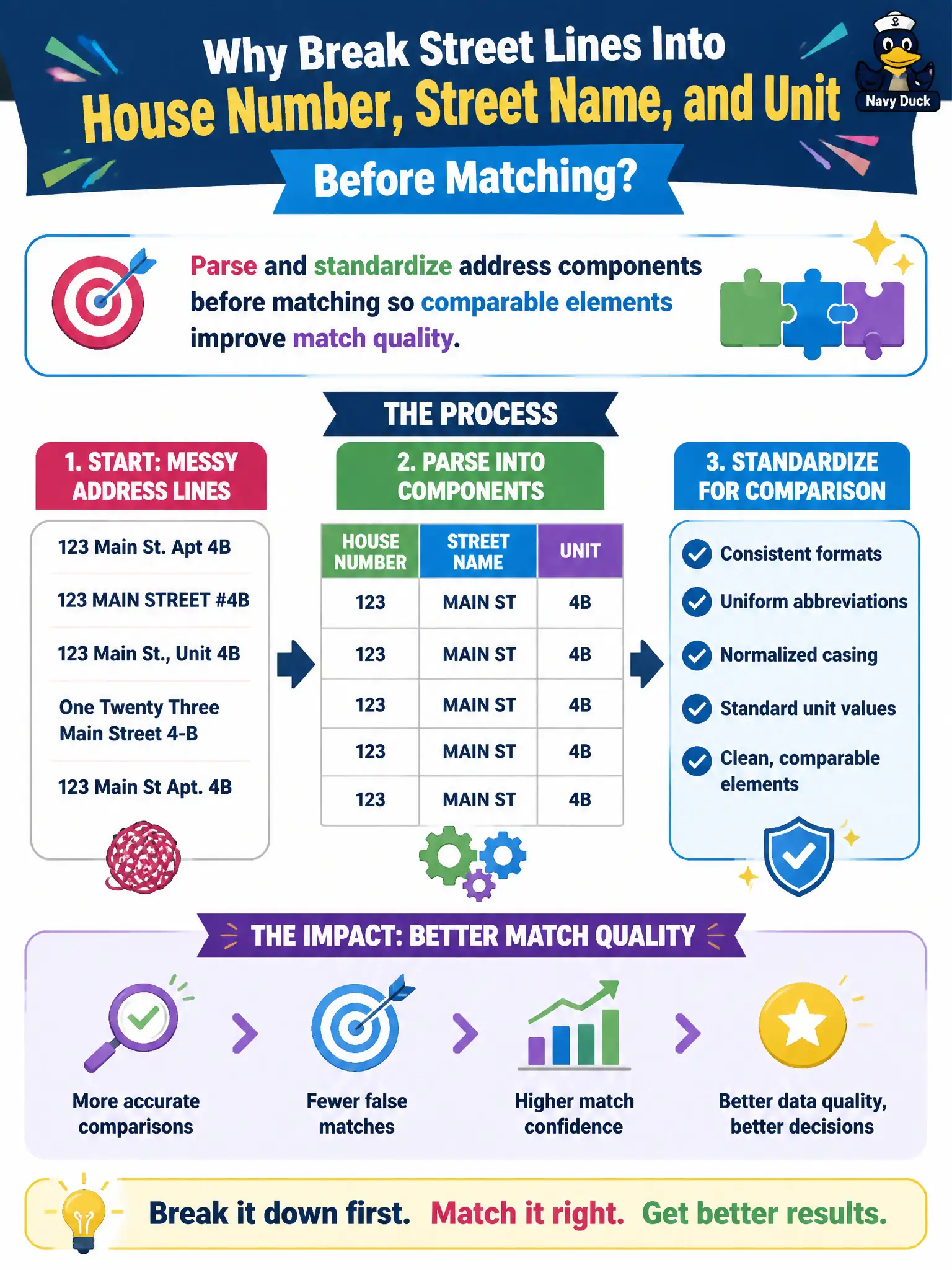
Before comparing parcel and mailing addresses for resident matching, the team breaks street lines into house number, street name, and unit. Why is that step important?
Select an answer to reveal the explanation.
Short Explanation
Matching messy free-text addresses is like comparing two grocery lists written on napkins—sort the eggs from the flour first. Parsing house number, street, and unit puts like pieces next to like pieces. Clean parts make the match engine far less confused.
Full Explanation
Breaking street lines into house number, street name, and unit before comparing parcel and mailing addresses matters because parsing and standardizing address components before matching improves comparable elements and match quality. Civic address noise is rampant; whole-string compares bury true matches. Claiming parsing is only for GIS layers and has no MDM effect fails; match engines benefit directly from standardized components. Saying street parsing replaces survivorship or stewardship after a match fails because parsing is a prep step, not a governance substitute. Claiming parsing guarantees every address pair will auto-merge without a confidence threshold fails; standardization improves signals but does not eliminate uncertainty or review needs. Exam caveat: parse/standardize before match is a core MDM data-preparation theme. Operational check: apply parsing and postal standardization to sample parcel and mailing sets, compare match rates before and after, and retain reject reports for steward cleanup. Include address standardization in the municipal MDM runbook ahead of party match jobs. Keep verification evidence with the municipal runbook so audits can prove the chosen control was applied as designed and that rejected alternatives would have left city services exposed to the failure modes described above.