
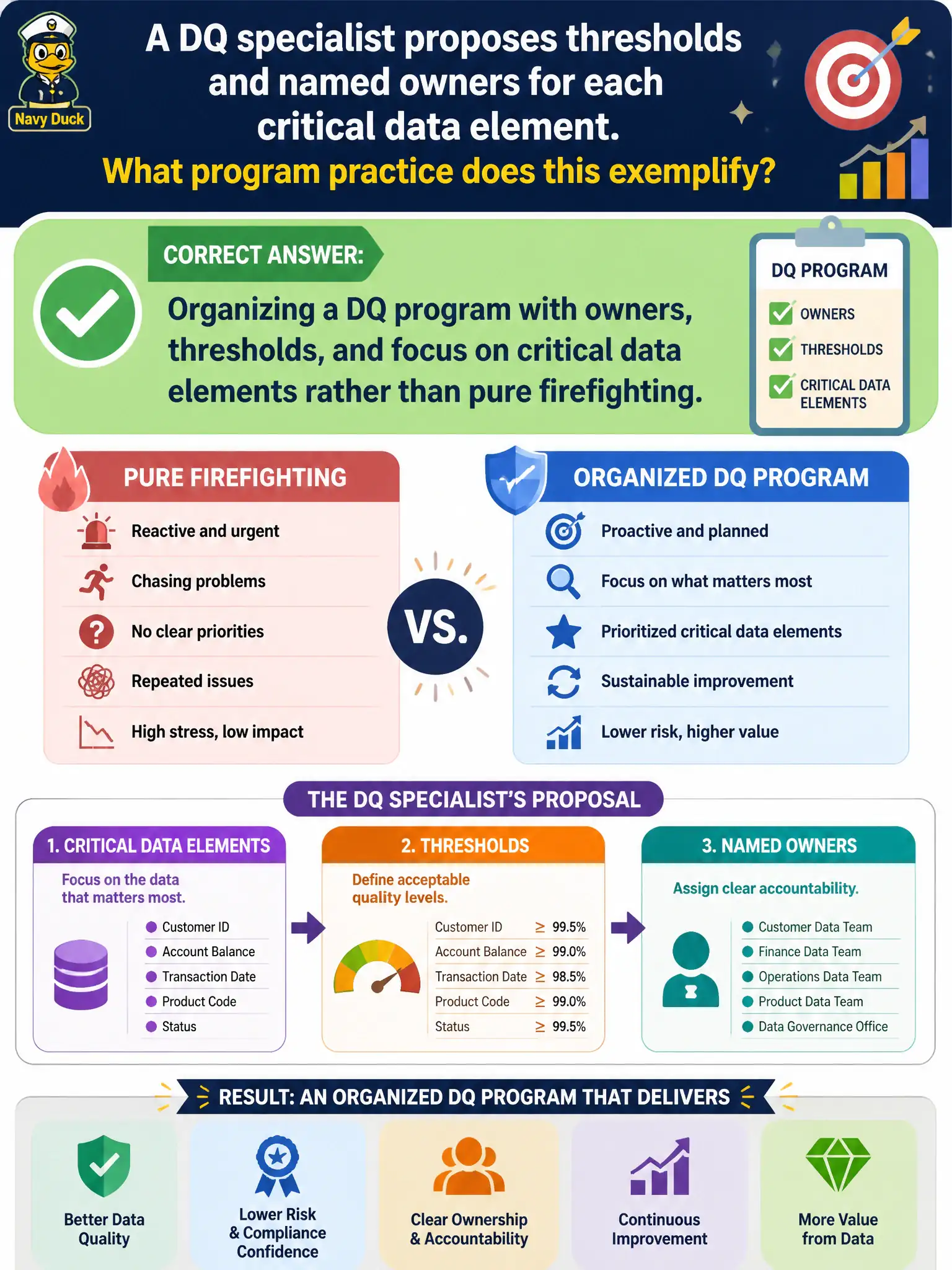
A DQ specialist proposes thresholds and named owners for each critical data element. What program practice does this exemplify?
Select an answer to reveal the explanation.
Short Explanation
Owners and thresholds turn quality from a panic sport into a managed program—someone owns the score and knows what 'good' means. Critical data elements get the spotlight first. That is organization, not heroics.
Full Explanation
A durable DQ program organizes around named owners, explicit thresholds, and focus on critical data elements rather than pure firefighting. When a DQ specialist proposes thresholds and named owners for each critical data element across municipal systems, that exemplifies program design: prioritized scope, accountability, and measurable targets. Ad-hoc firefighting with no durable ownership model may close today's ticket but does not build institutional capability when staff rotate. Replacing all measurement with informal hallway conversations fails auditability, continuity, and fairness across departments. Eliminating critical data elements so thresholds become unnecessary abandons risk-based prioritization of billing, safety, and regulatory fields. Exam caveat: not every column needs CDE-level rigor; over-scoping dilutes attention and breeds scorecard fatigue in city programs. Operational check: publish a CDE register with owner, dimension, threshold, and measurement job; review exceptions weekly with stewards; escalate repeated breaches to the governance forum. Municipal programs should start with a short CDE list tied to resident-facing and compliance outcomes before expanding into lower-risk attributes.