
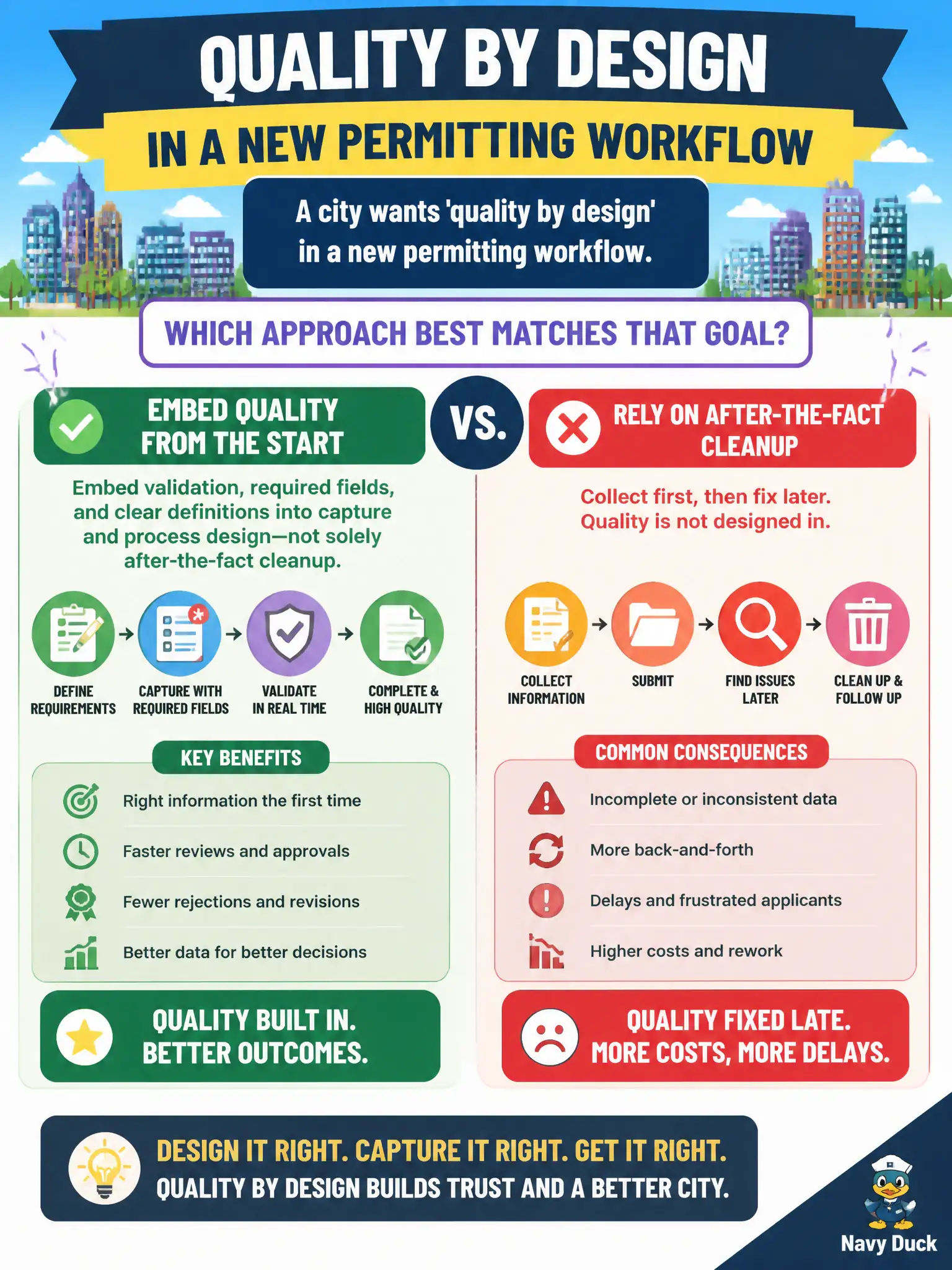
A city wants 'quality by design' in a new permitting workflow. Which approach best matches that goal?
Select an answer to reveal the explanation.
Short Explanation
Quality by design is building the guardrails into the road, not hiring more tow trucks later. Put required fields, validations, and clear definitions at capture. Cleanup still helps, but design should do the heavy lifting.
Full Explanation
Quality by design embeds validation, required fields, clear definitions, and referential checks into capture and process design—not solely into after-the-fact cleanup. A city that wants quality by design in a new permitting workflow should build those controls into forms, status transitions, APIs, and integrations before go-live. Relying only on quarterly scrapes to repair whatever staff entered incorrectly is reactive cleansing and leaves residents waiting while defects accumulate. Disabling all form edits so no new permits can introduce defects also stops legitimate progress and is not a sustainable municipal control pattern. Postponing any quality controls until five years of production data accumulate guarantees a costly remediation backlog and weak analytics for council. Exam caveat: quality by design still needs monitoring after go-live; embedded controls reduce but do not eliminate measurement, issue management, and stewardship. Operational check: in the permitting design review, list critical fields, requiredness, allowed codes, and referential checks; verify enforcement in the UI and API; and record DQ acceptance as a go/no-go gate. Civic permitting sponsors should treat those acceptance criteria with the same seriousness as functional demos before cutting over public-facing services.