
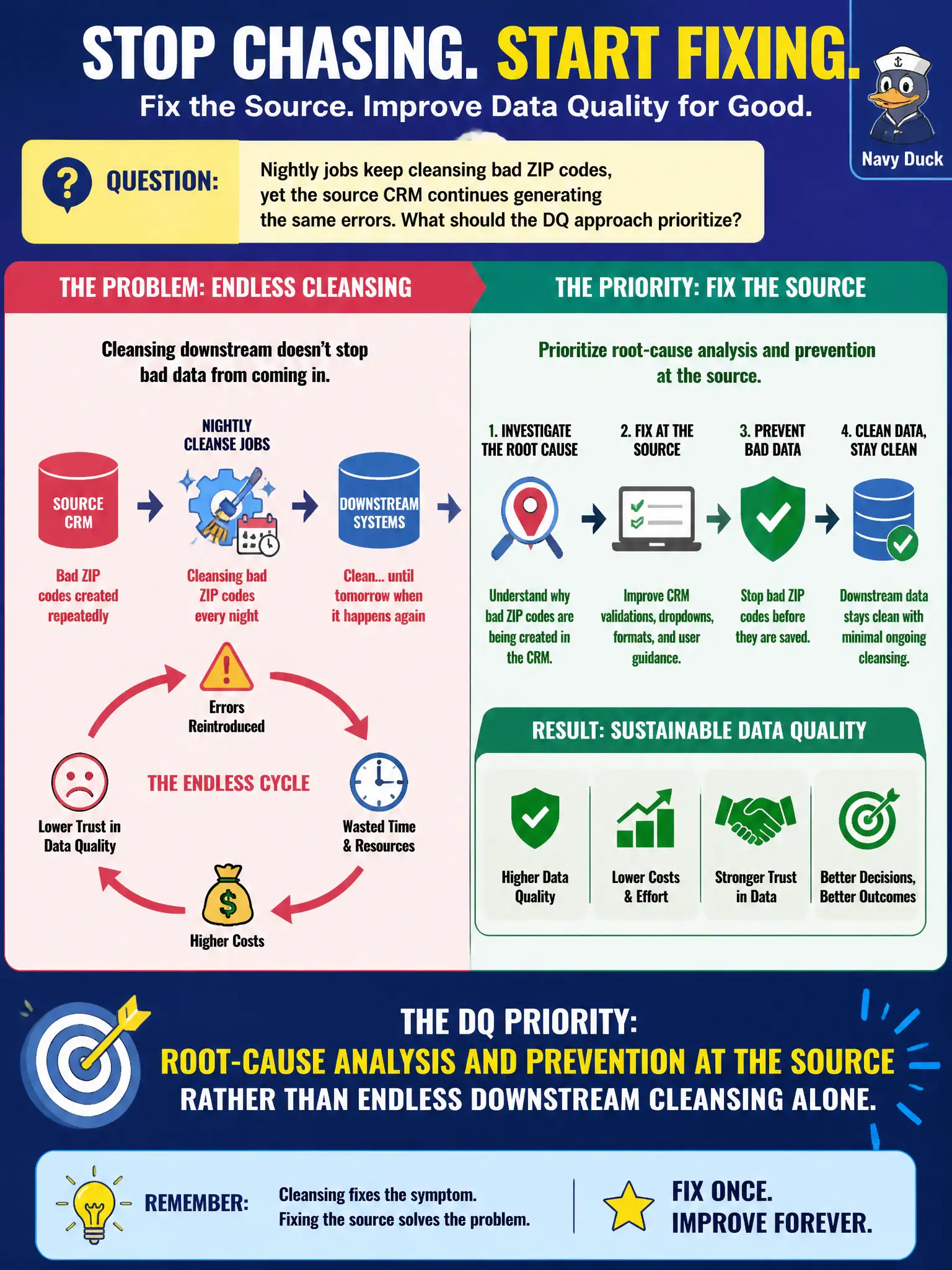
Nightly jobs keep cleansing bad ZIP codes, yet the source CRM continues generating the same errors. What should the DQ approach prioritize?
Select an answer to reveal the explanation.
Short Explanation
Mopping the floor every night while the pipe still leaks is exhausting and temporary. Fix the CRM behavior that creates bad ZIPs, not just the warehouse puddle. Root cause beats perpetual cleanup.
Full Explanation
Sustainable data quality prioritizes root-cause analysis and prevention at the source rather than endless downstream cleansing alone. If nightly jobs keep cleansing bad ZIP codes while the source CRM continues generating the same errors, the DQ approach must move upstream to capture controls, validation, and process design in the civic CRM. Increasing the number of nightly cleanup scripts without inspecting capture controls scales cost and runtime without reducing the inflow of defects. Hiding bad ZIPs from reports while leaving source generation unchanged forever creates dual realities for call centers and audit risk for regulators. Declaring cleansing successful because the warehouse looks clean each morning confuses temporary cosmetics with durable quality improvement. Exam caveat: tactical cleansing may still be needed to protect residents during a prevention project—pair it with a dated plan and owner to fix the source. Operational check: sample recurring ZIP defects by CRM entry path, add format and reference validation on save, redesign confusing form fields, and watch recurrence rate for two billing cycles after the change. Municipal CRM product owners should include ZIP prevention metrics in release acceptance so warehouse teams are not the permanent cleanup crew for city services.