
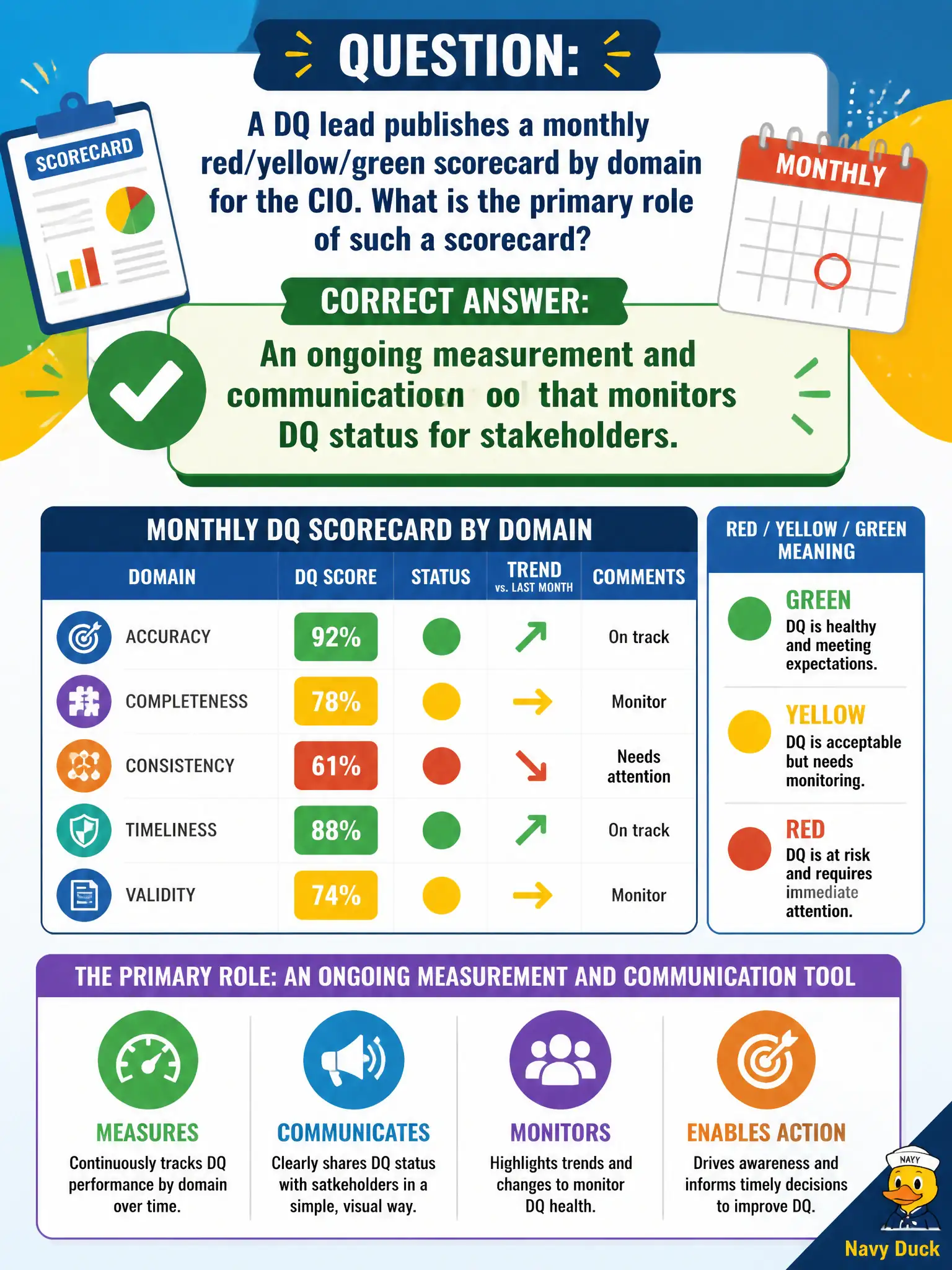
A DQ lead publishes a monthly red/yellow/green scorecard by domain for the CIO. What is the primary role of such a scorecard?
Select an answer to reveal the explanation.
Short Explanation
A scorecard is the monthly weather report for data—not a framed diploma you hang once. It keeps status visible so leaders can steer. Red/yellow/green only helps if you keep measuring.
Full Explanation
DQ scorecards are ongoing measurement and communication tools that monitor status for stakeholders such as a municipal CIO or department directors. A monthly red/yellow/green scorecard by domain should track trends, owners, and thresholds so leadership can see where civic data risks concentrate. Treating the scorecard as a one-time audit binder that is never updated after the first quarter abandons continuous monitoring and leaves new defects invisible. Using the scorecard as a substitute for owning critical data elements or setting thresholds creates colorful theater without operable controls. Calling it a legal certificate that permanently retires all quality defects overclaims what a management dashboard can accomplish in public-sector operations. Exam caveat: colors without definitions, owners, and linked issues do not constitute a management system; scorecards must connect to stewardship action. Operational check: publish domain definitions and thresholds beside the scorecard, assign an owner per red cell, require linked DQ issues with due dates, and review trends in a monthly civic data forum. City leadership should ask which critical elements moved and why—not only whether the overall tile is green—before accepting the monthly report as evidence of control.