
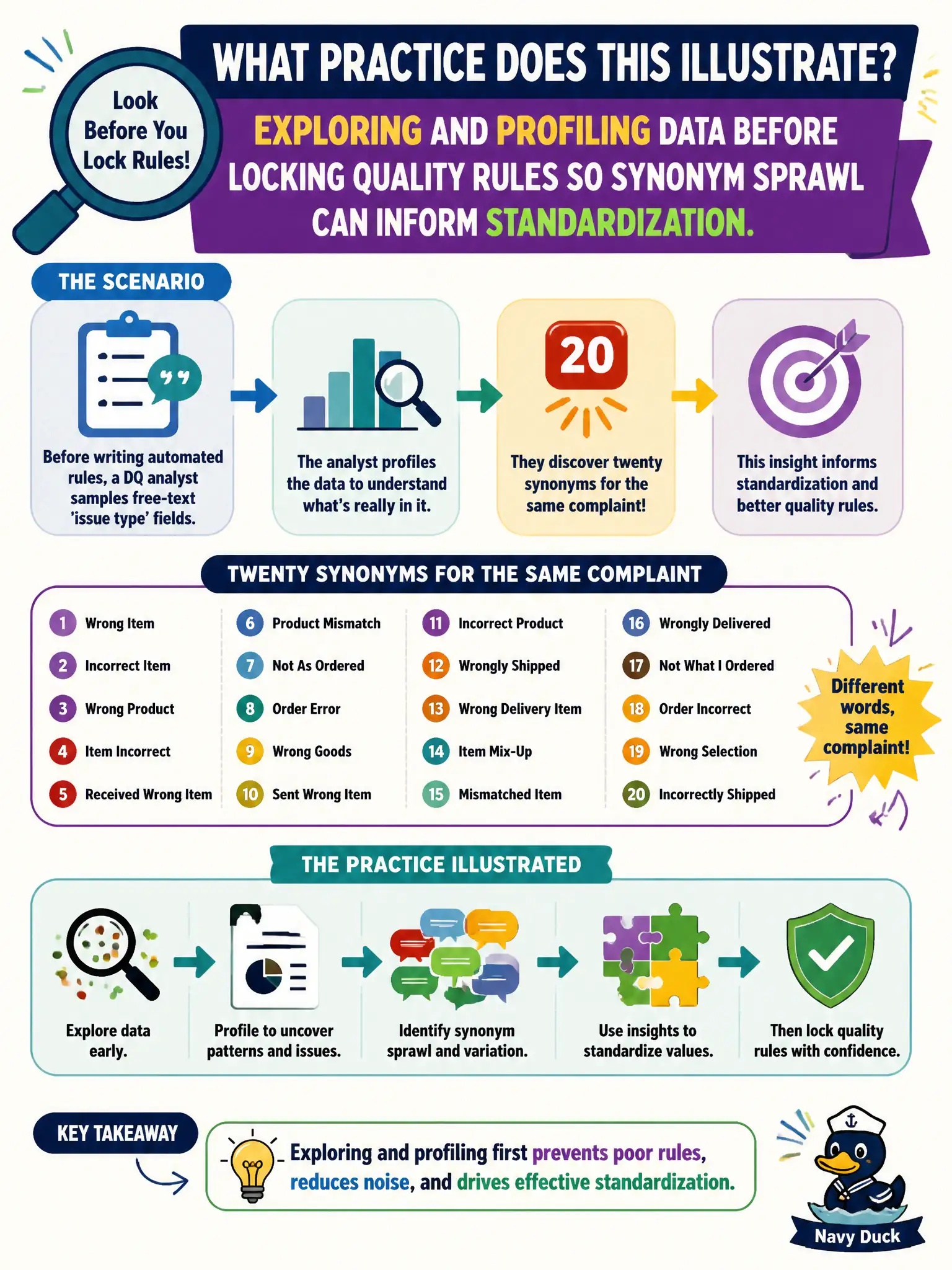
Before writing automated rules, a DQ analyst samples free-text 'issue type' fields and finds twenty synonyms for the same complaint. What practice does this illustrate?
Select an answer to reveal the explanation.
Short Explanation
Twenty ways to say 'pothole' is a goldmine if you look before you automate—and a mess if you freeze rules first. Explore the language people actually use, then design standards. Discovery before automation saves rework.
Full Explanation
Exploring and profiling data before locking quality rules lets synonym sprawl and vocabulary variation inform standardization. When a DQ analyst samples free-text 'issue type' fields and finds twenty synonyms for the same complaint before writing automated rules, that practice is deliberate exploration—not a skippable nicety. Skipping exploration because synonym sprawl is 'never' a quality concern leaves rules brittle and dashboards fragmented across civic 311 categories. Immediately deleting all free-text fields eliminates useful narrative and may be operationally impossible; standardization or controlled vocabularies are usually better. Publishing a CIO scorecard with no underlying measurement of the field creates vanity governance without evidence. Exam caveat: exploration informs rules; it does not replace them—after synonyms are mapped, enforce a preferred term list at capture where feasible. Operational check: build a synonym map from the sample, propose a controlled list with the service steward, pilot validation on new tickets, and only then automate scoring. Municipal customer-service programs should version the issue-type list so historical synonyms remain interpretable after the cutover.