
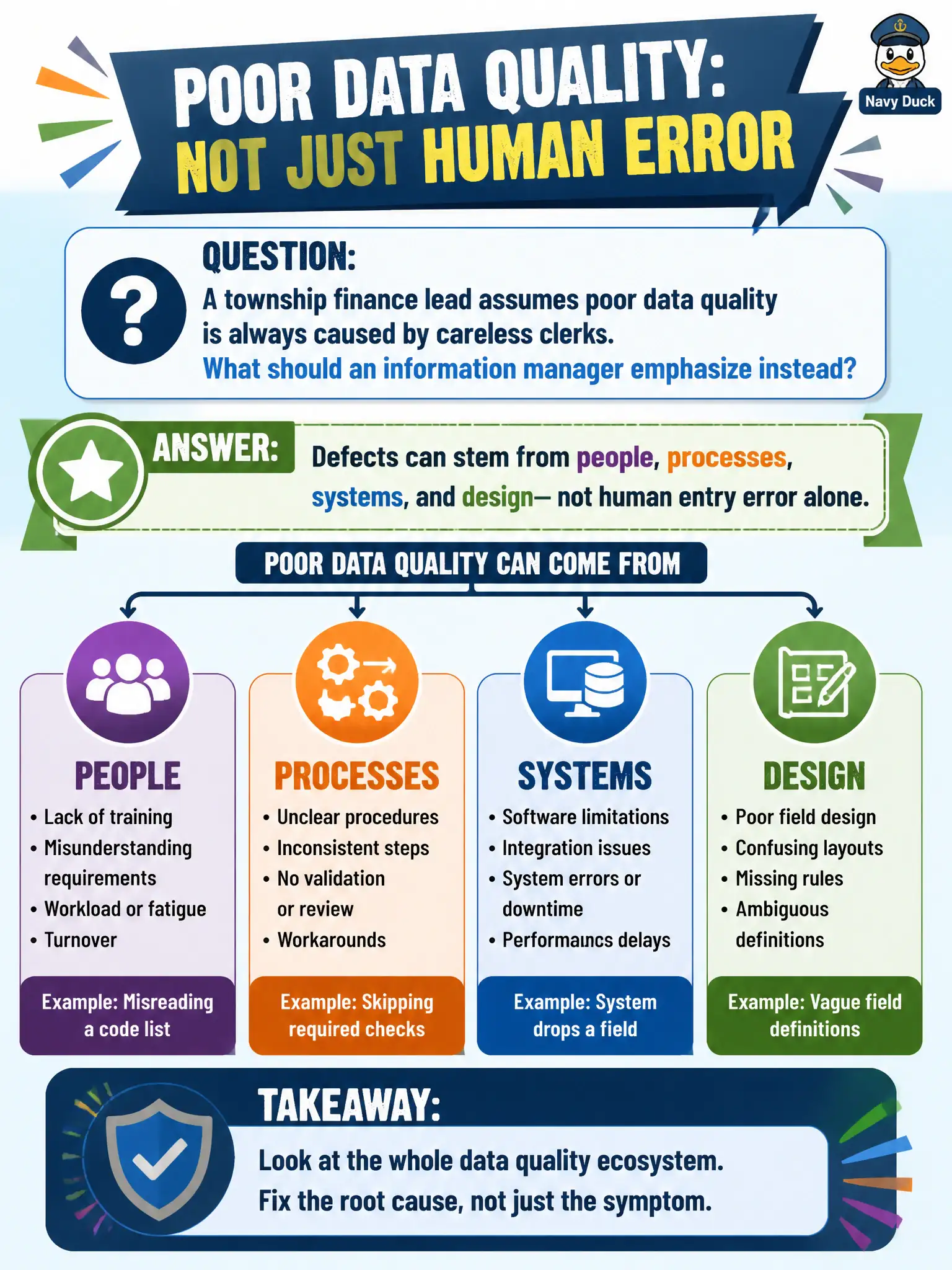
A township finance lead assumes poor data quality is always caused by careless clerks. What should an information manager emphasize instead?
Select an answer to reveal the explanation.
Short Explanation
Blaming only the clerks is like blaming the driver for every flat tire when the roads and the tires are also broken. Process gaps, brittle systems, and bad design create defects too. A fair root-cause view looks beyond keystrokes.
Full Explanation
Data quality defects commonly arise from people, processes, systems, and design—not from careless clerks alone. A township finance lead who assumes every poor-quality outcome is human entry error will miss systemic fixes such as clearer definitions, better interfaces, validation at capture, and controlled handoffs. Insisting only human entry error matters denies process and system design as cause classes and breeds scapegoating instead of prevention. Claiming defects always originate in the warehouse, never at capture, ignores that many municipal errors begin on forms, integrations, and reference data. Declaring poor quality inevitable and therefore unworthy of root-cause classification abandons continuous improvement. Exam caveat: root-cause classification should be evidence-based; human error remains real, but it is one class among several, not the default explanation. Operational check: for the next ten finance DQ defects, tag cause class (people, process, system, design), quantify the mix, and fund the top systemic control rather than only retraining clerks. Civic finance programs should share cause-class trends with department heads so accountability lands on design owners as well as front-line staff.