
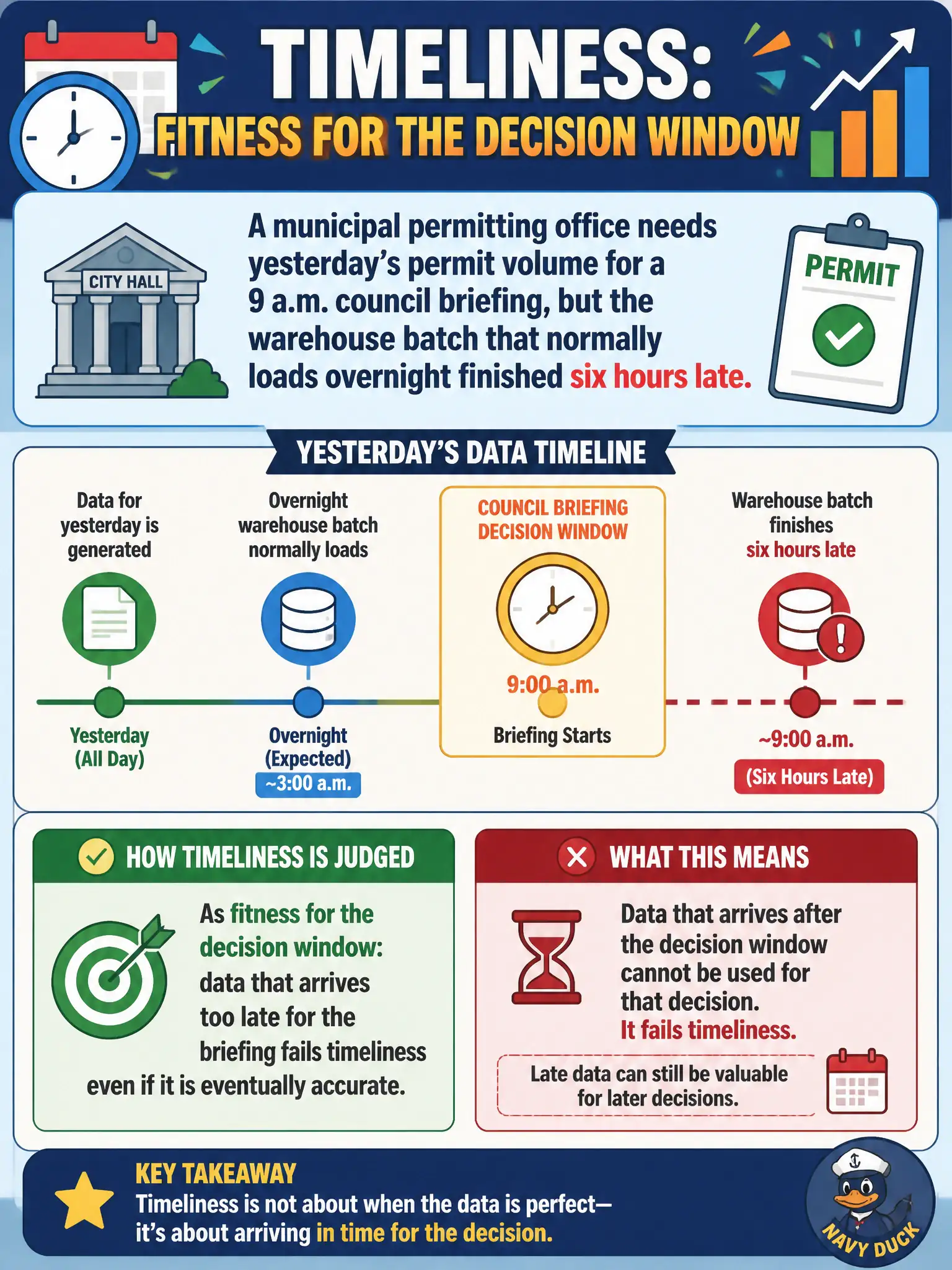
A municipal permitting office needs yesterday's permit volume for a 9 a.m. council briefing, but the warehouse batch that normally loads overnight finished six hours late. How should timeliness be judged in this situation?
Select an answer to reveal the explanation.
Short Explanation
Timeliness is about showing up when the decision needs you—not winning a 'newest possible' contest. If the council briefing starts and yesterday's counts are still missing, the data failed the window. Accurate numbers that arrive after the vote do not help the meeting.
Full Explanation
Timeliness is fitness for the decision or process window, not an absolute claim that newer data is always better. When a municipal permitting office needs yesterday's permit volume for a 9 a.m. council briefing and the overnight warehouse batch finishes six hours late, the data fails timeliness for that briefing even if values later prove accurate. Judging only by absolute freshness—for example declaring any dataset under one hour old timely regardless of the meeting—ignores the consumer's hard deadline. Framing late loads as a uniqueness concern that somehow creates duplicate permit IDs by definition conflates schedule failure with identity rules. Claiming delayed delivery cannot be a data quality issue once data eventually lands denies the dimension that CIMP-style practice ties to use. Exam caveat: the same delayed batch may still be timely for a Friday analytical review; always state the use when scoring timeliness. Operational check: document the briefing's required-by time, measure load completion against that SLA, escalate late jobs before the meeting, and provide a clearly labeled provisional extract if leadership must proceed. County clerks should note on the council pack whether figures are final or delayed so elected officials interpret risk correctly.