
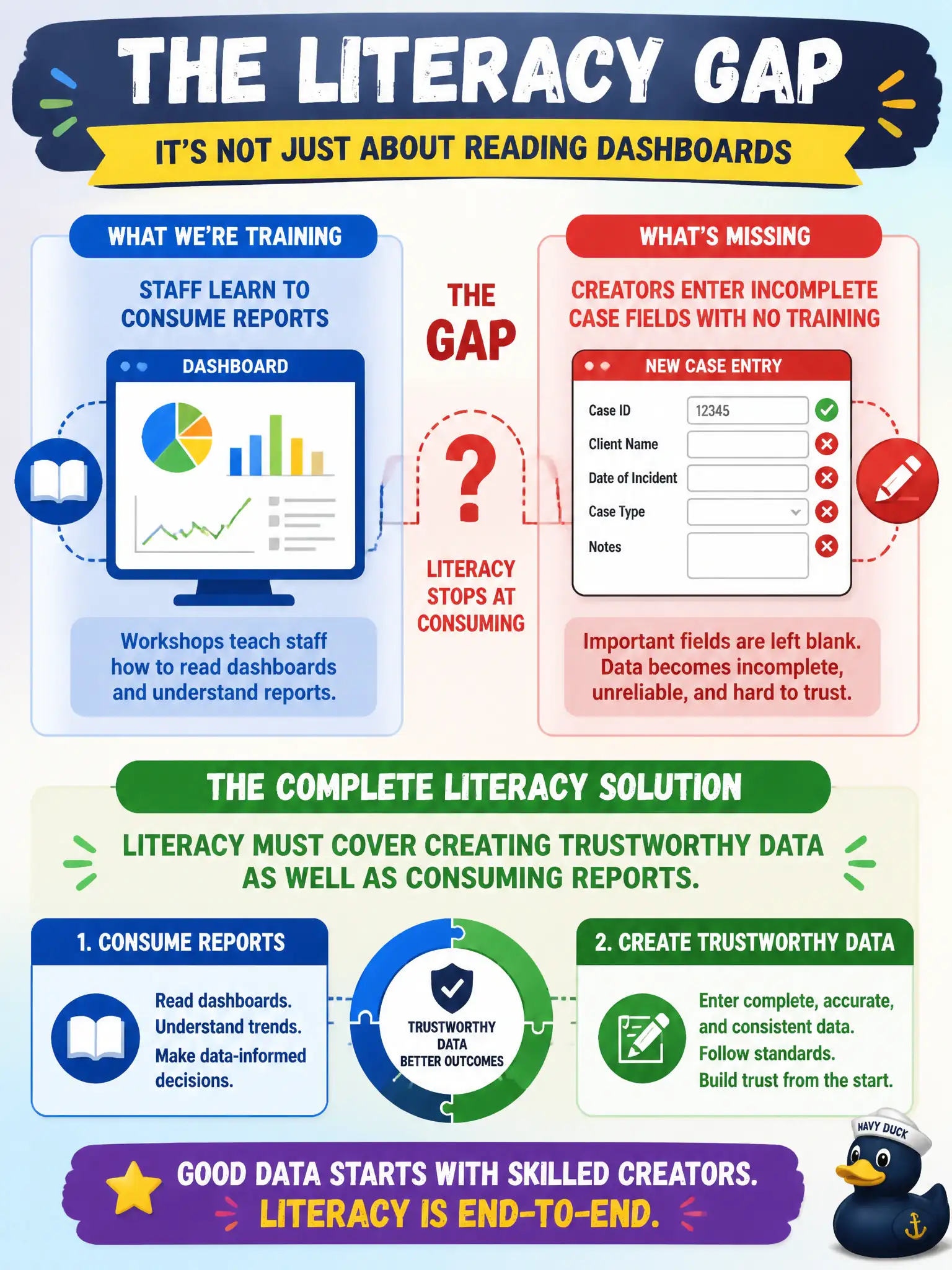
Workshops teach staff how to read dashboards, but creators still enter incomplete case fields with no training. What literacy gap remains?
Select an answer to reveal the explanation.
Short Explanation
Teaching people to read the menu while the kitchen still guesses at recipes will not fix dinner. Literacy is a two-way street: the folks who create records need the same care as the folks who read the charts.
Full Explanation
Data literacy in civic agencies must cover creating trustworthy data as well as consuming dashboards. Staff who can read charts but still leave case fields incomplete produce reports that look polished while decisions rest on hollow inputs—literacy programs that train only consumers leave the producer gap untouched. Claiming literacy is complete once consumers interpret charts fails by ignoring upstream creation quality that determines whether those charts are trustworthy. Asserting only executives need producer-side literacy fails because frontline clerks and caseworkers create the operational fields that feed executive views. Treating field completeness as unrelated to literacy fails by separating skills training from the concrete behaviors that make municipal data fit for use. Exam caveat: literacy is a two-sided capability—consume and produce—not a BI visualization soft skill alone. Operational check: pair dashboard training with creator checklists for mandatory case fields, sample incomplete records before and after training, and report completeness trends to the data council. Embed producer expectations in onboarding for permitting, social services, and public-safety systems so civic literacy is measured by fewer empty critical fields, not only by attendance at chart-reading workshops.