
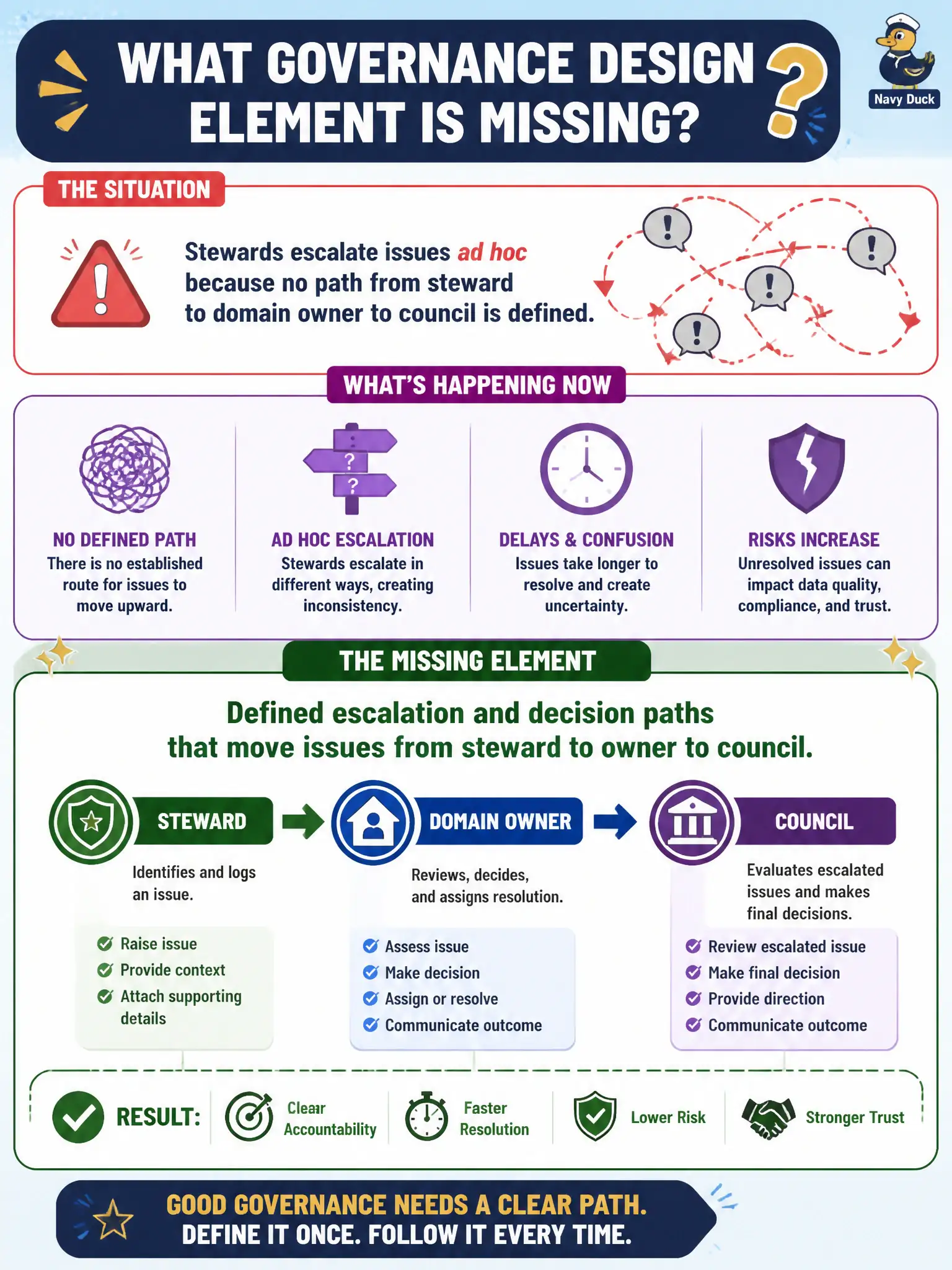
Stewards escalate issues ad hoc because no path from steward to domain owner to council is defined. What governance design element is missing?
Select an answer to reveal the explanation.
Short Explanation
Without a ladder, every issue becomes a hallway debate or a forgotten inbox. Spell out steward → owner → council so decisions actually land. Escalation paths are decision rights with directions.
Full Explanation
Decision-rights design includes who decides and how unresolved issues move upward from steward to owner to council. When stewards escalate ad hoc because no path is defined, the missing element is a documented escalation and decision path for municipal data conflicts. Claiming escalation paths are unnecessary if everyone emails the help desk misroutes business definition disputes to IT break-fix queues. Sending only the vendor hotline data definition disputes outsources meaning that the city must own. Deleting the steward role so nothing needs escalation removes the first line of issue management without solving conflicts. Exam caveat: escalation timelines and decision SLAs should match risk; not every synonym debate needs the full council. Operational check: publish the path with contacts and SLAs, train stewards to use it, and review aged escalations in the DG forum each month. Domain owners should be measured on timely decisions for escalated civic data issues, not only on attending kickoff meetings. Time-box escalations so definition disputes cannot linger across fiscal reporting cycles. Time-box escalations so definition disputes cannot linger across fiscal reporting cycles, and exclude business-definition ownership tickets from generic IT help-desk queues.