
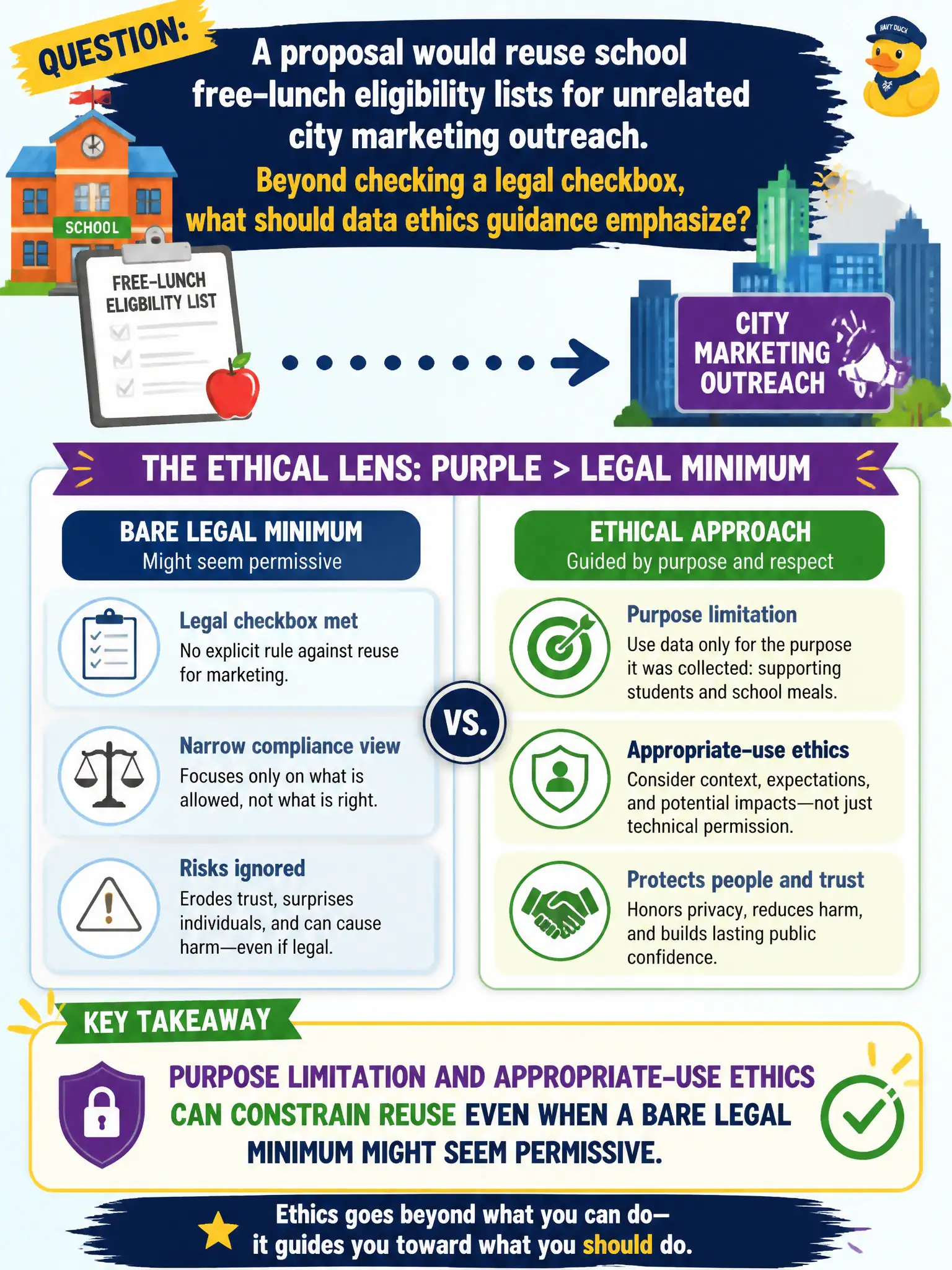
A proposal would reuse school free-lunch eligibility lists for unrelated city marketing outreach. Beyond checking a legal checkbox, what should data ethics guidance emphasize?
Select an answer to reveal the explanation.
Short Explanation
Just because you can open the lunch-list drawer does not mean you should mail every family a festival flyer from it. Ethics asks about purpose and fairness, not only 'is it illegal.' Sensitive lists deserve a higher bar.
Full Explanation
Purpose limitation and appropriate-use ethics can constrain reuse even when a bare legal minimum might seem permissive. A proposal to reuse school free-lunch eligibility lists for unrelated city marketing outreach should trigger ethics and purpose review beyond a checkbox, because vulnerable household data warrants heightened care. Claiming any legally obtainable list may be reused for any municipal campaign without further review ignores purpose limitation and public trust. Letting marketing teams own ethics decisions with no governance input privatizes public-interest judgment about sensitive benefit data. Saying ethics apply only to external vendors, never to city communications staff, creates a false internal free zone. Exam caveat: legality is necessary but not always sufficient for responsible civic reuse; document ethics review alongside legal advice. Operational check: require purpose, population sensitivity, and alternative-data analysis in a reuse request form; obtain DG and privacy sign-off before extract; and log refusals as well as approvals. Education and communications leads should treat free-lunch eligibility as sensitive benefit data, not a convenient marketing segment file.