
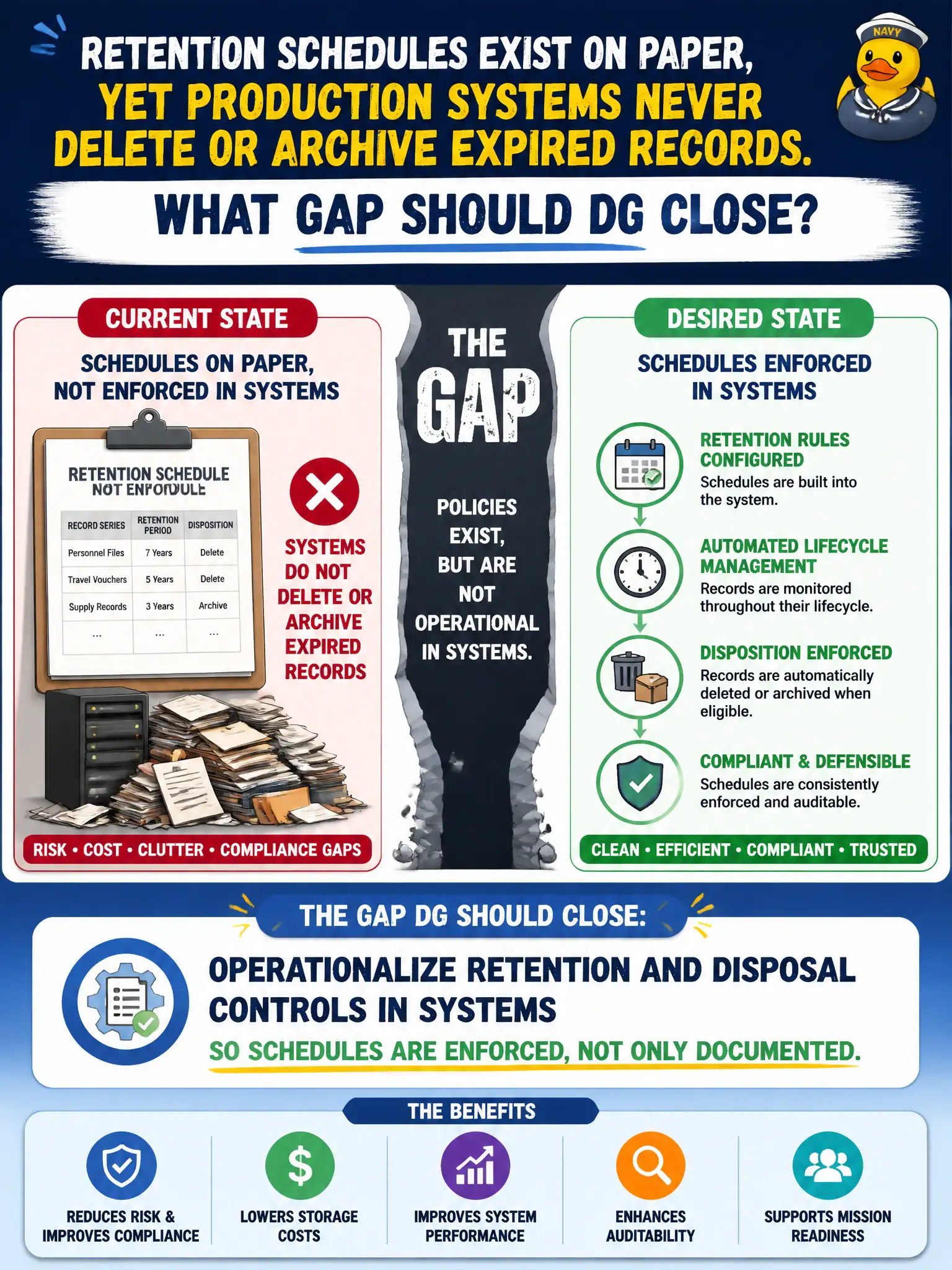
Retention schedules exist on paper, yet production systems never delete or archive expired records. What gap should DG close?
Select an answer to reveal the explanation.
Short Explanation
A retention schedule that never deletes is a diet plan taped to the fridge. The value is in the systems actually disposing or archiving on time. Paper without pipelines is just decoration.
Full Explanation
Retention schedules must be operationalized in systems so disposal and archival are enforced, not only printed on paper for municipal records programs. When schedules exist on paper yet production systems never delete or archive expired records, DG should close the operationalization gap with technical controls and owners. Throwing away the schedules because paper policies are sufficient forever leaves the city without a disposal standard auditors can test. Printing larger posters of the schedule and considering disposal complete confuses communication with execution in source systems. Retaining every record indefinitely to avoid implementing deletion workflows increases breach impact, e-discovery cost, and mistrust. Exam caveat: some record classes have legal holds that pause disposal; holds must be managed explicitly, not used as an excuse for never building deletion capability. Operational check: map schedule classes to systems, implement archival or deletion jobs with audit logs, test restores and legal-hold overrides, and report overdue disposals to the governance council. Records managers and system owners should jointly certify annual disposal runs for high-volume civic systems that store resident data.