
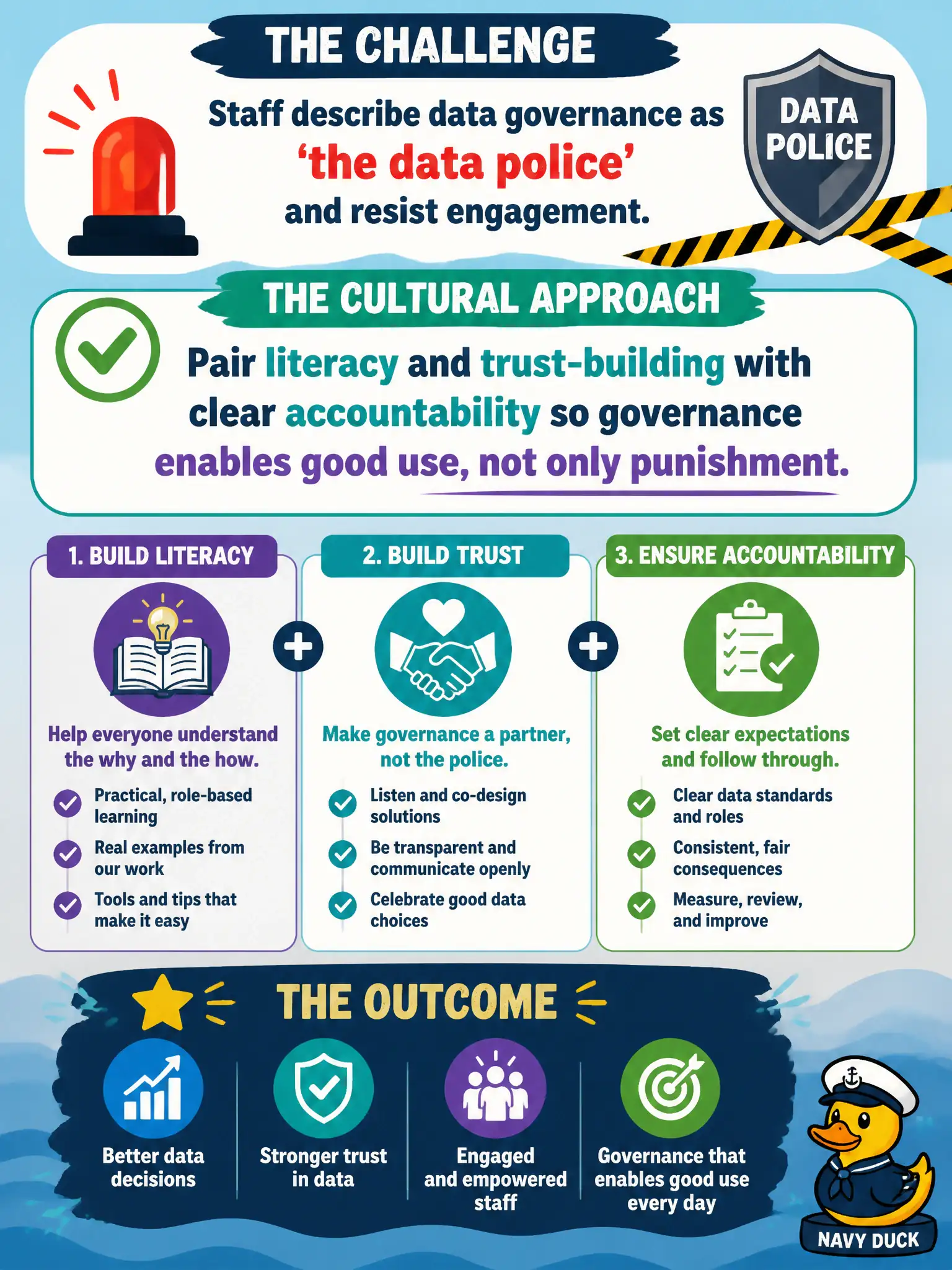
Staff describe data governance as 'the data police' and resist engagement. What cultural approach should the program take?
Select an answer to reveal the explanation.
Short Explanation
If governance feels like a ticket book, people hide the data under the seat. Blend literacy—why the rules help—with fair accountability so folks see enablement, not a speed trap. Culture work is half the program.
Full Explanation
Governance culture should pair literacy and trust-building with clear accountability so the program enables good use of municipal data, not only punishment. When staff describe data governance as the data police and resist engagement, increasing surprise audits and public shaming reinforces the hostile metaphor and deepens avoidance. Abolishing all controls so nobody feels accountable for data handling abandons protection of residents, privacy obligations, and public funds. Outsourcing culture change exclusively to a new firewall rule set confuses network enforcement with organizational behavior, skills, and shared definitions. Exam caveat: enforcement remains necessary for willful or reckless violations; the design goal is balanced enablement through training, clear policy, usable processes, and proportionate consequences. Operational check: launch role-based literacy modules, create steward office hours, publish success stories where governance enabled safer analytics, and reserve formal enforcement for defined policy breaches with due process. Municipal change leaders should measure both policy acknowledgment rates and help-seeking behavior so culture shifts are evidenced in operations, not assumed after a poster campaign in city hall.