
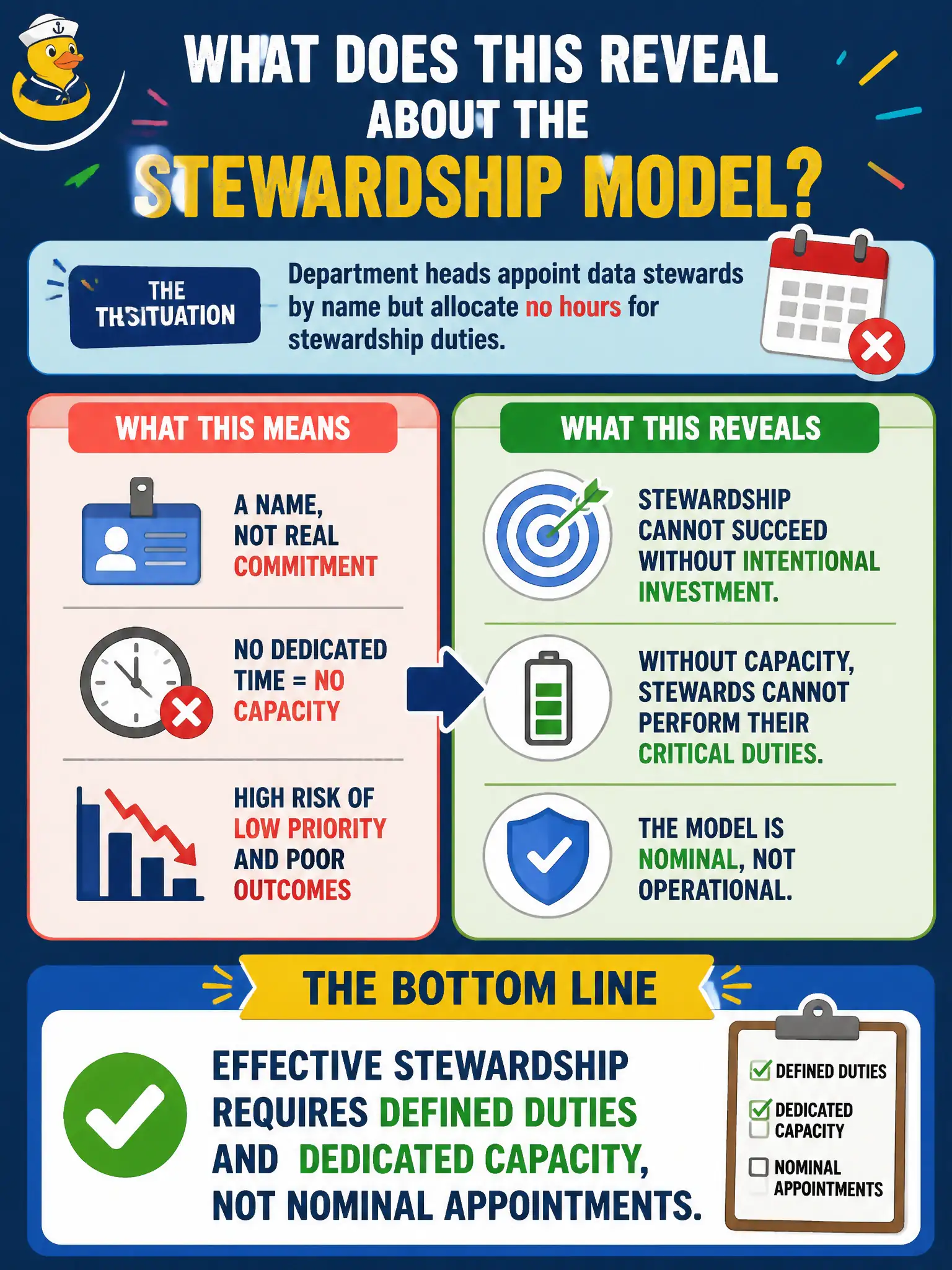
Department heads appoint data stewards by name but allocate no hours for stewardship duties. What does this reveal about the stewardship model?
Select an answer to reveal the explanation.
Short Explanation
Putting someone's name on a slide is not a job description. Stewardship is real work—definitions, issue triage, quality checks—and it needs clock time. A title with zero hours is theater, not accountability.
Full Explanation
Effective stewardship requires defined duties and dedicated capacity, not nominal appointments by title alone on a municipal org chart. When department heads appoint data stewards by name but allocate no hours for stewardship, the model is theatrical and will fail under real workload pressure from daily operations. Titles alone proving maturity without further design ignore the time, skills, and decision authority stewards need to resolve definition and quality conflicts. Restricting stewardship to external consultants on weekends undermines continuity, raises cost, and weakens civic knowledge retention when contracts end. Telling stewards to refuse all quality work until a new catalog is purchased holds operations hostage to tooling and delays protection of critical data. Exam caveat: capacity can start small with a few hours per week on critical elements if duties, escalation paths, and manager acknowledgment are explicit and auditable. Operational check: write steward role descriptions with time allocation, secure manager approval in performance plans, and measure issue response SLAs before expanding the steward network citywide. City HR and DG leads should jointly recognize stewardship in job objectives so appointees are not punished for doing unpaid governance work that leadership publicly celebrates.