
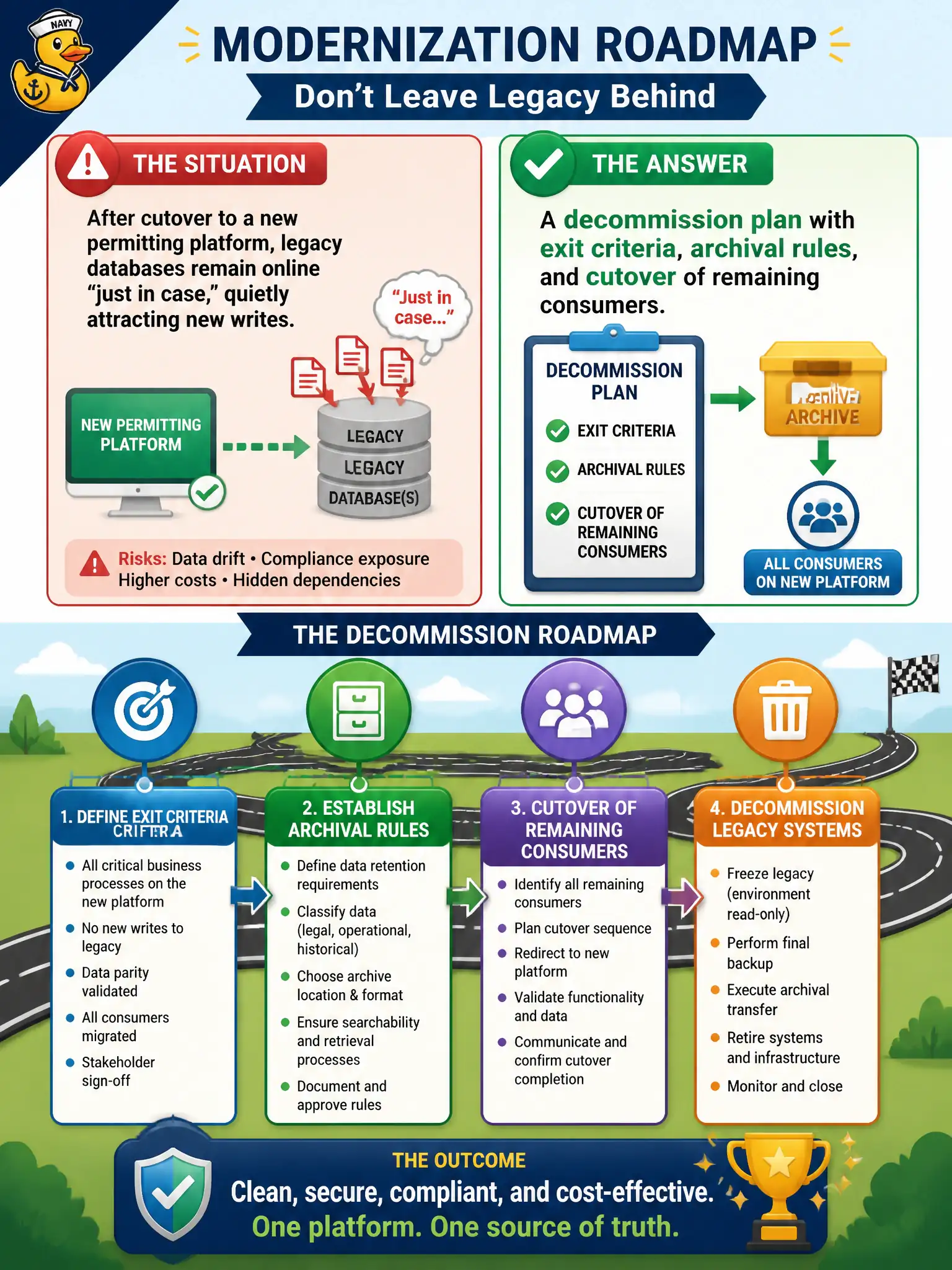
After cutover to a new permitting platform, legacy databases remain online “just in case,” quietly attracting new writes. What should the modernization roadmap include?
Select an answer to reveal the explanation.
Short Explanation
Leaving the old fridge plugged in “just in case” is how you get two kitchens and spoiled food. Modernization is not done until decommission actually happens.
Full Explanation
After cutover to a new permitting platform, legacy databases that remain online “just in case” and quietly accept new writes recreate dual systems of record and undermine modernization. A sound roadmap therefore includes a decommission plan with exit criteria, archival rules, consumer cutover, access lockdown, and verified shutdown evidence. Completing retirement reduces cost, risk, and duplicate-master problems that persist when shadow stores keep diverging. Indefinite dual-write forever with no retirement criteria institutionalizes conflict and makes “temporary” coexistence permanent. Listing only new-build milestones while treating legacy shutdown as optional folklore leaves the hardest governance work unfunded. Keeping legacy stores writable by every team to maximize flexibility maximizes uncontrolled mutation rather than safe transition. Exam caveat: decommission planning is not reckless deletion—archival, legal retention, and residual read-only access may be required; the exam rejects indefinite writable dual-run without criteria. Operational check: inventory remaining writers and readers on each legacy store, set a write-freeze date, migrate consumers, archive per policy, revoke write access, and record shutdown sign-off against the exit criteria.