
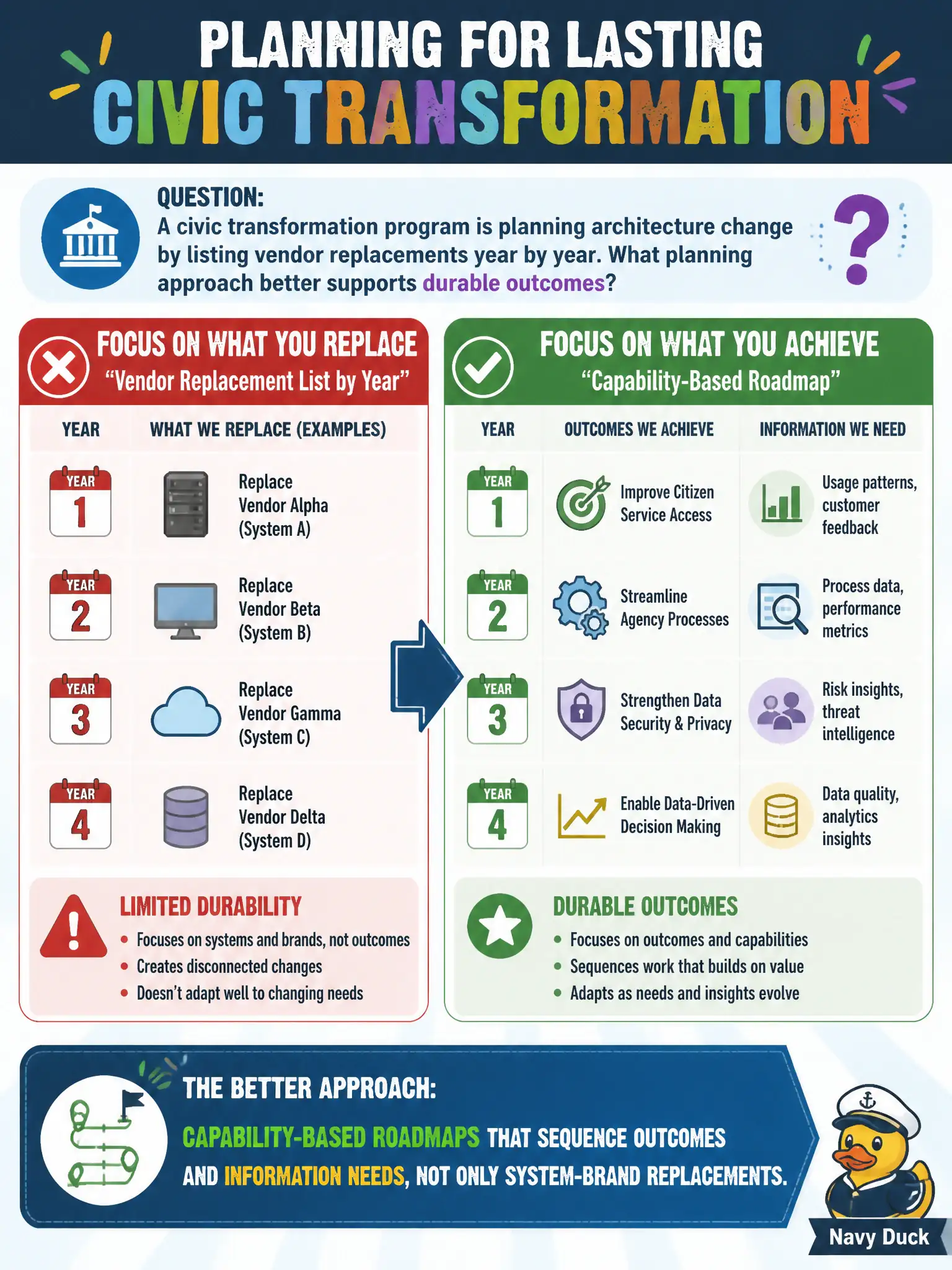
A civic transformation program is planning architecture change by listing vendor replacements year by year. What planning approach better supports durable outcomes?
Select an answer to reveal the explanation.
Short Explanation
Buying a new badge on the laptop is not the same as fixing the capability. Plan around what licensing, inspections, or benefits must do—and the information that enables them—not only which brand replaces which.
Full Explanation
Durable civic transformation planning orients architecture around capabilities, service outcomes, and information needs rather than a year-by-year list of vendor brand replacements. Capability-based roadmaps sequence what licensing, inspections, benefits, or case management must achieve, which data products enable those outcomes, and how operating models and interfaces must change. System-replacement roadmaps that list only logos and go-live dates often swap platforms without resolving duplication, ownership gaps, or interoperability debt, so citizen-facing pain recurs inside new brands. Freezing all planning until every legacy brand retires in a single cutover weekend is brittle big-bang thinking that ignores sequenced capability delivery and risk. Prioritizing the loudest vendor demo regardless of citizen-service capabilities lets procurement theater drive architecture instead of measured outcomes. Exam caveat: capability roadmaps still eventually select platforms; the point is that brand sequence alone is insufficient architecture planning and must be subordinated to outcomes and information design. Operational check: rewrite the next roadmap slice as capability outcomes plus required information products and owners; map each proposed system change to those outcomes; and defer brand decisions that cannot show duplication reduction, interface clarity, or service improvement.