
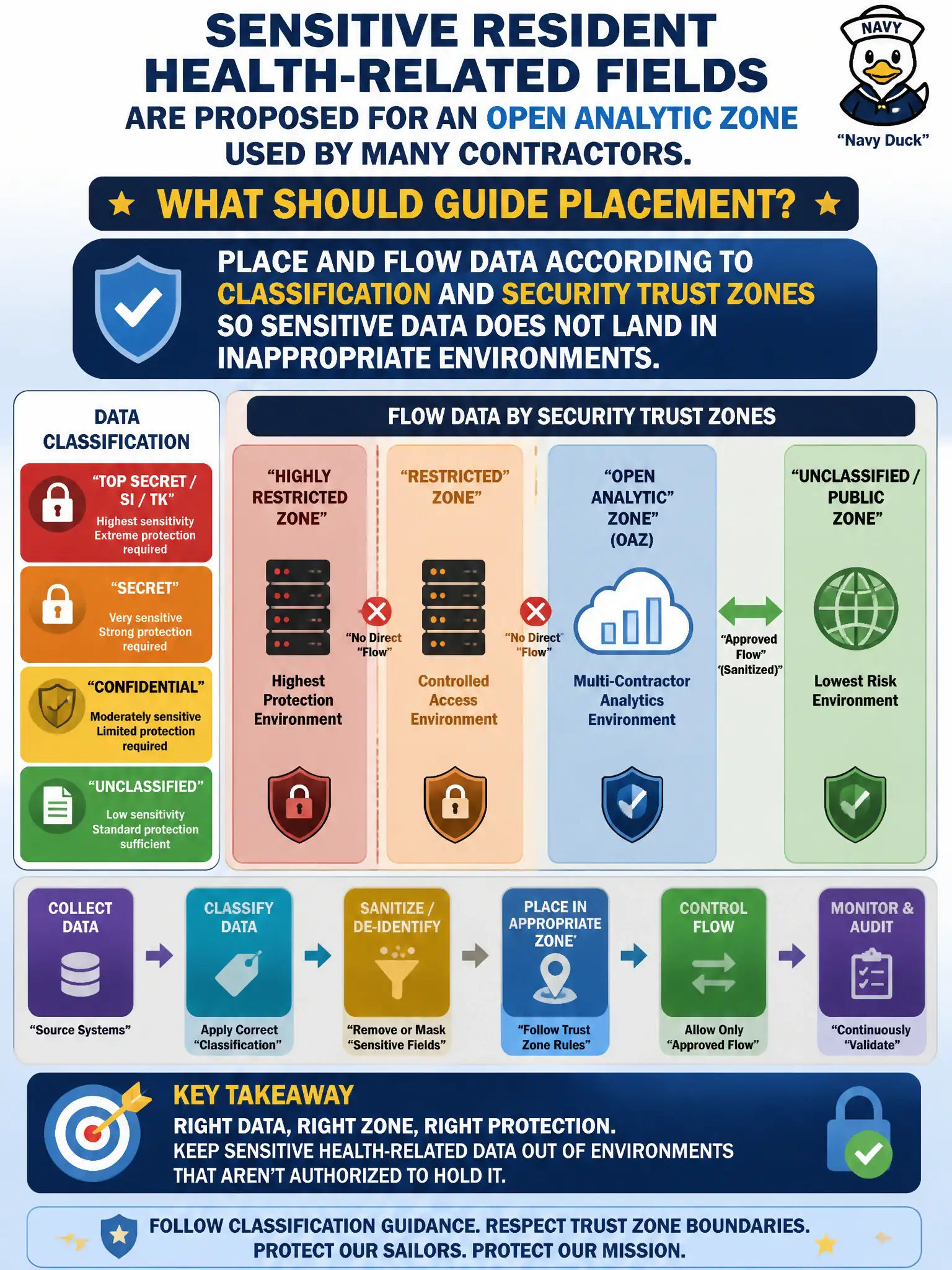
Sensitive resident health-related fields are proposed for an open analytic zone used by many contractors. What should guide placement?
Select an answer to reveal the explanation.
Short Explanation
You don’t store the vault keys in the lobby brochure rack. Classification and trust zones decide where sensitive data may live and how it may move—protection is part of architecture, not a sticker after the fact.
Full Explanation
Sensitive resident health-related fields proposed for an open analytic zone used by many contractors must be placed according to classification and security trust zones. Architecture should keep sensitive data out of inappropriate environments even if encryption at rest exists somewhere. Classification labels are not optional merely because some disk is encrypted. Obscuring column names does not make open zones suitable for protected health-related attributes. Trust zones apply to data architecture placement, not only to network drawings. Exam principle: classification-driven placement and flows. Caveat: if a legitimate analytic need exists, use a higher-trust zone, minimization, and contractual controls—do not “open” the data by renaming. Operationally, map the proposed fields’ classifications to allowed zones, block promotion into the open contractor zone, and document an approved alternative path if analysis is still required. Record denied placements as architecture decisions so future projects do not re-propose the same sensitive fields for open contractor zones. Trust-zone diagrams used in reviews must name data classes explicitly; network-only pictures without classification leave architects arguing past the real placement risk.