
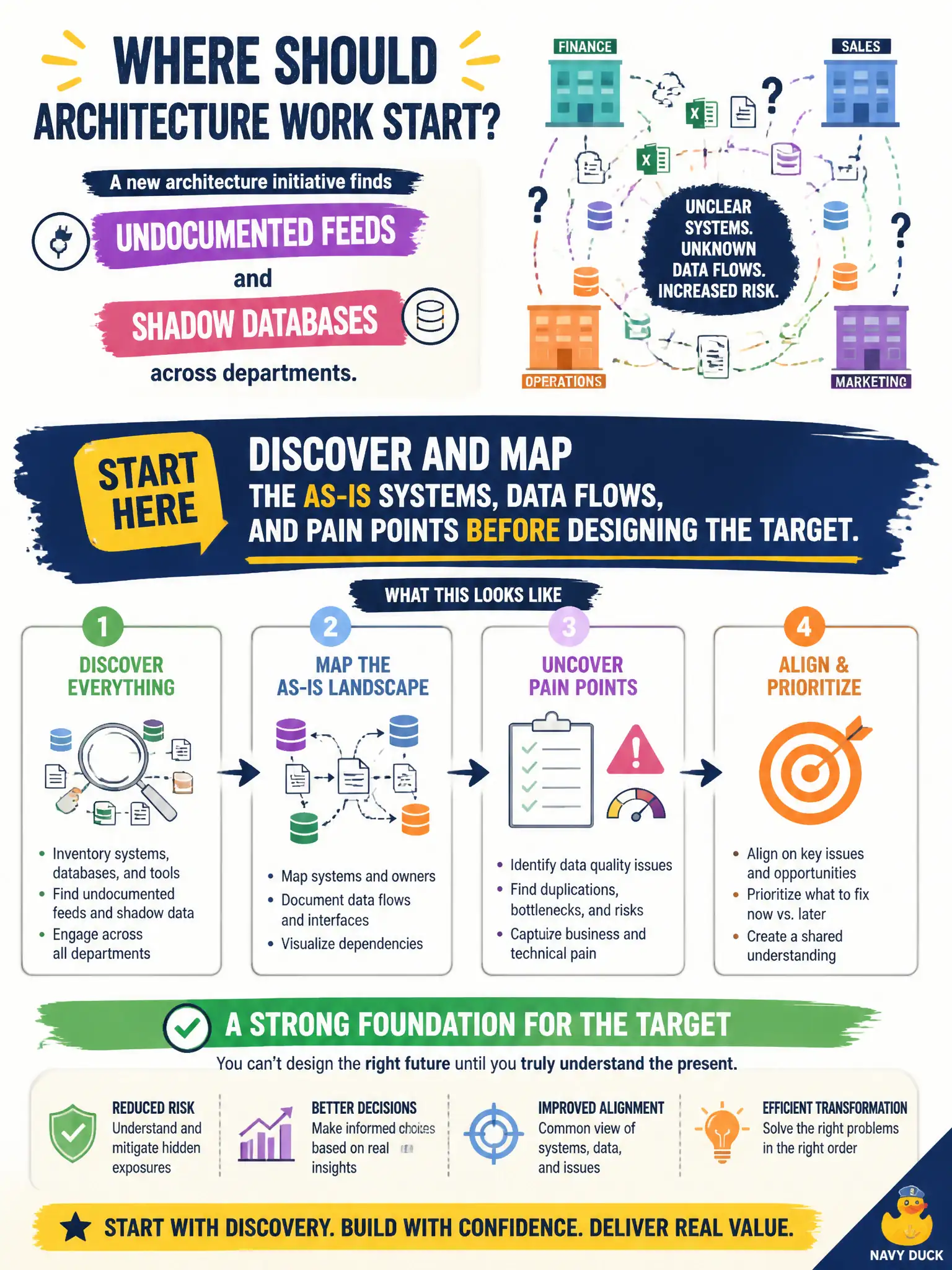
A new architecture initiative finds undocumented feeds and shadow databases across departments. Where should architecture work start?
Select an answer to reveal the explanation.
Short Explanation
You wouldn’t remodel a house without walking the rooms and finding the mystery pipes. Same with data architecture: map what exists—feeds, shadow databases, and headaches—before drawing the dream kitchen.
Full Explanation
Architecture for a fragmented municipal estate should start with as-is discovery: map systems, data flows, and pain points before designing the target. Issuing a target-state diagram before inventorying systems and flows designs fiction. Deleting all undocumented stores immediately without mapping consumers creates outages and lost civic history. Assuming vendor reference architectures replace current-state discovery imports someone else’s context wholesale. Exam sequencing: current-state understanding before target design. Caveat: discovery should be time-boxed and risk-focused—endless inventory can stall modernization—but skipping it is worse. Operationally, produce a system and flow inventory for priority domains such as permitting and finance, capture top pain points with owners, then draft target patterns that explicitly address those evidenced problems. Time-box as-is discovery to weeks, not years, but refuse target diagrams that cannot point to inventoried systems and evidenced pain points. Capture integration pain and duplicate stores in the as-is map with business owners present, or target designs will optimize imaginary landscapes rather than the city’s real estate. Share the as-is map with security and records stakeholders early so hidden stores are not “discovered” only during an incident or audit.