
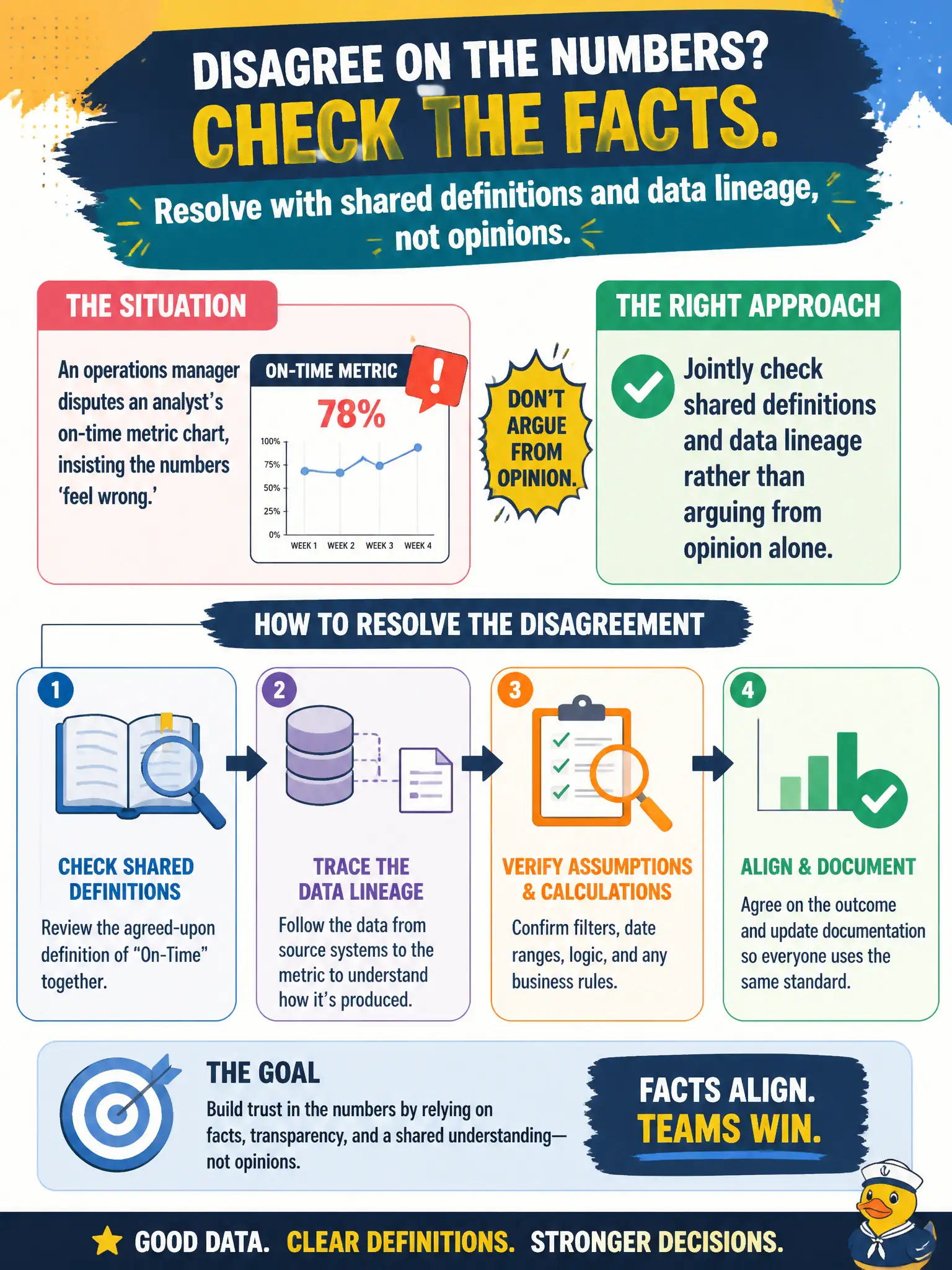
An operations manager disputes an analyst's on-time metric chart, insisting the numbers 'feel wrong.' How should they resolve the disagreement?
Select an answer to reveal the explanation.
Short Explanation
When someone says the chart 'feels wrong,' don't turn it into a staring contest—open the definition and the lineage together. Maybe 'on-time' means different clocks, or the extract skipped a feed. Shared metadata settles disputes faster than volume.
Full Explanation
When an operations manager disputes an analyst’s on-time metric chart as feeling wrong, resolve the disagreement by jointly checking shared definitions and data lineage rather than arguing from opinion alone. Walk the metric from business rule through transforms to the chart so both parties see filters, statuses, and timing grains. Accepting the louder stakeholder’s preferred number as official institutionalizes power over evidence. Deleting the chart to avoid conflict abandons operational transparency. Averaging the manager’s gut estimate with the chart invents a midpoint metric with no definition. Exam caveat: lived operational knowledge can reveal real lineage bugs—joint review is not a claim that the chart is always right; it is the method to find whether definition, data, or intuition needs correction. Operational check: open the metric definition and lineage together, reproduce the number from certified sources, document any bug or definition gap, agree on the corrected official figure, and update the semantic glossary if needed. In municipal information-management practice, record the rationale so future staff know which failure modes the rejected options would create for city services, and re-validate after the next cycle that the same control still holds.