
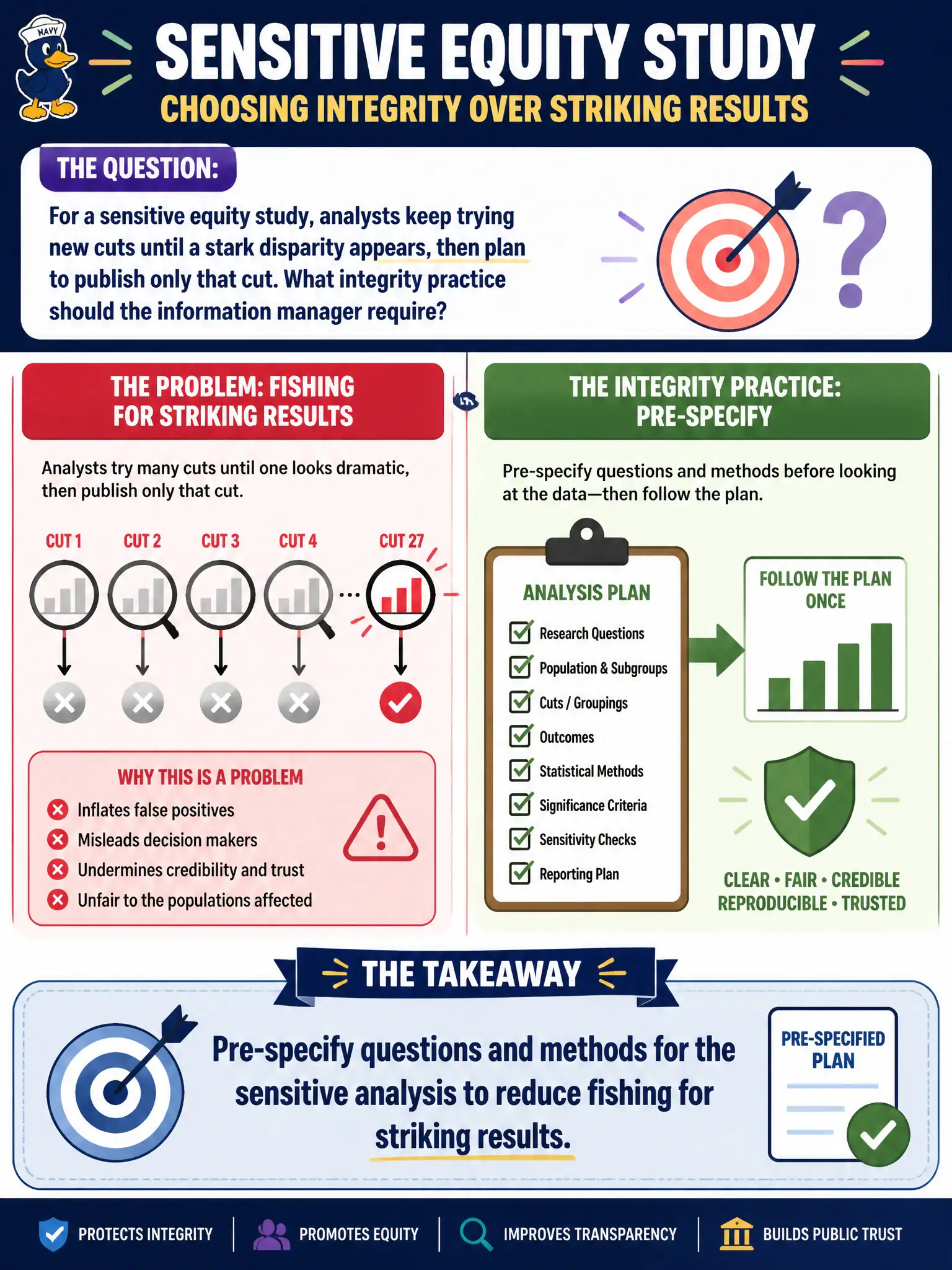
For a sensitive equity study, analysts keep trying new cuts until a stark disparity appears, then plan to publish only that cut. What integrity practice should the information manager require?
Select an answer to reveal the explanation.
Short Explanation
Fishing through cuts until a shocking chart appears is like flipping coins until you get ten heads and then claiming the coin is magic. Pre-register the questions and methods for sensitive equity work so the plan—not the thrill of a chart—drives what you publish. Integrity beats surprise.
Full Explanation
For a sensitive equity study, analysts must pre-specify questions and methods to reduce fishing for striking disparity cuts that are then published as if confirmatory. Pre-specification protects integrity when stakes include funding, enforcement, and community trust. Publishing every exploratory cut without context so volume implies rigor overwhelms readers and still allows selective emphasis. Hiding the research question until after results are chosen for maximum impact inverts the scientific order and invites accusation of bias. Letting stakeholder preference alone decide which disparity table becomes official subordinates evidence design to political convenience. Exam caveat: exploratory analysis can still happen in a sandbox, but confirmatory or public equity claims need pre-registered questions, inclusion rules, and honest reporting of deviations. Operational check: write the equity questions, populations, metrics, and planned cuts before looking for the starkest table; archive the plan; report primary results first; and label any post-hoc cuts as exploratory. In municipal information-management practice, record the rationale so future staff know which failure modes the rejected options would create for city services, and re-validate after the next cycle that the same control still holds.