
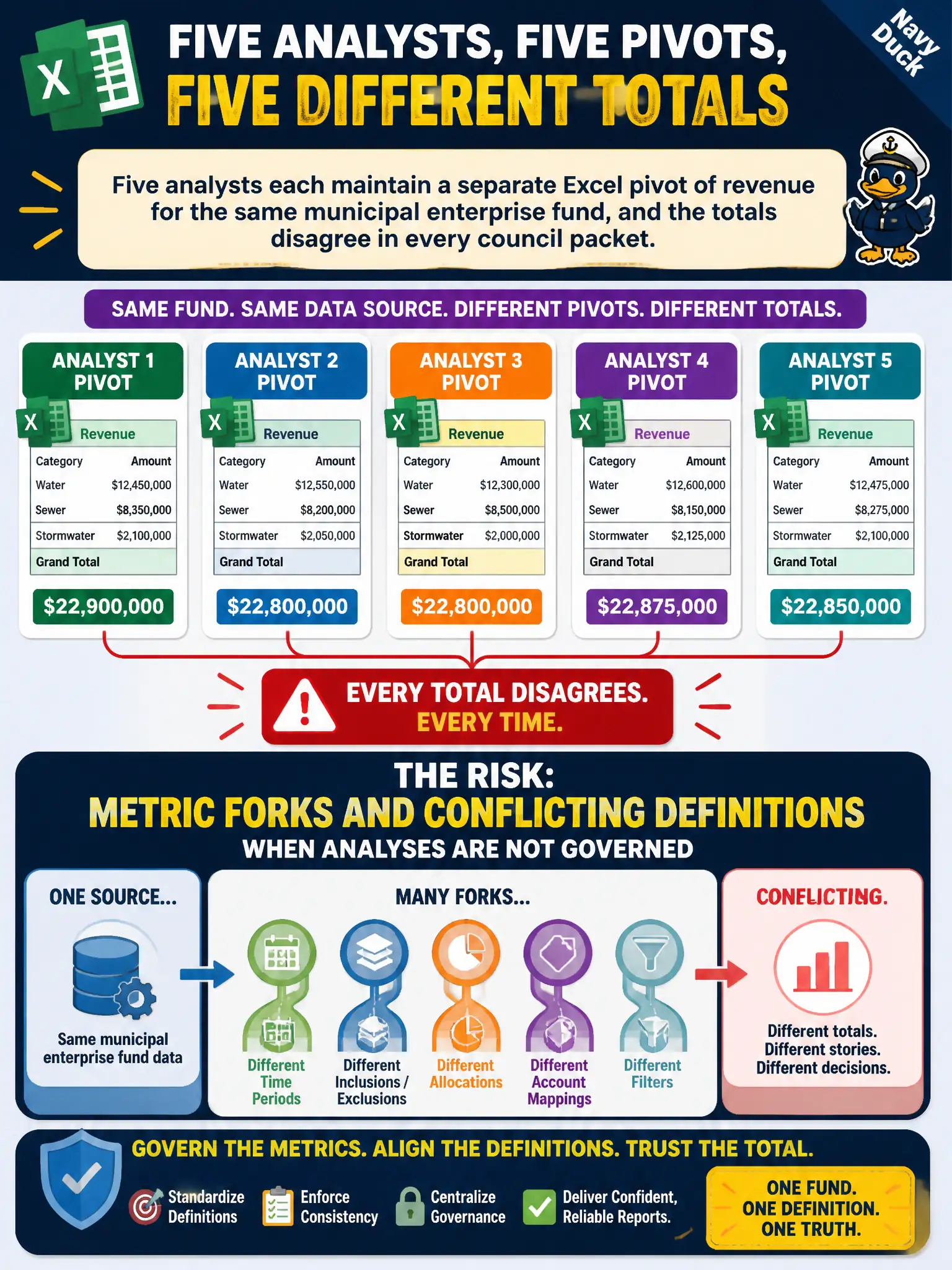
Five analysts each maintain a separate Excel pivot of revenue for the same municipal enterprise fund, and the totals disagree in every council packet. What risk does unmanaged spreadsheet analysis create?
Select an answer to reveal the explanation.
Short Explanation
Five competing pivots of revenue is like five umpires each calling a different strike zone. Unmanaged spreadsheets fork the metric until nobody trusts the number. High-stakes figures need a governed source of truth, not another copy.
Full Explanation
Five analysts each maintaining a separate Excel pivot of revenue for the same municipal enterprise fund, with totals disagreeing in every council packet, illustrates the risk of metric forks and conflicting definitions when analyses are not governed. Unmanaged spreadsheet analyses diverge through filter choices, join logic, refresh timing, and informal definitions, producing conflicting “official” numbers that damage civic trust and auditability. Claiming local files guarantee improved auditability fails because personal workbooks rarely provide versioned lineage, access control, or reproducible calculation paths. Assuming automatic alignment to the enterprise semantic layer without stewardship fails because spreadsheets do not inherit glossary rules by magic. Believing unmanaged pivots eliminate the need for documented calculation logic fails by removing the very controls that make revenue figures defensible. Exam caveat: spreadsheets can remain useful for exploration, but official council and financial figures need governed semantic sources, certified logic, and documented owners—exploration and publication are different risk classes. Operational check: inventory the five revenue pivots, compare filters and formulas, publish one certified enterprise-fund revenue definition in the glossary, point council packets to the certified source, and retire or watermark unofficial forks as non-authoritative.