
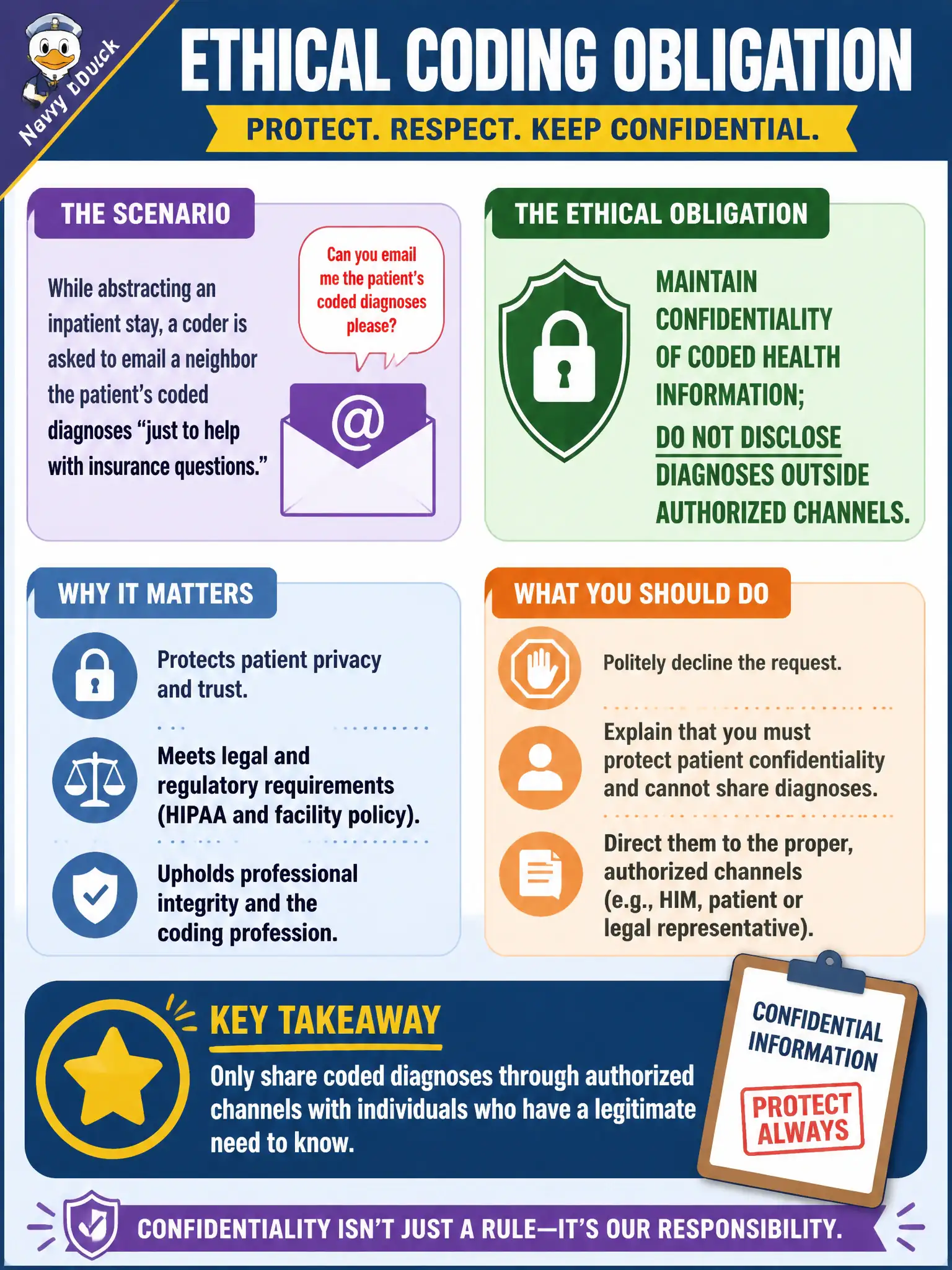
While abstracting an inpatient stay, a coder is asked to email a neighbor the patient’s coded diagnoses “just to help with insurance questions.” What ethical coding obligation applies?
Select an answer to reveal the explanation.
Short Explanation
Coded data is still the patient’s story in shorthand. Ethical coding includes keeping that story confidential—neighbors and side-channel emails are out. Stick to authorized disclosure paths.
Full Explanation
While abstracting an inpatient stay, a request to email a neighbor the patient's coded diagnoses for insurance help must be refused: ethical coding includes maintaining confidentiality of coded health information and disclosing only through authorized channels. Civic hospitals serve communities where neighbors know each other—confidentiality is the firewall of trust. Sharing only ICD codes because codes are supposedly not PHI is false; coded diagnoses linked to a patient remain protected. Sharing because the neighbor promises not to forward still creates an unauthorized disclosure. Posting a supposedly de-identified version on social media without proper de-identification risks re-identification and is not an authorized channel. Exam caveat: coded data is PHI when identifiable; ethics and HIPAA both bar side-channel sharing. Operational check: refuse the ask, route any legitimate access through ROI, report the request if policy requires, and reinforce that coding work products are not community favors. Ethical coding in public facilities means the record and Official Guidelines outrank productivity, CMI, or dashboard pressure every time the two conflict. Re-read the authenticated record before finalizing whenever tools, payers, or dashboards push a result the documentation does not support.