
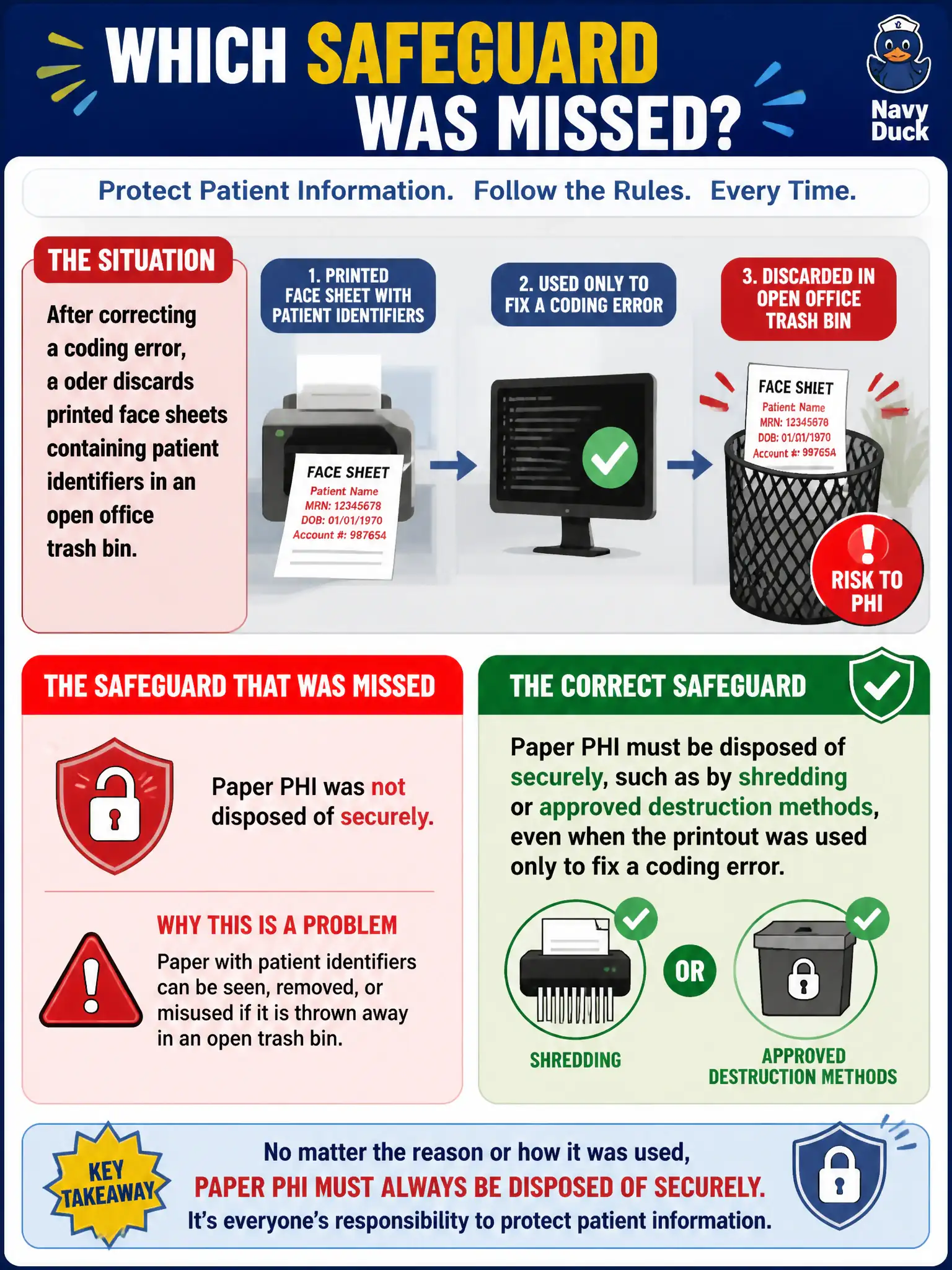
After correcting a coding error, a coder discards printed face sheets containing patient identifiers in an open office trash bin. What safeguard was missed?
Select an answer to reveal the explanation.
Short Explanation
Wrong codes get fixed—wrong trash does not. Those face sheets still have names and numbers, so they go in the shred bin, not the open can. Paper PHI is still PHI on the way out.
Full Explanation
After correcting a coding error, discarding printed face sheets with patient identifiers in an open office trash bin misses required paper-PHI destruction safeguards such as shredding or approved destruction. Civic HIM departments must secure PHI through its entire lifecycle, including disposal. Treating printed face sheets as non-PHI because they were used only for coding QA ignores that identifiers remain protected. Calling open trash acceptable inside locked HIM departments still exposes PHI to housekeeping, vendors, and unauthorized staff. Claiming only electronic PHI requires safeguards invents a paper exemption HIPAA does not grant. Exam caveat: media type does not remove protection—paper identifiers need secure destruction. Operational check: place face sheets in locked shred consoles, ban open-bin disposal of PHI printouts, audit disposal practices, and include paper destruction in privacy walkthroughs. Sustain civic accountability by pairing correct code assignment with transparent denial, quality, and privacy escalation paths so public reporting and payment integrity move together. Re-read the authenticated record before finalizing whenever tools, payers, or dashboards push a result the documentation does not support.