
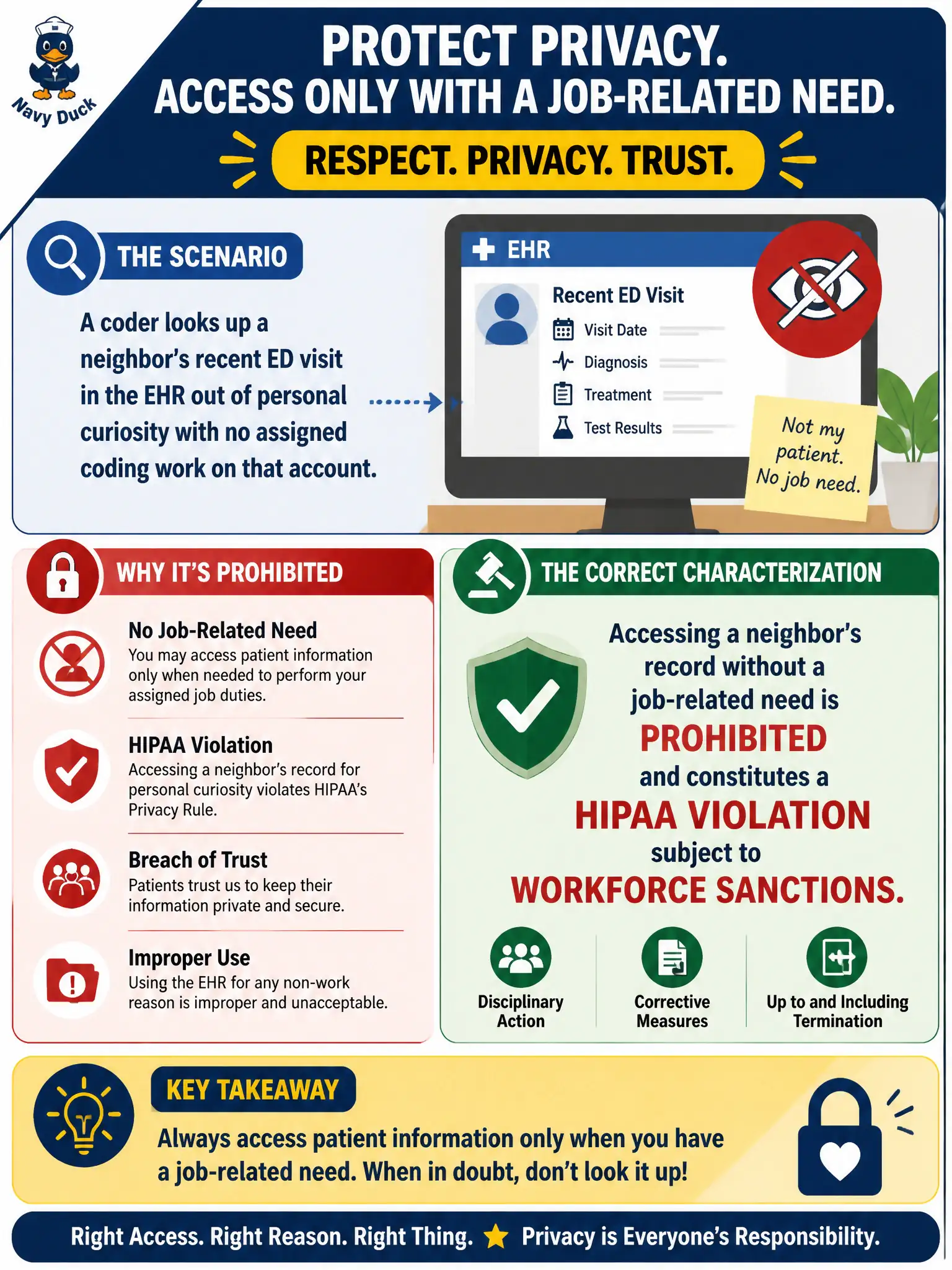
A coder looks up a neighbor's recent ED visit in the EHR out of personal curiosity with no assigned coding work on that account. What is the correct characterization?
Select an answer to reveal the explanation.
Short Explanation
Neighbors do not equal need-to-know. Opening that ED chart for curiosity is snooping, and HIPAA treats it as a violation—even if nothing is posted about it. Stick to assigned accounts.
Full Explanation
Looking up a neighbor's recent ED visit in the civic hospital EHR out of personal curiosity with no assigned coding work is prohibited and constitutes a HIPAA violation subject to workforce sanctions. Community hospitals succeed when neighbors trust that staff will not peek. Framing curiosity access as community awareness invents a nonexistent permission. Claiming one curiosity look-up per year is allowed creates a fictional quota. Accepting the look-up if findings are not posted on social media still leaves the unauthorized access itself unlawful—disclosure is a separate issue. Exam caveat: absence of redistribution does not cure unauthorized access. Operational check: monitor audit logs for same-address or acquaintance accesses, investigate and sanction per policy, retrain on minimum necessary, and remind staff that assigned worklists define legitimate access. Sustain civic accountability by pairing correct code assignment with transparent denial, quality, and privacy escalation paths so public reporting and payment integrity move together. Re-read the authenticated record before finalizing whenever tools, payers, or dashboards push a result the documentation does not support. Confirm compliance sign-off on contested accounts before claim drop so civic integrity controls remain visible in the audit trail.