
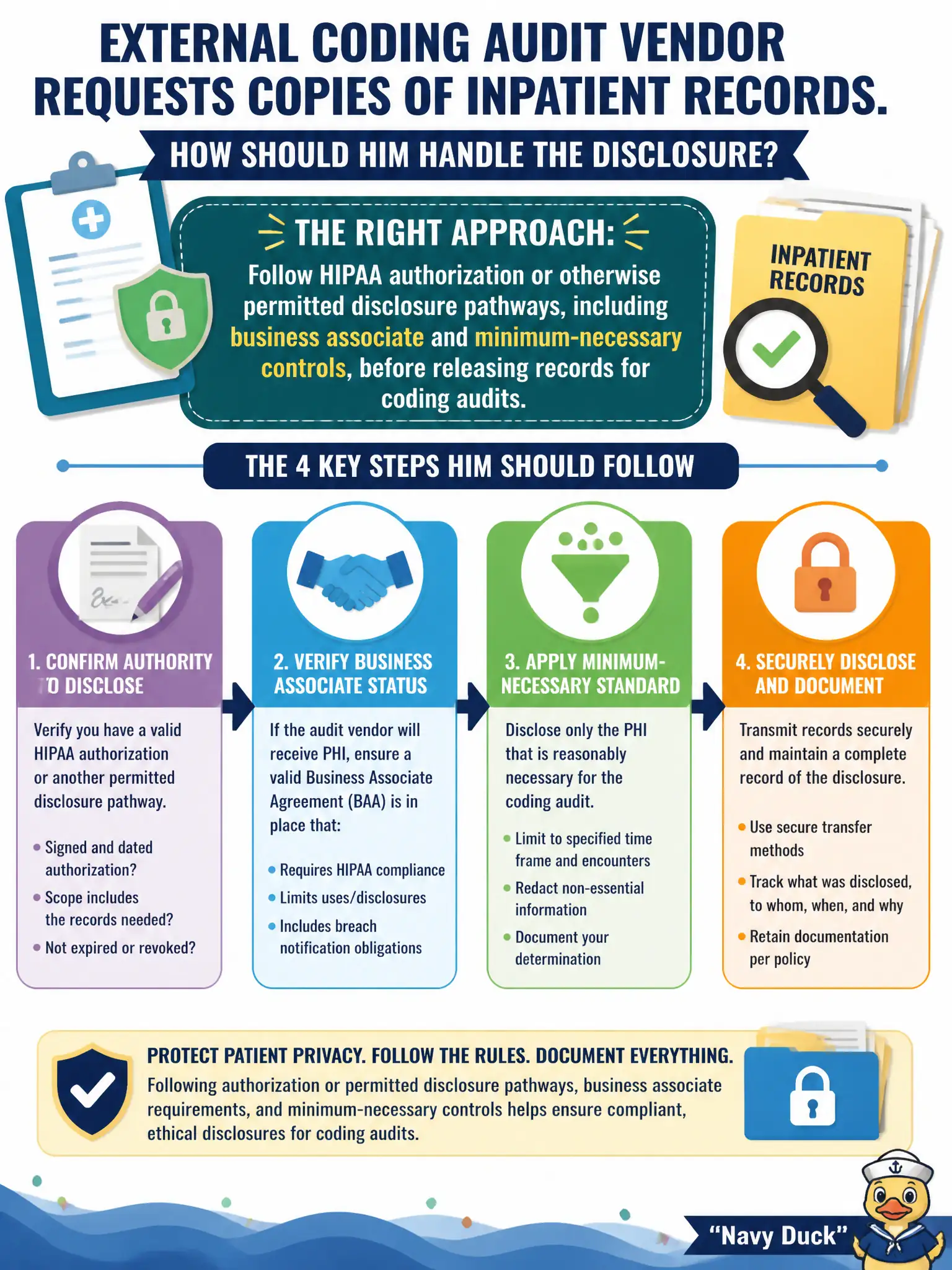
An external coding audit vendor requests copies of inpatient records. How should HIM handle the disclosure?
Select an answer to reveal the explanation.
Short Explanation
Auditors do not get a free-for-all dump of charts. Release of information still runs through HIPAA lanes—BAAs, minimum necessary, approved processes. Help the audit, but do not freestyle the disclosure.
Full Explanation
When an external coding audit vendor requests inpatient records from a municipal hospital, HIM must follow HIPAA authorization or otherwise permitted disclosure pathways, including business associate and minimum-necessary controls, before release. Civic ROI discipline protects residents even when the recipient is an auditor. Emailing unrestricted full charts to any vendor address without agreements bypasses BAAs and minimum necessary. Refusing all auditor access because audits are never allowed misstates HIPAA—audits can be permissible with proper agreements and controls. Allowing the vendor to create its own EHR logins without facility oversight abandons access management and audit accountability. Exam caveat: payment or quality audits do not eliminate business associate and disclosure rules. Operational check: confirm BAA and scope, release only needed elements through ROI or secure audit portals, provision vendor access under facility identity controls, and log disclosures for compliance evidence. Sustain civic accountability by pairing correct code assignment with transparent denial, quality, and privacy escalation paths so public reporting and payment integrity move together. Re-read the authenticated record before finalizing whenever tools, payers, or dashboards push a result the documentation does not support.