
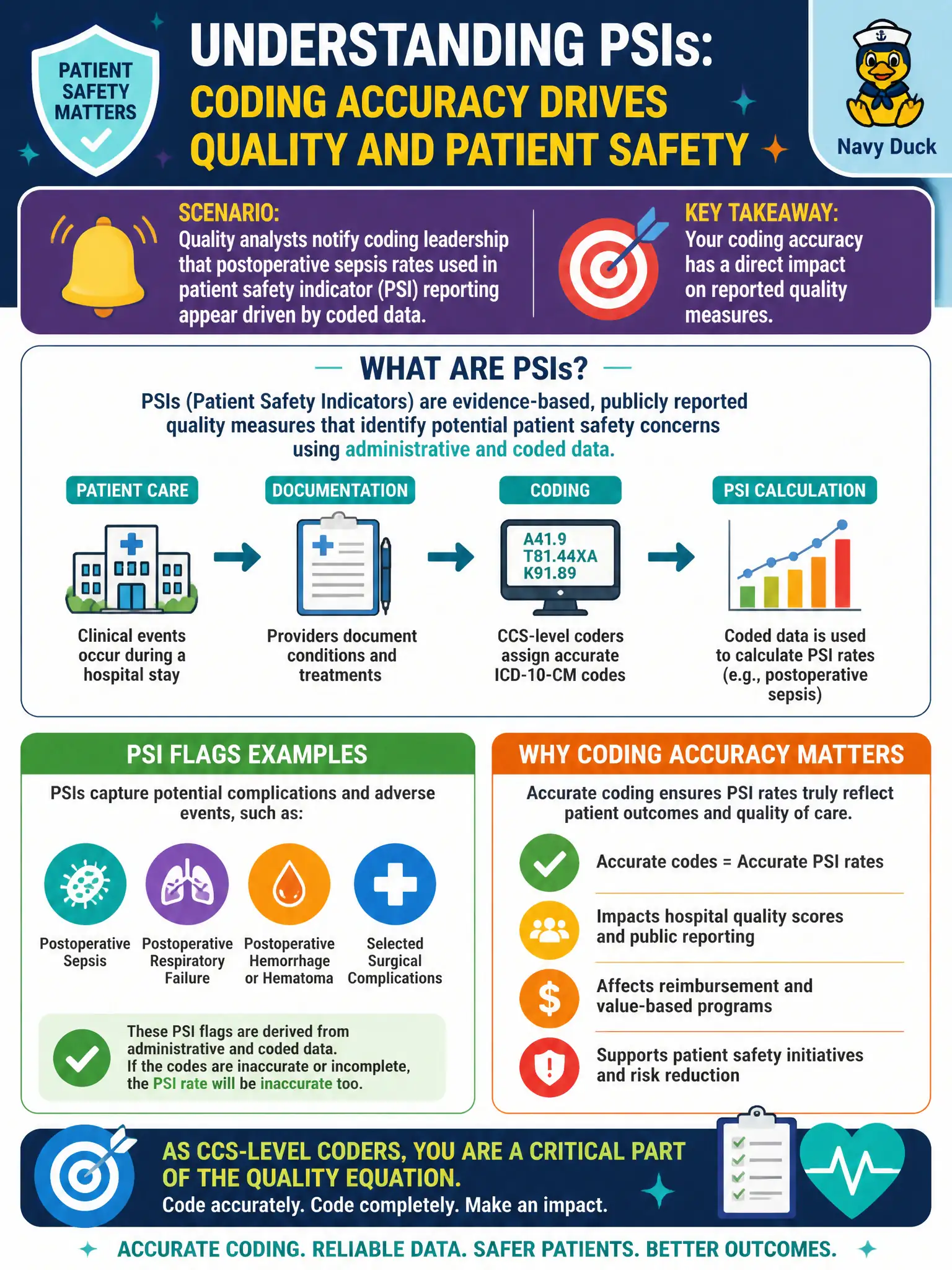
Quality analysts notify coding leadership that postoperative sepsis rates used in patient safety indicator (PSI) reporting appear driven by coded data. What should CCS-level coders understand about PSIs?
Select an answer to reveal the explanation.
Short Explanation
Those patient safety scores are not magic—they are built from the codes put on the bill. Messy or missing complication coding skews the dashboard. Accuracy is patient-safety reporting, not just reimbursement.
Full Explanation
CCS-level coders in a county health system must understand that patient safety indicators such as postoperative sepsis or selected complications are quality measures derived from administrative and coded data, so coding accuracy directly shapes publicly reported rates. Civic hospitals' transparency dashboards are only as sound as the abstracts feeding them; coding is patient-safety infrastructure, not merely a billing chore. Believing PSIs come only from nursing flowsheets and never from coded diagnoses or procedures misses the administrative-data foundation of these measures. Deleting postoperative complication codes whenever a PSI rate looks high is unethical manipulation of quality reporting. Treating PSIs as replacements for Official Guidelines for principal diagnosis selection on surgical cases conflates quality measurement with coding rulebooks. Exam caveat: PSI software reads what you code; it does not authorize guideline deviations or selective omission. Operational check: code complications when documented and reportable, validate POA and postoperative timing, partner with quality analysts on definitional questions, and escalate any request to suppress valid complication codes through compliance. Sustain civic accountability by pairing correct code assignment with transparent denial, quality, and privacy escalation paths so public reporting and payment integrity move together.